
 fufufafa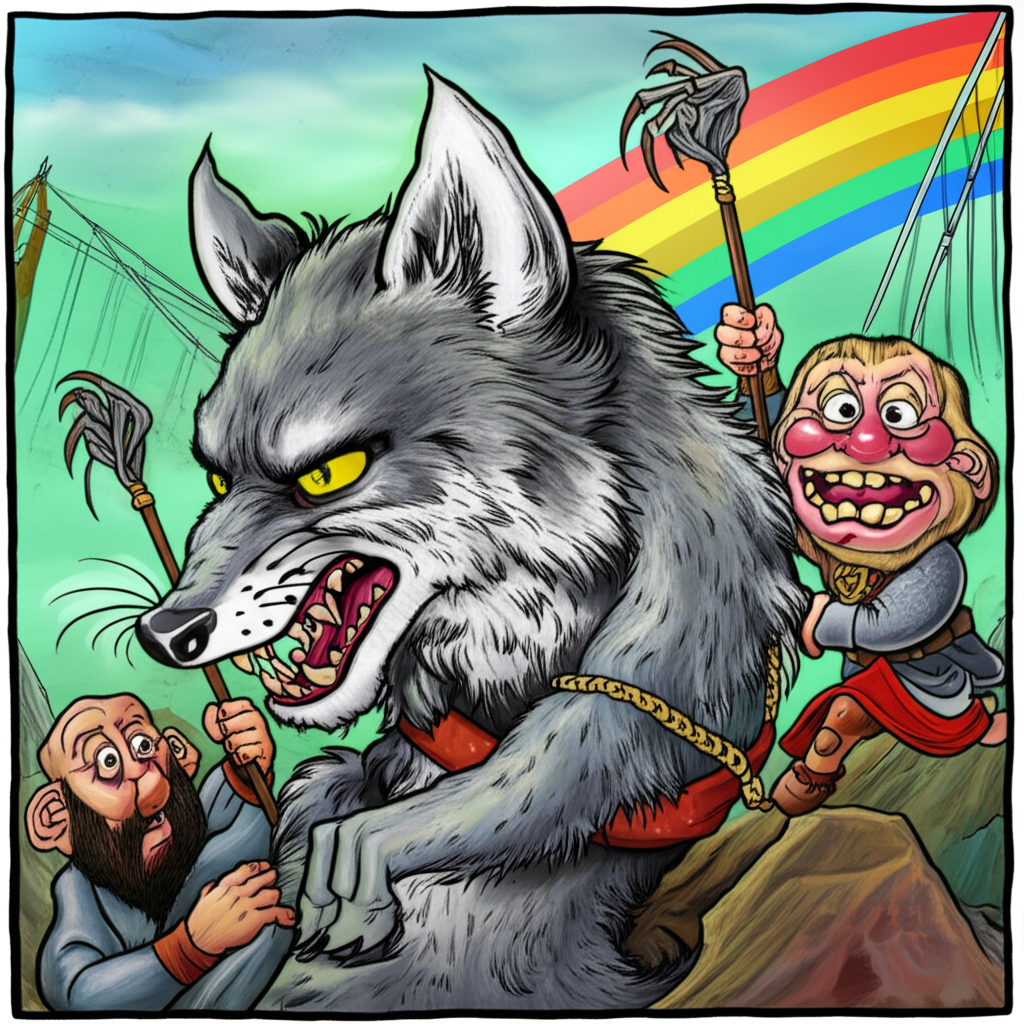
From the icy windswept plains and the deep, shadowed fjords of ancient Scandinavia, a tapestry of tales was woven, stories passed down through generations by the Norse peoples. These were not mere bedtime stories, but profound narratives that sought to explain the world, the forces of nature, and the complex relationship between humanity, the gods, and the untamed wilderness. Among these captivating myths, the saga of Fenrir, the monstrous wolf, and his fated binding, stands as a stark and powerful prophecy, intrinsically linked to the shimmering, rainbow bridge of Bifrost. This is a traditional story, a product of the ancient imagination, designed to explore concepts of destiny, chaos, and the ultimate cosmic struggle.
The cultural milieu from which this myth emerged was one of stark contrasts. The Norse people lived in a harsh, unforgiving environment, where survival often depended on their ability to understand and respect the raw power of nature. Their world was perceived as a dynamic and often perilous place, governed by powerful, anthropomorphic deities who, much like humans, experienced joy, anger, and conflict. This was an era where the natural world was imbued with spiritual significance, and the cycles of life, death, and rebirth were seen as part of a grand, cosmic drama. The Æsir, the principal pantheon of gods, resided in Asgard, a realm accessible through Bifrost, a bridge of light that separated the divine from the mortal. Yet, this celestial order was not immutable; it was perpetually threatened by forces of chaos and destruction, embodied by giants, monsters, and beings like Fenrir.
Central to this prophecy is Fenrir, a creature of immense power and terrifying potential. He is depicted as a wolf of colossal size, a progeny of the trickster god Loki and the giantess Angrboða. Fenrir is not simply a beast; he is a symbol of untamed ferocity, insatiable hunger, and the destructive potential that lies dormant, waiting to be unleashed. His jaws are said to be so vast that they could swallow the sun, and his strength is immeasurable. The symbolic attributes of Fenrir are those of primal chaos, the embodiment of the wild, destructive forces that threaten to tear apart the fabric of existence. He represents the ultimate threat to order, a force that, if left unchecked, would bring about ruin.
The narrative of Fenrir’s binding unfolds as a chilling prophecy, recounted in ancient Norse poetry, particularly the Poetic Edda. The gods, recognizing the immense danger Fenrir posed, grew increasingly fearful of his unchecked growth and the destructive prophecies surrounding him. They attempted to bind him, not once, but twice, with chains of ever-increasing strength. The first, Læðingr, and the second, Drǫngnir, proved insufficient against the wolf’s might. Each attempt only served to fuel his rage and solidify his legend.
Finally, the gods turned to the dwarves, master craftsmen renowned for their magic and ingenuity. They forged a seemingly innocuous fetter, Gleipnir, woven from the sound of a cat’s footfall, the beard of a woman, the roots of a mountain, the sinews of a bear, the breath of a fish, and the spittle of a bird. This magical cord was impossibly strong, capable of holding even Fenrir. To entice the wolf to be bound by this seemingly flimsy ribbon, the gods offered a wager, a test of his strength and a demonstration of his willingness to prove his prowess.
Hesitant, but prideful and eager to showcase his power, Fenrir agreed, provided one of the gods would place their hand in his mouth as a token of good faith. Tyr, the god of law and justice, a figure of immense courage and self-sacrifice, stepped forward. As Fenrir struggled against the magical bonds of Gleipnir, growing ever more furious, his struggle proved futile. The fetter tightened, and with a roar that shook the heavens, Fenrir was bound. True to his word, Fenrir, in his fury, bit off Tyr’s hand, leaving the god with only a stump, a permanent scar symbolizing the cost of containing chaos. The gods then cast Fenrir into the deepest abyss, chaining him with the magical fetter, Gleipnir, where he remains, awaiting the prophesied hour of Ragnarök, the twilight of the gods.
The symbolism woven into the Fenrir myth is multifaceted and deeply resonant. The binding of Fenrir can be interpreted as a representation of humanity’s ongoing struggle to control the destructive forces inherent in nature and within ourselves. The chains, particularly the magical Gleipnir, speak to the idea that sometimes the most profound control comes not from brute force, but from wisdom, cunning, and understanding the intangible aspects of existence. Tyr’s sacrifice highlights the courage required to confront overwhelming threats and the personal cost of maintaining order. Fenrir himself embodies the primal, untamed aspects of the universe, the chaos that can erupt and challenge any established structure. His eventual breaking of his bonds and his role in Ragnarök foreshadow a cataclysmic event, a cosmic reset where the old order is destroyed to make way for the new.
In the modern world, the myth of Fenrir continues to capture the imagination. He appears as a formidable antagonist in countless works of literature, from epic fantasy novels to comic books. In video games, his likeness is often used to represent ultimate challenges and formidable bosses. Scholars of mythology and folklore delve into these stories to understand the worldview of ancient peoples, exploring their fears, aspirations, and their attempts to make sense of the world around them. The narrative of Fenrir’s binding serves as a potent allegory for the eternal struggle between order and chaos, a theme that resonates across cultures and time.
It is crucial to reiterate that the saga of Fenrir is a cultural narrative, a traditional story told by ancient people to articulate their understanding of the world. It is a product of human imagination, not a divine revelation. As Muslims, we recognize that only Allah (God) is the true Creator and Sustainer of all existence. He is the ultimate power, and all things are subject to His will.
Yet, even within this understanding, the power of storytelling endures. The Binding of Fenrir reminds us of the richness of our shared human heritage, the diverse ways in which people have sought to grapple with life’s profound questions. It is a testament to the enduring power of imagination and the tradition of storytelling that allows us to explore complex themes through compelling narratives, offering us not dogma, but a window into the minds and hearts of those who came before us.


