
 fufufafa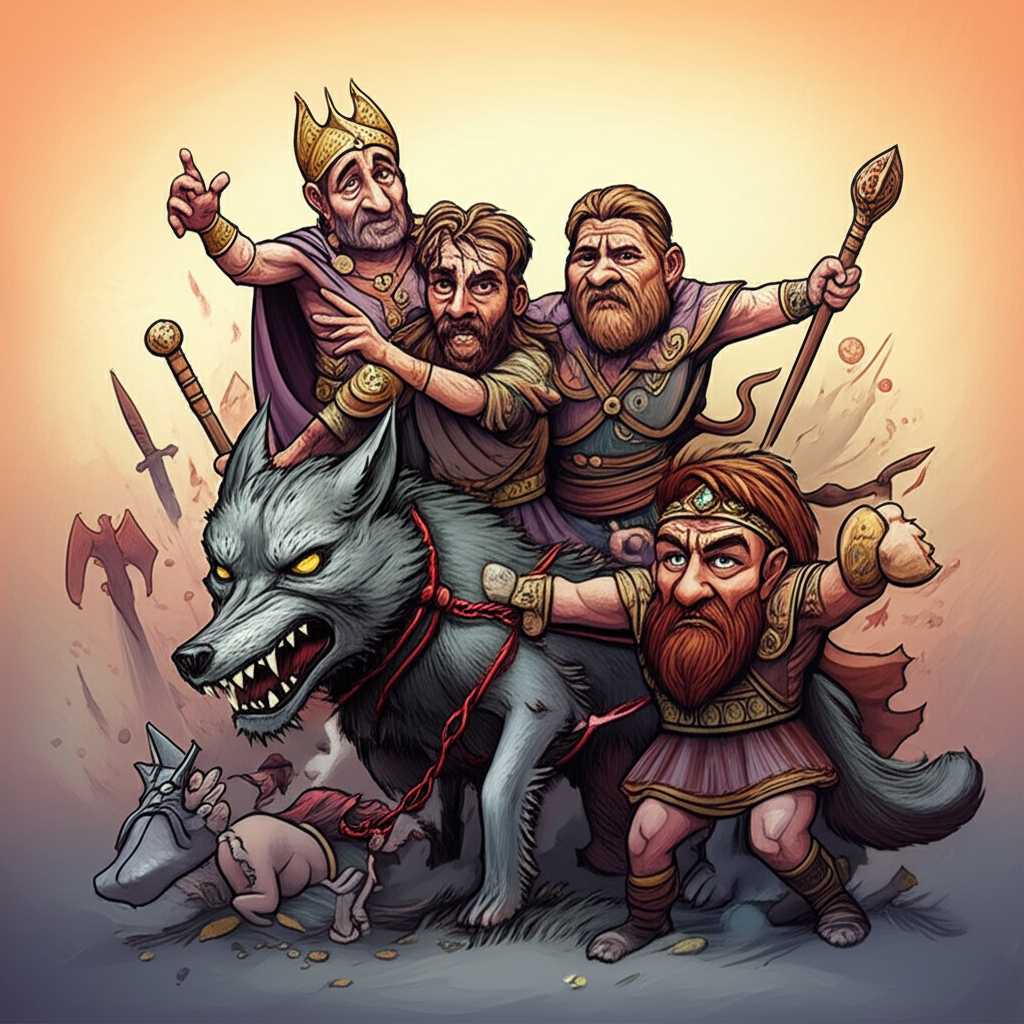
From the frigid, mist-shrouded lands of ancient Scandinavia, where the winds whispered tales of gods and giants, comes a profound and unsettling narrative: the Binding of Fenrir. This is not a factual account, but a traditional story, woven by the minds of our ancestors to grapple with the forces of chaos, fate, and the very fabric of existence as they understood it. These were tales passed down through generations, etched into runes on stone and sung in mead halls, reflecting a world where the divine and the monstrous were intimately intertwined.
The era in which these myths took root was one of stark beauty and brutal reality. The Norse people, hardy and resilient, lived in close proximity to the untamed forces of nature. Harsh winters, unpredictable seas, and the ever-present threat of conflict shaped their worldview. They perceived the world as a dynamic, often precarious balance between the Aesir, the gods who represented order and civilization, and the Jotnar, the giants and monstrous beings who embodied primal chaos and destruction. Life was a constant struggle, and their stories mirrored this, often exploring themes of courage in the face of overwhelming odds, the inevitability of fate, and the cyclical nature of creation and destruction. Their gods, while powerful, were not infallible; they too faced challenges and mortality, making their struggles deeply resonant with the human experience of their time.
At the heart of this particular prophecy lies a creature of immense and terrifying power: Fenrir. He is not merely a wolf, but a colossal, monstrous entity, born of a forbidden union between the god Loki and a giantess. His eyes blaze with an inner fire, and his jaws are said to be capable of swallowing the sun and moon. Fenrir embodies unrestrained ferocity, insatiable hunger, and a primal urge for destruction that threatens to unmake the very cosmos. His symbolic attribute is that of pure, untamed chaos, a force so potent that even the gods fear its ultimate manifestation. He represents the terrifying potential for the natural world, or indeed any unchecked power, to spiral into utter devastation.
The narrative of Fenrir’s binding is a chilling prelude to the twilight of the gods, Ragnarok. It begins with the growing dread among the Aesir concerning this monstrous wolf. Fenrir’s size and strength were increasing at an alarming rate, and his disposition was increasingly hostile. The gods, recognizing the dire threat he posed, devised a plan to restrain him. They attempted to bind him with progressively stronger chains, but Fenrir, with his immense power, shattered each one. His arrogance and the ease with which he broke free only fueled the gods’ apprehension.
Finally, the dwarf smiths, renowned for their craftsmanship, were tasked with forging a magical fetter called Gleipnir. This was no ordinary chain; it was woven from the sound of a cat’s footsteps, the beards of women, the roots of a mountain, the sinews of a bear, the breath of fish, and the spittle of birds. Such seemingly insubstantial ingredients, when combined through dwarven magic, created a binding of unparalleled strength, imbued with an almost ethereal power.
The gods, with a mixture of trepidation and cunning, approached Fenrir once more, presenting him with Gleipnir. They claimed it was a test of his might, a challenge to his already proven strength. Fenrir, however, was wary. He sensed a deception, a subtle magic that unnerved him. He agreed to be bound, but only on the condition that one of the gods would place their hand within his jaws as a pledge of good faith. If the fetter proved unbreakable, he would be freed. If it held him, then the god’s hand would be lost.
It was the god Tyr, the champion of justice and courage, who stepped forward. With a grim resolve, he placed his right hand between Fenrir’s formidable jaws. The gods then secured Gleipnir around the wolf, and to their immense relief and Fenrir’s furious despair, the magical fetter held fast. Fenrir struggled, his roars shaking the very foundations of the world, but Gleipnir tightened, its magical essence proving insurmountable. In his rage and betrayal, Fenrir bit off Tyr’s hand, leaving the valiant god with a permanent scar. The gods then thrust a sword into Fenrir’s open jaws, its hilt pointing upwards, to keep them perpetually agape. He was then bound to a great rock, deep within the earth, where he was left to howl and rage until the prophesied doom.
The story of Fenrir’s binding is rich with symbolism for the ancient Norse. Fenrir himself represents the untamed forces of chaos and destruction that constantly threaten to engulf the ordered world. His unchecked growth and power symbolize the potential for any force, natural or societal, to become overwhelming if not properly managed or contained. The gods’ attempts to bind him reflect the constant human effort to impose order and control upon the unpredictable elements of life. Tyr’s sacrifice, offering his hand to Fenrir, embodies the concept of courage and the willingness to make personal sacrifices for the greater good, even in the face of certain pain or loss. The magical fetter, Gleipnir, made of seemingly impossible elements, speaks to the idea that true strength and resilience can be found in unexpected places, and that cunning and wisdom can overcome brute force. The binding foreshadows Ragnarok, suggesting that even the gods, with all their power, cannot ultimately escape the cycle of destruction and renewal.
In modern times, the myth of Fenrir has transcended its ancient origins, finding new life in popular culture. He is frequently depicted in literature, video games, and fantasy films as a formidable antagonist, a symbol of primal power and apocalyptic threat. These interpretations often focus on his monstrous appearance and his role in the grand, cataclysmic events of Ragnarok. Scholars of mythology and folklore also study these narratives, analyzing them for insights into the beliefs, fears, and values of the societies that created them. The story of Fenrir continues to capture the imagination, resonating with themes of power, betrayal, and the eternal struggle between order and chaos.
It is crucial to reiterate that the Binding of Fenrir is a traditional story, a product of human imagination and a reflection of ancient cultural understanding. It is not a factual account, nor is it a belief system to be adopted. As Muslims, we recognize that only Allah (God) is the true Creator, Sustainer, and Sovereign of the universe. Our understanding of reality is grounded in divine revelation and reason. However, we can still appreciate these ancient narratives for their cultural heritage and the profound storytelling traditions they represent. The Binding of Fenrir, with its dramatic imagery and enduring themes, serves as a testament to the human capacity for imagination, for weaving tales that explore the deepest questions of existence, and for preserving these narratives as windows into the minds of those who came before us. They are echoes of a past, rich with imagination and the enduring human quest to understand the world around us.


