
 fufufafa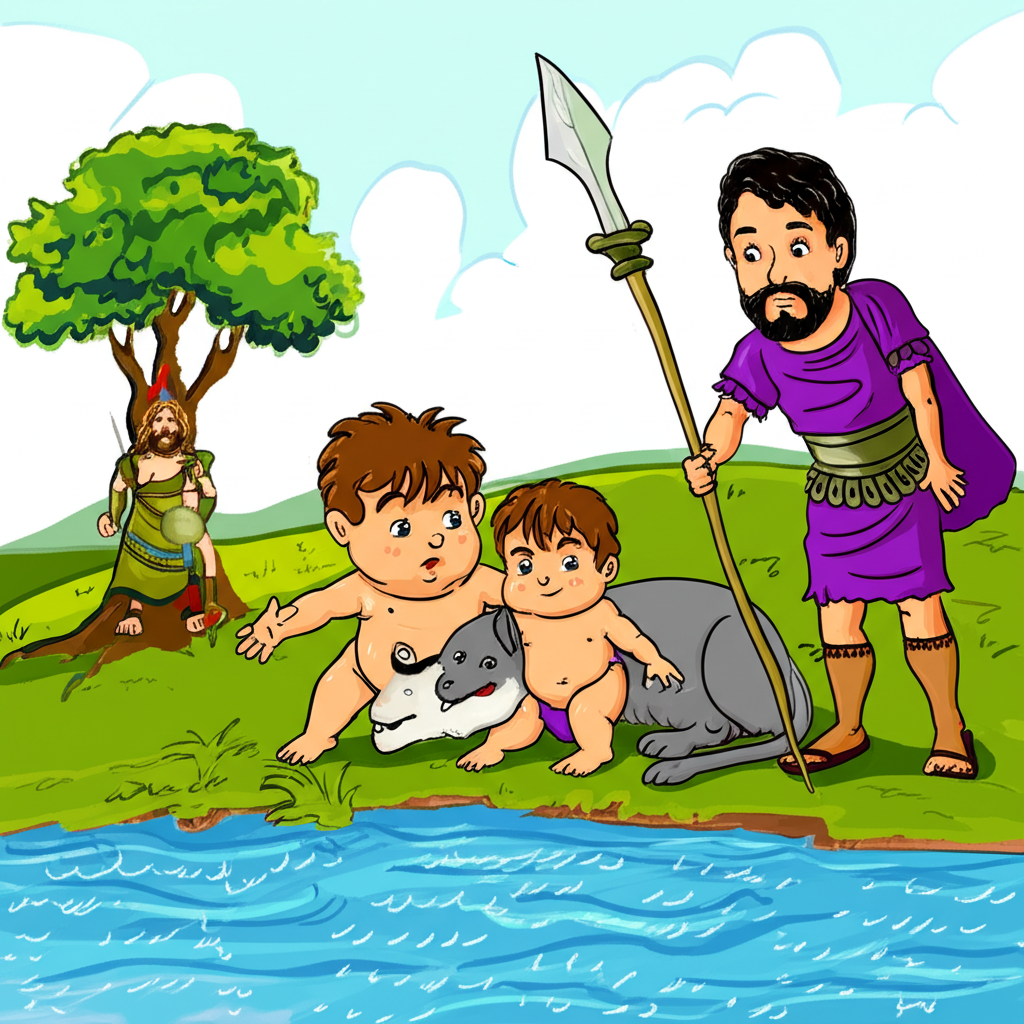
The story of Rome, a city whose very name resonates with power and endurance, is inextricably woven with tales far grander and more mystical than mere historical record. At its heart lies a vibrant tapestry of myths and legends, passed down through generations, shaping the identity of a civilization. Among these foundational narratives, few are as evocative as the intertwined origins of the Tiber River and the legendary founding of Rome itself. This is a traditional story, told by the ancient peoples of the Italian peninsula, particularly the Latins and later the Romans, as a means to explain their identity, their connection to the land, and the divine forces they believed shaped their destiny. It is not a historical account but a profound cultural narrative, offering insight into the ancient Roman worldview.
A World Shaped by Gods and Spirits: The Ancient Roman Panorama
To understand the myth of the Tiber and Rome, one must first step into the mental landscape of its originators. This narrative emerged from a cultural era characterized by a deep, pervasive sense of the sacred in every aspect of life. For the ancient Romans, the world was not a collection of inert objects but a living, breathing entity, permeated by divine will and inhabited by countless spirits and gods. Rivers flowed not just with water but with the essence of a potent deity; mountains stood as the dwelling places of powerful forces; and the very act of planting a seed or building a wall involved an appeal to, or appeasement of, unseen powers.
Their society, initially agrarian and later evolving into a sophisticated urban empire, maintained a profound respect for nature and its cycles. This perspective fostered a rich polytheistic belief system, where a pantheon of gods and goddesses, each with distinct domains and personalities, governed the cosmos. Everyday life was punctuated by rituals, sacrifices, and prayers designed to maintain pax deorum, the "peace of the gods," ensuring prosperity and averting disaster. In such a world, a majestic river like the Tiber could not simply be a geographical feature; it had to possess a spirit, a history, and a divine connection that explained its vital role in human existence.
Tiberinus: The River God and a King’s Legacy
Central to the story of the Tiber’s naming and its role in Rome’s foundation is the figure of Tiberinus, the river god. As a mythological entity, Tiberinus was typically imagined as a powerful, often elderly man, with a long beard and flowing hair, perhaps crowned with reeds or aquatic plants. He might be depicted reclining, holding a cornucopia (symbolizing abundance) or an oar, signifying his dominion over the river’s waters. His presence was benevolent yet formidable, a life-giver and a potential force of destruction through floods.
Symbolically, Tiberinus represented the very essence of the river – its fertility, its constancy, its ability to sustain life and connect communities. He embodied the river’s dynamic nature, its currents, its depths, and its mysterious power. For the ancient Romans, revering Tiberinus was not about worshipping a physical idol, but acknowledging the immense, palpable influence of the Tiber River on their lives. It was an expression of gratitude for the water that nourished their fields, provided transport, and offered a natural defense. The god was the personification of the river’s spirit, an imaginative way to understand and relate to a fundamental aspect of their environment.
The Myth Unfurls: From Alba Longa to the Founding Shore
The narrative begins long before the twin founders of Rome, tracing back to the aftermath of the Trojan War. Aeneas, a Trojan prince, after a perilous journey, landed on the shores of Latium in Italy. His descendants established the city of Alba Longa, a prominent settlement that would endure for centuries. It was during the reign of one of Alba Longa’s kings that the majestic river, which would later become the Tiber, first received its enduring name.
Before this, the river was known as Albula, the "White River," perhaps for the color of its waters or its banks. The myth tells of Tiberinus, a legendary king of Alba Longa, who, during a battle or perhaps while overseeing his kingdom, tragically drowned in the Albula’s swirling currents. Out of respect and mourning for their lost king, the people of Alba Longa renamed the river in his honor, henceforth calling it the Tiber. Thus, the river gained its potent identity, forever linked to a monarch and forever destined to play a pivotal role in shaping a new empire.
Centuries later, the lineage of Alba Longa’s kings continued, leading to Numitor, the rightful ruler, and his jealous brother, Amulius. Amulius usurped the throne, killed Numitor’s male heirs, and forced his daughter, Rhea Silvia, to become a Vestal Virgin, a priestess sworn to chastity, ensuring she would bear no heirs to challenge his rule. Yet, the gods, or perhaps fate, had other plans. Rhea Silvia was said to have been ravished by the war god Mars, giving birth to twin sons, Romulus and Remus.
Furious at this divine intervention, Amulius ordered the infants to be drowned in the Tiber River, hoping to eliminate any threat to his power. The servants, perhaps out of pity or fear of the river god’s wrath, did not cast them directly into the swift main current. Instead, they placed the twins in a shallow basket and set it adrift in a flooded part of the river. The Tiber River, personified by its god, now played its crucial role. As the floodwaters receded, the basket, guided by the benevolent current, gently deposited the infants on the muddy banks at the foot of the Palatine Hill.
Here, the myth continues with the miraculous survival of the twins. A she-wolf, Lupa, discovered them and suckled them, providing life-giving milk. A woodpecker, a sacred bird to Mars, also watched over them, bringing them food. Eventually, a shepherd named Faustulus and his wife, Acca Larentia, found the boys and raised them as their own. As Romulus and Remus grew, they displayed remarkable leadership and strength. Upon learning of their true lineage, they rallied supporters, overthrew Amulius, and reinstated their grandfather, Numitor, to the throne of Alba Longa.
Desiring to found their own city, Romulus and Remus chose the very spot where they had been saved by the Tiber. However, a dispute arose over which hill to build on and who would rule. In a tragic turn, Romulus killed Remus. Romulus then founded his city on the Palatine Hill, naming it Rome after himself. The Tiber River, having saved its founders, flowed around the nascent city, providing defense, sustenance, and a vital artery for trade, forever cementing its sacred status in the heart of the Roman world.
Echoes of Meaning: Symbolism for the Ancients
For the ancient Romans, the myth of the Tiber’s origin and its role in Rome’s founding was rich with symbolism. It underscored the divine favor bestowed upon Rome, suggesting that the gods themselves had intervened to ensure its birth and survival. The river, through Tiberinus, became a symbol of life and destiny, a powerful force that not only sustained but also protected. The story explained the strategic importance of the Tiber, highlighting its natural defensive qualities and its role as a conduit for prosperity.
Furthermore, the narrative subtly conveyed lessons about leadership and destiny. Romulus and Remus, abandoned to the elements, demonstrated resilience and a natural aptitude for leadership, traits that the Romans highly valued. The she-wolf symbolized ferocity and maternal protection, while the woodpecker represented divine guidance. The myth also served as a foundation myth, providing a glorious, divine origin for their burgeoning empire, fostering a sense of shared identity and pride among its citizens. It explained why Rome was great, connecting its very beginnings to powerful divine forces and heroic acts.
The Myth in Modern Light: A Legacy of Imagination
Today, the myth of the Tiber’s origins and Rome’s founding is understood not as historical fact but as a profound piece of cultural heritage. It is studied in literature and classical studies as a prime example of a foundation myth, revealing much about ancient Roman values, beliefs, and narrative structures. In art and sculpture, depictions of Romulus and Remus suckling the she-wolf, or the majestic figure of Tiberinus, continue to captivate, preserving the visual language of the ancients.
The story has inspired countless modern interpretations, appearing in novels, films, and video games that draw on its dramatic elements and archetypal characters. It serves as a testament to the enduring power of storytelling and the human imagination’s capacity to imbue the natural world with meaning and purpose. For scholars, it offers a window into the ancient mind, allowing us to reconstruct how people without scientific explanations made sense of their world and their place within it.
A Tapestry of Tales, Not Truths
In conclusion, the myth of the Tiber’s origins and its pivotal role in the founding of Rome is a magnificent example of ancient storytelling. It is a cultural narrative, passed down through generations, that allowed the Romans to explain their world, their city, and their unique identity. As we explore these tales, it is essential to remember that they are products of human imagination, reflecting the beliefs and societal structures of a bygone era.
As Muslims, we recognize that the true Creator and Sustainer of all existence is Allah (SWT) alone, and that all power and dominion belong to Him. These ancient myths, while fascinating and culturally significant, do not represent divine truth or guidance. Instead, they stand as monuments to human creativity, a vibrant part of our shared global heritage, reminding us of the timeless power of imagination and the enduring tradition of storytelling across civilizations. They invite us to reflect on how different cultures have sought to understand their world, weaving intricate narratives that continue to resonate through the centuries.


