
 fufufafa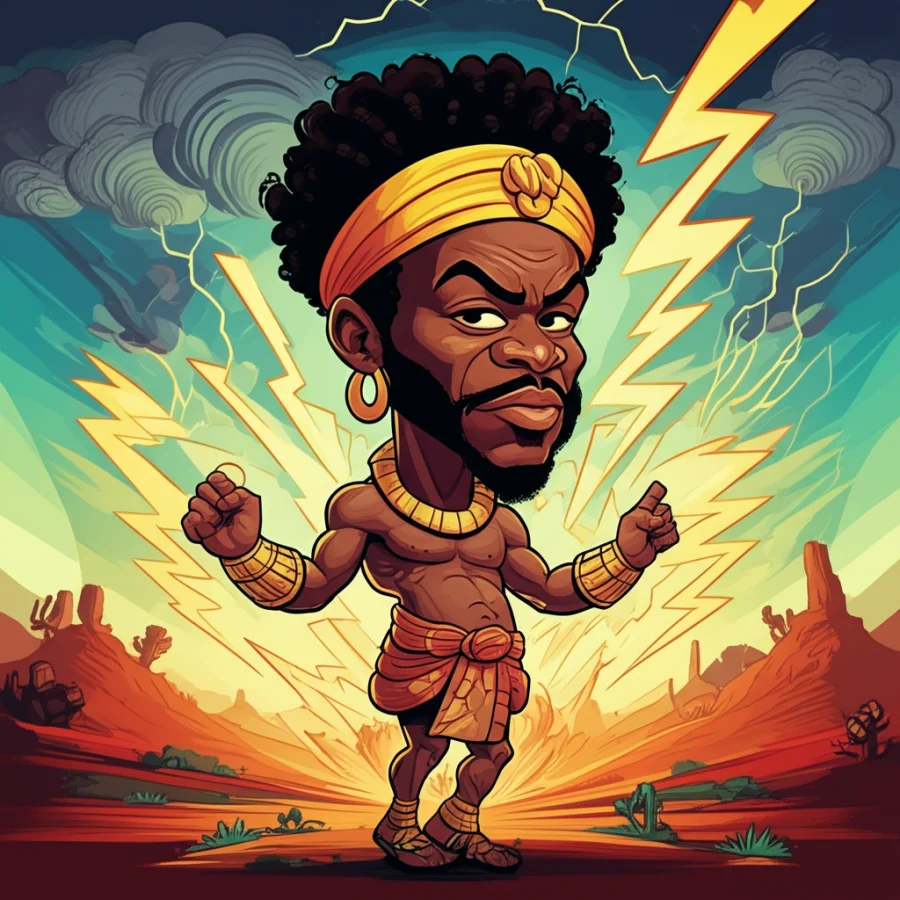
Across the vast, sun-scorched canvas of the Sahara Desert, where the wind sculpts dunes into ephemeral mountains and the silence is as profound as the stars at night, there echo ancient tales. These are not scientific treatises on geology or hydrology, but vibrant narratives woven from the threads of human imagination, born from a deep-seated need to understand the seemingly inexplicable forces of nature. The myth of Shango and the origins of the Sahara’s oases is one such story, a testament to the ingenuity and storytelling prowess of the West African peoples, particularly those with roots in the Yoruba culture.
In an era long past, before the intricate irrigation systems and modern desert exploration we know today, the world was a place of awe and mystery. For those who lived on the fringes of the great desert, or dared to traverse its formidable expanse, water was the ultimate arbiter of life and death. The unpredictable rains, the sudden flash floods, and the miraculous appearance of life-giving springs in the arid landscape were phenomena that demanded explanation. Ancient cosmologies often attributed such powerful events to the actions of divine or semi-divine beings, forces that shaped the world and dictated the fate of mortals. This was a worldview where the sacred and the mundane were intimately intertwined, where the rustling of leaves could be the whisper of spirits and the rumble of thunder, the voice of a powerful deity. It was within this framework of a world alive with unseen energies that stories like Shango’s Thunder Tales took root.
Central to this particular narrative is Shango, a figure revered in Yoruba mythology not as a god of nature in the strictest sense, but as a powerful Orisha, a divine being embodying the forces of thunder, lightning, fire, and justice. Shango is often depicted as a warrior king, proud, passionate, and possessing immense power. His symbolic attributes include the double-headed axe, representing his dual nature of creation and destruction, and the thunderstone, a tangible representation of his fiery pronouncements. In these ancient tales, Shango is not merely a distant deity but an active participant in the shaping of the physical world, his actions directly influencing the lives of humans and the very landscape they inhabited. His essence is one of raw, untamed power, a force that could both devastate and, paradoxically, bring forth life.
The myth of Shango’s Thunder Tales, as it might have been recounted around crackling fires under the immense desert sky, speaks of a time when the Sahara was even more parched and unforgiving than it is today. The sun beat down with relentless fury, and the land lay barren, cracked, and thirsty. The people, their lives dependent on scarce water sources, prayed for relief, their pleas carried on the dry, hot winds.
One day, as the sun reached its zenith, casting an oppressive glare upon the desolate plains, Shango, in his celestial realm, heard the desperate cries. He looked down upon the suffering land and felt a surge of his formidable power. He was a being of immense energy, and his presence could stir the very atmosphere. Gathering the might of a thousand thunderstorms, Shango raised his double-headed axe towards the heavens. With a roar that shook the foundations of the earth, he struck.
The sky, previously a relentless blue, churned and darkened. Lightning, jagged and incandescent, tore through the clouds, illuminating the stark landscape with an otherworldly glow. Then came the thunder, a deafening clap that echoed across the vast emptiness, a sound so profound it felt as if the world itself was splitting open. It was Shango’s decree, his forceful intervention.
Where his thunderous pronouncements struck the parched earth, the ground trembled. And then, in a miraculous transformation, water, cool and life-giving, began to bubble forth. These were not gentle trickles, but powerful springs, bursting from the dry soil, a direct consequence of Shango’s electrific power. The people, witnessing this astonishing event, rejoiced. They saw these newfound water sources as gifts from the powerful Orisha, evidence of his benevolence amidst his fearsome might. The oases, verdant islands in the vast sea of sand, were born from the fury of Shango’s thunder. They were places where life could flourish, where travelers could find respite, and where communities could be sustained, all thanks to the mythical tempest.
To the ancient peoples who shared this story, the myth of Shango’s Thunder Tales likely represented several profound meanings. The story served as a powerful explanation for the existence of oases, those vital pockets of life in the Sahara. Shango’s thunder and lightning could be seen as the raw, generative forces of nature, capable of both destruction and creation. The myth might have symbolized the unpredictable yet ultimately life-sustaining nature of the environment. It could also have represented the idea of divine intervention, a belief that even in the harshest of conditions, a higher power could intervene to provide for humanity. Furthermore, Shango’s character, with his potent and sometimes volatile nature, could have reflected the awe and respect ancient peoples held for the untamed power of storms and the vital importance of water. It was a narrative that acknowledged the raw power of nature and attributed its life-giving aspects to forces beyond human control.
In the modern world, myths and legends like Shango’s Thunder Tales continue to hold sway, not as literal accounts of creation, but as rich veins for cultural exploration and artistic expression. In literature, these stories often form the bedrock of fantasy novels and epic poems, drawing on their evocative imagery and archetypal characters. In film and television, they can inspire visually stunning portrayals of powerful beings and dramatic landscapes. In video games, the figures and concepts derived from these myths can be reimagined as playable characters or thematic elements. For cultural studies scholars, these narratives offer invaluable insights into the worldview, values, and anxieties of past societies, providing a window into how ancient peoples interpreted their world and their place within it.
It is crucial to reiterate that the narrative of Shango’s Thunder Tales is a traditional story, a product of ancient human storytelling and a reflection of a bygone cultural understanding. As Muslims, we recognize that only Allah is the true Creator and Sustainer of the universe, the ultimate source of all life and power. This myth, therefore, is not to be believed as a divine truth, but appreciated for its cultural significance. It stands as a testament to the enduring human need to make sense of the world, to find meaning in the vastness of nature, and to weave tales that connect us to our past. The vibrant tapestry of human heritage is enriched by such stories, reminding us of the power of imagination, the resilience of the human spirit, and the timeless tradition of storytelling that binds generations together.


 admin
admin
 rifanmuazin



