fufufafa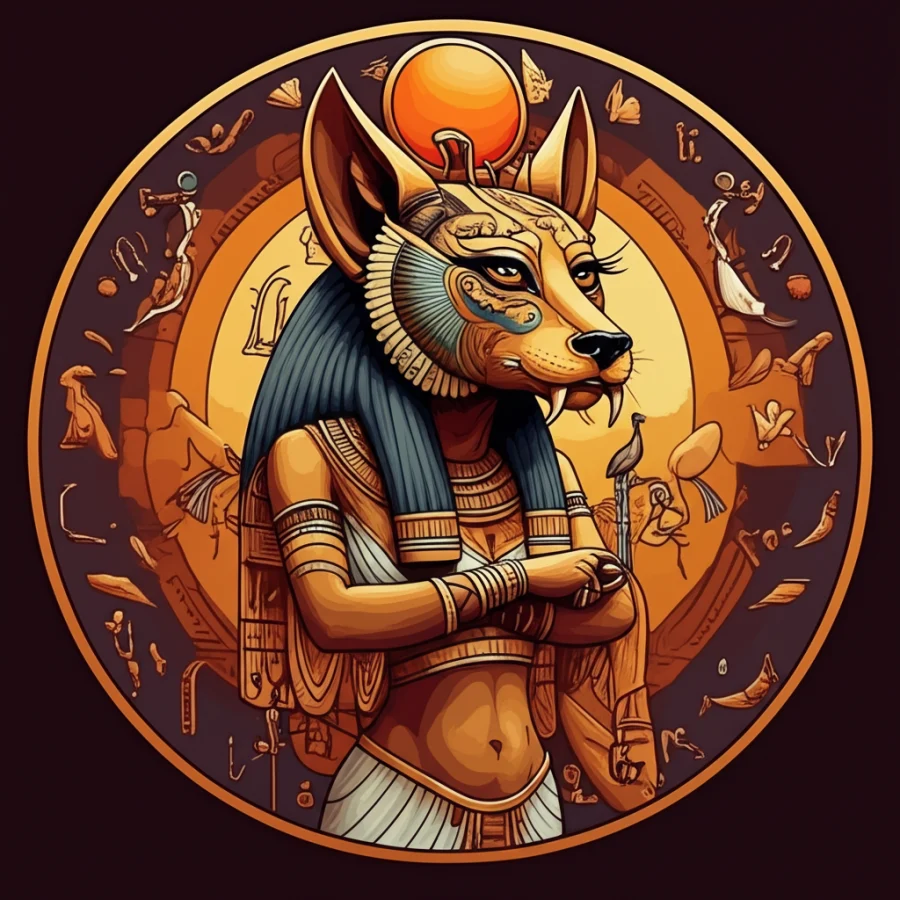
This is a retelling of a traditional story from ancient Egypt, a land steeped in mythology and rich symbolism. It is a story passed down through generations, not a statement of belief, but a window into the worldview of a fascinating civilization. It offers a glimpse into their understanding of the cosmos, the forces of nature, and the human condition.
Origins and Cultural Background:
The myth of Sekhmet and the Sun’s Night Journey flourished in ancient Egypt, a civilization that thrived along the fertile Nile River from around 3100 BCE to 30 BCE. Their society was highly structured, with a pharaoh at its apex, considered a divine ruler connecting the earthly and divine realms. Religion permeated every aspect of their lives. The Egyptians believed in a pantheon of gods and goddesses, each embodying different aspects of nature, human emotions, and cosmic principles.
The Egyptians lived in a world governed by Ma’at, a concept representing cosmic order, truth, justice, and balance. Maintaining Ma’at was paramount, and any disruption could lead to chaos and destruction. The cyclical nature of the Nile’s flooding, the sun’s daily journey across the sky, and the agricultural seasons deeply influenced their beliefs. They saw life, death, and rebirth as interconnected, mirroring the natural world around them. The scorching heat of the desert, the life-giving waters of the Nile, and the constant battle against the encroaching sands shaped their anxieties and inspired their mythology.
Character Description: Sekhmet, the Powerful One
Sekhmet, whose name translates to "The Powerful One" or "She Who Is Mighty," was a formidable goddess in the Egyptian pantheon. She was typically depicted as a lioness-headed woman, a powerful and awe-inspiring image. The lioness symbolized strength, ferocity, and protection, all qualities associated with Sekhmet.
Symbolically, Sekhmet was associated with several key aspects of Egyptian life. Primarily, she represented the destructive power of the sun, the scorching heat that could bring drought and famine. She was also seen as a protector of the pharaohs, a fierce warrior goddess who defended them in battle. Paradoxically, she also possessed the power to heal and cure diseases, making her a complex figure embodying both destruction and restoration. The red color often associated with her symbolized blood, fire, and the intensity of the desert sun. The uraeus, the cobra symbol worn on her brow, signified her royal status and connection to the divine. The sun disk above her head further cemented her link to Ra, the sun god, often considered her father. She was not simply a god of destruction but a force of cosmic balance, punishing wrongdoing and maintaining order.
Main Story: Sekhmet and the Oath of Sun’s Night Journey
The story begins with Ra, the sun god, growing old and weary. He felt the weight of his responsibility, guiding the sun across the sky each day, battling the forces of chaos in the underworld each night. Humanity, whom he had created, had begun to disrespect him, plotting against him and forgetting their reverence for the divine.
Enraged and heartbroken, Ra summoned his Eye, a powerful force that could manifest as a goddess of vengeance. This time, his Eye manifested as Sekhmet, the lioness-headed goddess of fire and destruction. He unleashed her upon humanity, instructing her to punish their transgressions.
Sekhmet, fueled by righteous anger, descended upon the land, unleashing her wrath with terrifying force. She slaughtered humans in droves, her bloodlust seemingly unquenchable. The land was ravaged by famine, disease, and war as Sekhmet’s fury knew no bounds. Ra, witnessing the carnage, realized he had made a terrible mistake. He had intended to punish humanity, not annihilate it.
Regret washed over him, but Sekhmet was beyond his control. Her bloodlust had taken over, and she was determined to complete her task. Ra knew he had to find a way to stop her before she destroyed all of humankind. He consulted with the other gods, desperately seeking a solution.
Finally, Ra devised a plan. He ordered his servants to brew thousands of jars of beer, mixing it with red ochre to resemble blood. This "blood of Ra" was then poured across the land, covering the fields and rivers in a crimson tide.
Sekhmet, seeing the vast sea of "blood," was overcome with joy. She began to drink greedily, believing she was consuming the blood of her victims. As she drank, the beer intoxicated her, slowly lulling her into a drunken stupor. Her rage subsided, and she eventually fell into a deep sleep.
While Sekhmet slept, Ra enacted a sacred oath for her nightly journey alongside him through the underworld. He bound her to protect his barque, the vessel carrying him through the dangerous realm, against the serpent Apep, the embodiment of chaos. Each night, she would serve as his guardian, her fierce nature now channeled towards protecting the sun’s journey and ensuring its return to the sky each morning. Thus, Sekhmet, the goddess of destruction, became also the protector of the sun’s life cycle, forever bound to the Oath of the Sun’s Night Journey.
Symbolism and Meaning:
The myth of Sekhmet and the Sun’s Night Journey is rich in symbolism. It represents the dangers of unchecked anger and the importance of balance. Sekhmet’s initial rampage highlights the destructive potential of uncontrolled emotions. Ra’s regret and his subsequent attempt to appease her symbolize the need for wisdom and moderation.
The beer dyed red to resemble blood is a powerful symbol of deception and the manipulation of primal instincts. It also represents the ability to transform destructive forces into something more manageable. Sekhmet’s eventual role as protector of the sun during its night journey through the underworld symbolizes the idea that even destructive forces can be channeled for good and that every force has a positive and negative potential. The myth also reflects the ancient Egyptians’ understanding of the cyclical nature of life, death, and rebirth, as well as their fear of chaos and their desire to maintain cosmic order.
Modern Perspective:
The myth of Sekhmet continues to resonate in modern culture. She appears in literature, movies, and video games, often depicted as a powerful and complex figure. In literature, she might be portrayed as a symbol of female rage or a representation of the untamed aspects of the human psyche. In movies and video games, she is often depicted as a fierce warrior goddess, embodying strength and power. Cultural studies use her myth to explore themes of gender, power, and the representation of destructive forces. She serves as a reminder of the enduring power of mythology and its ability to capture the complexities of the human experience.
Conclusion:
The story of Sekhmet and the Oath of Sun’s Night Journey is a compelling example of ancient Egyptian mythology, offering a glimpse into their worldview, their fears, and their aspirations. It is a testament to the power of storytelling and the enduring legacy of ancient civilizations.
As Muslims, we recognize that this is a cultural story, not a statement of belief. We believe that Allah is the one and only Creator and Sustainer of the universe. This story, however, allows us to appreciate the rich cultural heritage of ancient Egypt and the human imagination that shaped it. It reminds us of the power of stories to teach, to entertain, and to connect us to the past. Let us appreciate this tale for what it is: a window into a different time and a testament to the enduring human capacity for creativity and storytelling.