fufufafa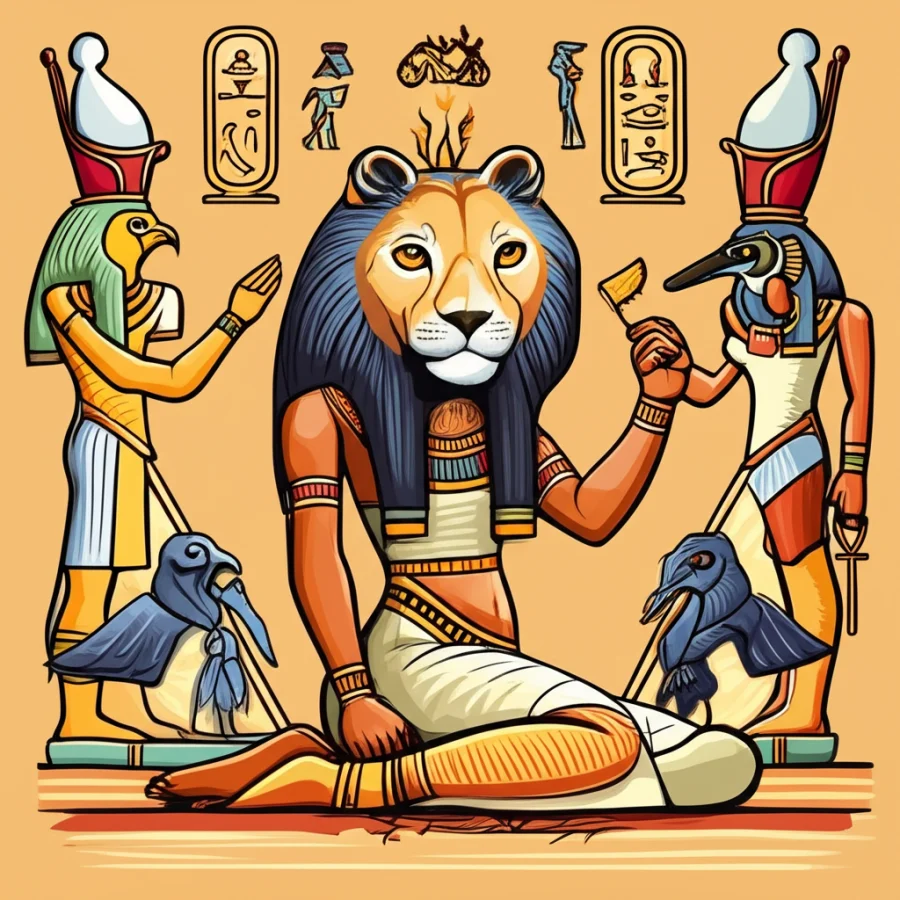
Introduction:
This article delves into a story originating from ancient Egypt, a land steeped in rich mythology and folklore. We will explore the narrative of Sekhmet and her interwoven role, albeit a secondary one, within the larger, more significant myth cycle known as "The Contendings of Horus and Set." This is a traditional story, passed down through generations by the ancient Egyptians, reflecting their understanding of the world, its order, and the forces that shaped their lives. It is important to remember that this is a cultural artifact, a product of the human imagination, and not a factual account or something to be taken as divine truth.
Origins and Cultural Background:
The myths of ancient Egypt flourished during a period spanning millennia, from the pre-dynastic era (c. 5000 BCE) through the Ptolemaic period (305-30 BCE). The society was deeply agricultural, intimately connected to the cycles of the Nile River, which dictated their lives. The ancient Egyptians viewed the world as inherently ordered, governed by the principle of Ma’at, representing truth, justice, and cosmic balance. They believed that the gods and goddesses actively intervened in human affairs, influencing everything from the rising of the sun to the fertility of the land. Their understanding of the afterlife was elaborate, involving a perilous journey and judgment before Osiris, the god of the underworld. The pharaoh, considered a divine ruler, was responsible for maintaining Ma’at and ensuring the well-being of the kingdom. Within this worldview, stories like the Contendings of Horus and Set, and the figures like Sekhmet within it, served to explain natural phenomena, reinforce moral values, and provide a framework for understanding the complexities of human existence.
Character Description: Sekhmet
Sekhmet, whose name translates to "The Powerful One" or "She Who is Powerful," is depicted as a fierce lion-headed goddess. She is often portrayed wearing a solar disk, representing her connection to Ra, the sun god, and the Uraeus serpent, symbolizing her royal status. Sekhmet is a complex figure embodying both destructive and protective qualities.
Symbolically, Sekhmet represents the power of divine retribution and the ferocity of the sun. She is the protector of the pharaoh in battle, unleashing her wrath upon his enemies. However, she is also a healer, capable of warding off disease and pestilence. This duality reflects the ancient Egyptian understanding of power: that it can be both destructive and life-sustaining. Her lioness form symbolizes her strength, courage, and unwavering determination. While her role within the Contendings of Horus and Set is not central, her existence within the pantheon influences the overall narrative and understanding of divine power. She embodies the volatile and dangerous aspects of divine intervention.
Main Story / Narrative Retelling: The Contendings of Horus and Set and Sekhmet’s Fleeting Presence
The Contendings of Horus and Set is a lengthy and complex narrative detailing the struggle for the throne of Egypt between Horus, the falcon-headed god and son of Osiris, and Set, the god of chaos, storms, and the desert, who murdered Osiris. The story unfolds over eighty years, filled with trials, trickery, and divine interventions.
While Sekhmet doesn’t play a starring role, her presence is implied and can be understood as a potential force within the unfolding drama. Imagine, then, the land of Egypt gripped by turmoil. Set, ever the trickster, attempts to usurp the throne, bringing chaos and disruption. Horus, rightful heir, strives to restore order and justice. The divine council, presided over by Ra, constantly debates the matter, swayed by both reason and deception.
During periods of intense conflict, when the land is threatened by widespread destruction, one can envision the potential for Sekhmet’s intervention. While not explicitly stated in every version of the tale, it is easy to picture Ra, angered by Set’s blatant disregard for Ma’at, considering unleashing Sekhmet’s wrath upon the land. Perhaps he restrains her, knowing her power is too indiscriminate, fearing she might destroy even the innocent along with the guilty.
The narrative emphasizes the constant struggle to maintain balance. Sekhmet’s potential involvement serves as a reminder of the immense power at the gods’ disposal and the consequences of unchecked chaos. Her absence from the central narrative highlights the importance of Ra’s judgment and the divine council’s role in controlling the forces of destruction, even those personified by a powerful goddess like Sekhmet. Eventually, after many trials and tribulations, Horus is declared the rightful ruler, and order is restored. This victory, however, is hard-won, and the threat of chaos, and the potential for Sekhmet’s fury, remains a cautionary tale woven into the fabric of Egyptian mythology.
Symbolism and Meaning:
The Contendings of Horus and Set, and the potential presence of Sekhmet within it, held profound meaning for the ancient Egyptians. The story served as an allegory for the struggle between order and chaos, a constant theme in their worldview. Horus represents the forces of good, justice, and stability, while Set embodies the unpredictable and destructive aspects of nature and human behavior.
The myth also reinforces the importance of rightful succession and the role of the pharaoh in maintaining Ma’at. Horus’s eventual triumph symbolizes the restoration of balance and the triumph of good over evil. Sekhmet, in her implied presence, represents the potential for divine retribution and the consequences of disrupting cosmic order. Her ability to both destroy and heal reflects the ancient Egyptians’ understanding of the duality of power and the importance of maintaining balance in all things. The story also highlighted the importance of divine justice and the need for responsible leadership, as Ra and the council deliberated carefully to avoid unleashing destructive forces like Sekhmet unnecessarily.
Modern Perspective:
The myths of ancient Egypt continue to fascinate and inspire artists, writers, and filmmakers today. The Contendings of Horus and Set, and the characters within it, including Sekhmet, have appeared in various forms of media, from literature and movies to video games and graphic novels.
Sekhmet, in particular, is often portrayed as a powerful and formidable figure, representing female strength and the untamed forces of nature. She can be seen as a symbol of righteous anger and the need to protect the vulnerable. Modern interpretations often explore the complexities of her character, acknowledging both her destructive and protective qualities. The Contendings of Horus and Set often serve as a source of inspiration for stories exploring themes of justice, betrayal, and the struggle for power. The enduring appeal of these myths lies in their ability to resonate with contemporary audiences, offering insights into the human condition and the eternal struggle between good and evil.
Conclusion:
The story of Sekhmet and her subtle presence within the Contendings of Horus and Set is a testament to the rich and enduring mythology of ancient Egypt. It is a cultural story, a product of the human imagination, designed to explain the world, reinforce moral values, and provide a framework for understanding the complexities of human existence. It is crucial to remember that these are stories, not statements of fact or divine truths.
As Muslims, we believe that Allah alone is the true Creator and Sustainer of the universe. We respect the cultural heritage of all peoples and recognize the value of stories like the Contendings of Horus and Set as expressions of human creativity and imagination. These narratives offer valuable insights into the beliefs and values of ancient civilizations, reminding us of the power of storytelling and the enduring human fascination with the mysteries of the world. They stand as testaments to the human capacity for imagination and the enduring power of cultural heritage.