fufufafa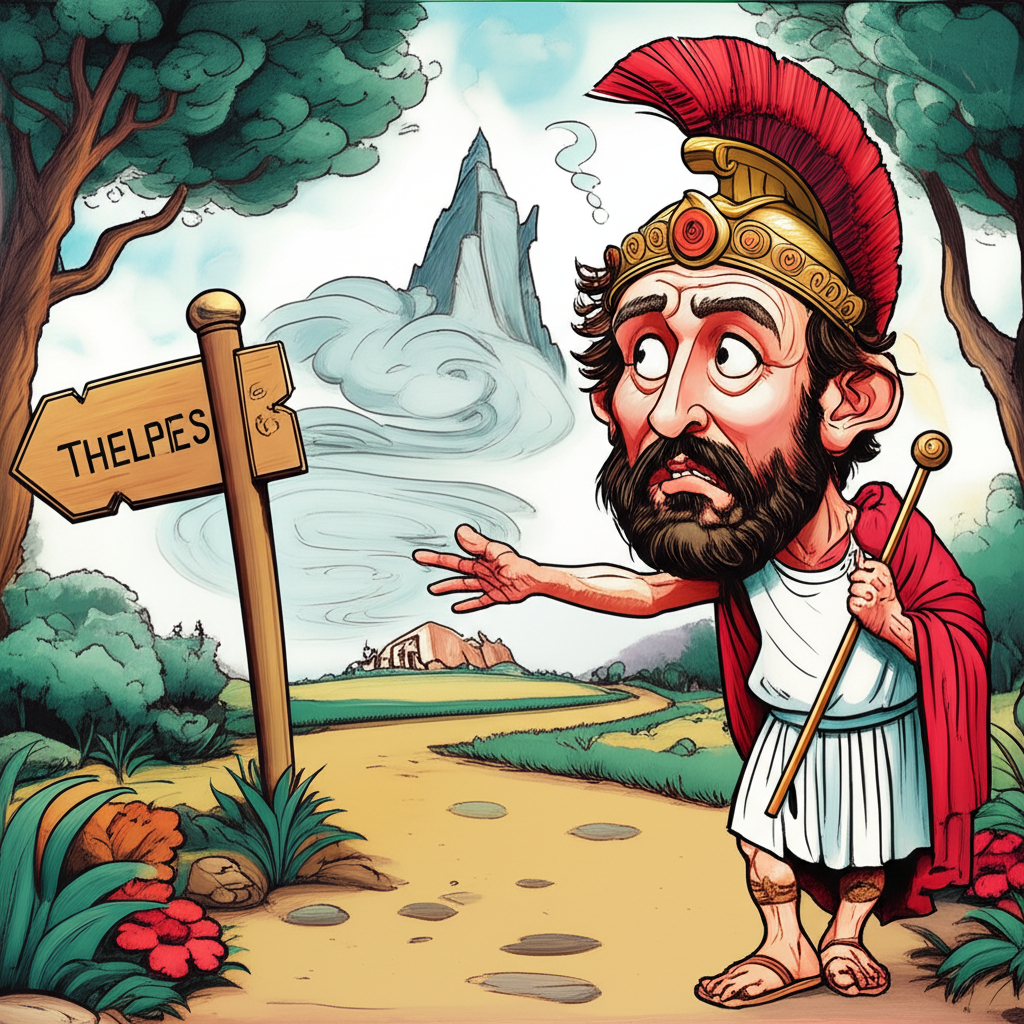
This narrative delves into a profound and enduring story from ancient Greek mythology, a rich tapestry of tales woven by people of antiquity to explain the world around them, explore human nature, and impart moral lessons. The account of Oedipus and his fateful journey to the Oracle at Delphi is a traditional story, passed down through generations, reflecting the deeply held beliefs and anxieties of a civilization long past. It is presented here purely for cultural, historical, and educational understanding, recognizing it as a work of human imagination, not as truth or divine revelation.
Origins and Cultural Background in Ancient Greece
The myth of Oedipus originates from Classical Greece, flourishing in a society that spanned roughly from the 8th century BCE to the 6th century CE. This was an era marked by the rise of influential city-states like Athens and Sparta, philosophical inquiry, the birth of democracy, and unparalleled artistic and literary achievements. The environment was one where polytheistic religion deeply permeated daily life; a pantheon of gods and goddesses, each with distinct domains and often human-like flaws, were believed to govern the cosmos and meddle in mortal affairs.
For the ancient Greeks, the world was imbued with divine presence. Natural phenomena, human emotions, and the course of history were often attributed to the will of the gods. A central concept was moira, or fate—an inexorable destiny that even the gods themselves could not always circumvent. Oracles, particularly the Oracle of Apollo at Delphi, held immense prestige and power. These sacred sites were believed to be conduits through which the gods communicated prophecies and guidance to mortals. Pilgrims, from common citizens to kings, would undertake arduous journeys to Delphi, seeking answers to personal dilemmas, political strategies, or warnings about their future. The prophecies, often cryptic, were taken with utmost seriousness, shaping individual lives and the destinies of entire cities. Within this worldview, hubris – excessive pride or defiance of the gods – was considered a grave offense, often leading to tragic downfall.
Oedipus: The Cursed Seeker of Truth
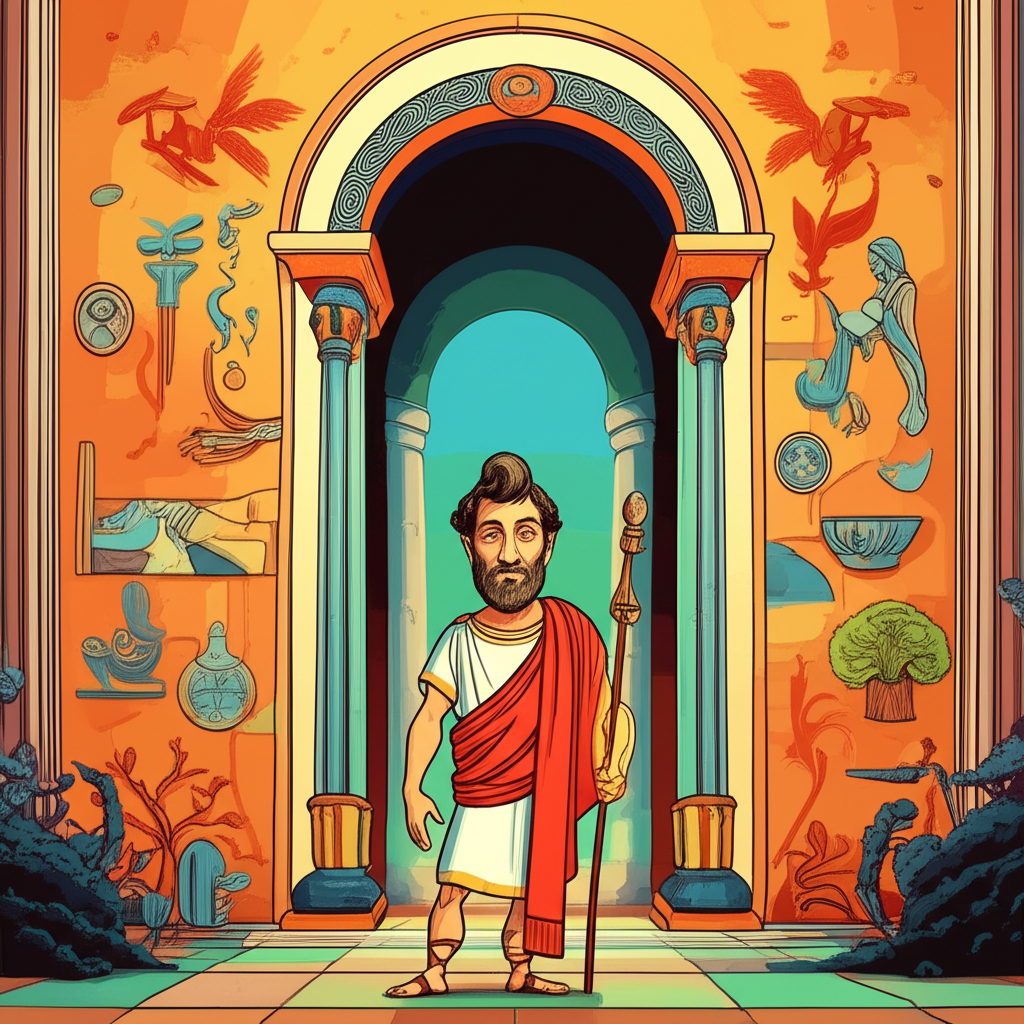
The central figure in this narrative is Oedipus, a character whose life is tragically entwined with an inescapable prophecy. He is depicted not as a deity or supernatural being, but as a mortal man, albeit one of noble lineage whose birthright remains unknown to him for much of his life. Oedipus is characterized by his intelligence, courage, and a strong sense of justice, traits that initially serve him well, such as when he famously defeats the Sphinx. However, these very qualities are paradoxically linked to his eventual ruin. His relentless pursuit of truth, his confidence in his own intellect, and a certain impulsiveness in his actions ultimately lead him to confront a horrifying reality.
Symbolically, Oedipus represents humanity’s struggle against an unknown fate, the profound limitations of human knowledge, and the often-painful consequences of self-discovery. His blindness, both literal and metaphorical, becomes a powerful symbol: initially blind to his true identity and destiny, he later blinds himself physically upon learning the truth, choosing to live in darkness rather than endure the sight of his own tragic life. He is a figure of immense pathos, caught in a web of circumstances beyond his control, yet actively contributing to his own downfall through his choices and character.
The Fateful Journey to Delphi
The story of Oedipus truly begins to unravel not with his birth, which was already cursed, but with a pivotal moment in his young adulthood, a journey to the heart of ancient Greek prophecy: Delphi. Oedipus had grown up in Corinth, believing himself to be the beloved son of King Polybus and Queen Merope. He lived a life of privilege, respected for his intellect and strength. However, a shadow began to fall over his peaceful existence. At a banquet, a drunken reveler, perhaps in a fit of malice or accidental truth-telling, taunted Oedipus, claiming he was not his father’s true son.
This stinging accusation lodged itself deep within Oedipus’s mind, sowing seeds of doubt and unease. Though Polybus and Merope vehemently denied the claim, Oedipus, driven by a powerful need for truth and a growing anxiety about his identity, could not let the matter rest. He resolved to seek an unimpeachable source of wisdom, a voice that could speak with divine authority. There was only one such place: the sacred sanctuary of Apollo at Delphi, nestled high on the slopes of Mount Parnassus.
With a heavy heart and a mind churning with questions, Oedipus embarked on his voyage. The journey to Delphi was no trivial undertaking. It involved days of travel across rugged terrain, a pilgrimage filled with anticipation and trepidation. As he ascended the winding paths towards the sanctuary, the air grew thin, the silence profound, broken only by the whispers of the wind through the olive groves. He imagined the Pythia, Apollo’s high priestess, seated on her tripod above the chasm, inhaling sacred vapors, her voice becoming the conduit for the god’s pronouncements. He sought clarity, hoping for a simple reassurance that would dispel his fears.
Finally, he arrived at the sacred precinct, a place of awe-inspiring grandeur with its temples, treasuries, and the famed omphalos stone, believed to be the navel of the world. He presented his query, his deepest fear: "Am I truly the son of Polybus and Merope?" The Pythia’s response, however, was not the comforting affirmation he desperately sought. Instead, her voice, distorted and echoing from the inner sanctuary, delivered a prophecy that chilled him to the bone, a pronouncement of such horror that it instantly eclipsed his original concern.
"You are destined," she declared with chilling finality, "to murder your father and marry your mother, and to beget children who will be a curse upon all."
The words struck Oedipus like a physical blow, shattering his world. The horror of the prophecy was absolute and unimaginable. To commit parricide and incest, the gravest of taboos, was an offense that would not only condemn him but also pollute any land he inhabited. He did not question the truth of the oracle; no one dared to. His immediate thought was not to defy the gods, but to escape this horrific destiny.
Convinced that Polybus and Merope were his biological parents, Oedipus made a desperate decision. He would never return to Corinth. He would flee, wander the world if necessary, to ensure that the prophecy could never come to pass. He turned his back on the familiar roads leading back to Corinth, choosing instead a path into the unknown, believing he was outsmarting fate. It was on this solitary journey, as he fled from Delphi, that destiny, in its cruel irony, began to unfold precisely as foretold. Unbeknownst to him, he was traveling towards Thebes, towards a fateful encounter at a crossroads that would initiate the fulfillment of the oracle’s terrifying decree.
Symbolism and Meaning to Ancient People
For the ancient Greeks, the myth of Oedipus, particularly his voyage to Delphi and the devastating prophecy, held profound symbolic weight. It served as a powerful exploration of the concept of moira – inescapable fate. The story highlighted the futility of trying to outwit destiny, even when armed with good intentions. Oedipus’s desperate flight from Corinth, intended to avert the prophecy, directly led him to fulfill it, underscoring the idea that some paths are predetermined, regardless of human effort.
It also spoke to the inherent limitations of human knowledge and the perils of hubris. Oedipus, intelligent as he was, was blind to his true identity and the real meaning of the oracle’s words. His confident actions, taken with what he believed was full knowledge, ironically led him deeper into the tragic snare. The myth conveyed a sense of the unpredictable and often cruel nature of divine will, reminding people that their lives were often subject to forces beyond their comprehension or control. Furthermore, it underscored the importance of piety and caution when dealing with sacred prophecies, and perhaps, a warning against digging too deeply into uncomfortable truths. It represented the human condition: a struggle against the unknown, a search for identity, and the tragic consequences of actions, however well-intentioned, when fate has a different plan.
Modern Perspective and Legacy
Today, the myth of Oedipus and his journey to Delphi continues to resonate deeply across various fields. In literature, it stands as the quintessential tragic narrative, exploring themes of destiny, free will, identity, and the agonizing pursuit of truth. Sophocles’ play Oedipus Rex remains a masterpiece of dramatic structure, studied globally for its psychological depth and narrative brilliance.
Perhaps its most famous modern interpretation comes from psychology, with Sigmund Freud coining the term "Oedipus complex" to describe a stage of psychosexual development. While Freud’s theories are widely debated and interpreted, the myth’s exploration of unconscious desires and familial bonds remains a touchstone for discussions on the human psyche. Beyond academia, the story’s core elements—a hero unknowingly destined for tragedy, the unraveling of a dark secret, the clash between individual will and greater forces—have influenced countless narratives in modern literature, film, television, and even video games. It serves as a powerful archetype for stories involving hidden pasts, predestined conflicts, and the often-painful process of self-discovery.
Conclusion
The story of Oedipus and his voyage to Delphi stands as a powerful testament to the enduring human fascination with fate, identity, and the search for truth. It is a cultural narrative, a product of the imaginative minds of ancient people, offering insights into their worldview, fears, and moral compass. As Muslims, we recognize that only Allah is the true Creator and Sustainer of the universe, and all power, knowledge, and destiny reside with Him alone. This myth, like countless others from various cultures, serves as a valuable piece of our shared human cultural heritage, a reflection of the universal human tendency to imagine, to question, and to tell stories that help us understand our place in the vast and often mysterious world.