fufufafa
The legend of Nuada and the events surrounding the Oath of Samhain originate from the rich tapestry of Irish mythology, a collection of stories passed down through generations by the ancient Celts. These tales, filled with powerful gods, valiant heroes, and fantastical creatures, offer a window into the worldview and beliefs of a people who lived in close connection with the natural world. It is crucial to understand that this is a traditional story, a product of the ancient Irish imagination, and not a statement of fact or divine truth.
Origins and Cultural Background
The myths of Ireland, including the story of Nuada, emerged during a time when Celtic society flourished across Europe, including the island we now know as Ireland. This was a pre-Christian era, where the natural world was imbued with spiritual significance. The Celts lived in a world where the boundaries between the physical and supernatural were often blurred. They believed in a pantheon of gods and goddesses who influenced their daily lives, controlled the elements, and intervened in human affairs. Oral tradition was paramount; stories were memorized and recited by skilled bards, ensuring the preservation and transmission of cultural knowledge, history, and beliefs. The cycles of nature, the changing seasons, and the agricultural year were deeply intertwined with their spiritual practices. Festivals like Samhain (pronounced "sow-in") marked significant transitions and were believed to be times when the veil between worlds thinned, allowing for greater interaction with the supernatural. Warfare, honor, and loyalty were highly valued, reflected in the epic tales of battles, quests, and heroic deeds that formed the core of their mythology.
Character Description: Nuada Airgetlám
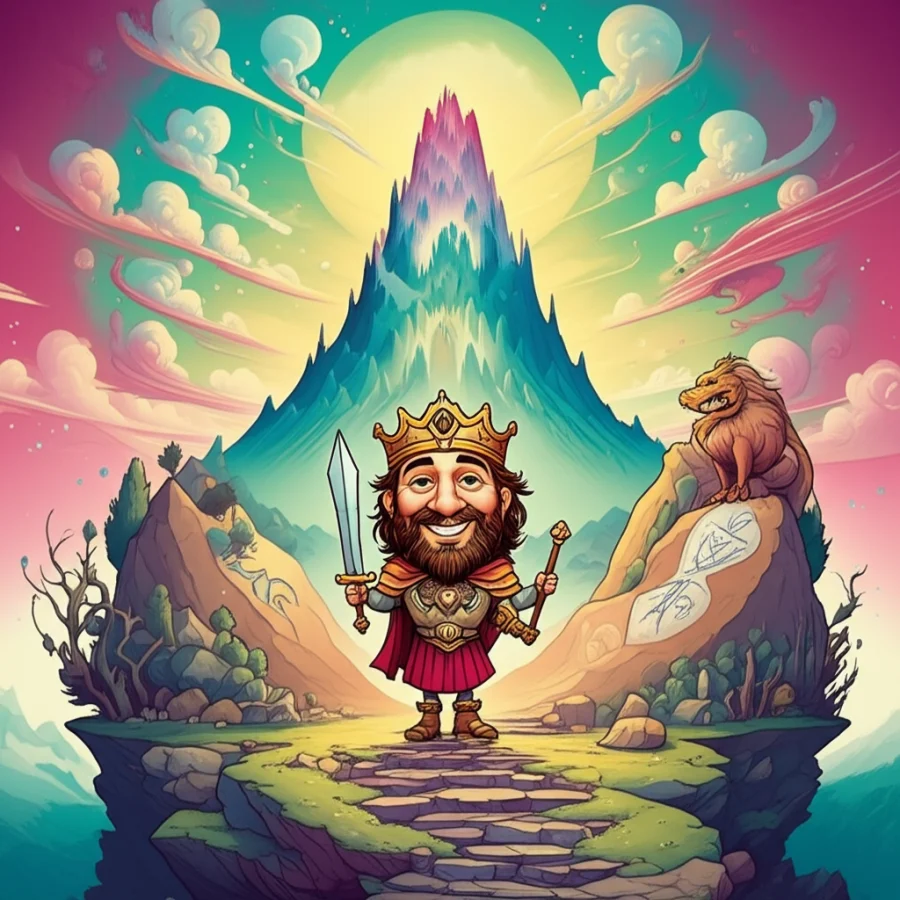
Nuada Airgetlám, meaning "Nuada of the Silver Hand," was the first king of the Tuatha Dé Danann, the people of the goddess Danu, who were believed to be a race of supernatural beings who invaded Ireland. He was depicted as a strong and noble leader, skilled in warfare and revered for his wisdom and justice. The most striking attribute of Nuada was, of course, his silver hand. He lost his original hand in a fierce battle at Mag Tuired, and as a king was required to be physically perfect, he was forced to abdicate. A master craftsman, Dian Cécht, replaced it with a fully functional silver hand. Symbolically, Nuada’s silver hand represents several things. It embodies the themes of loss and restoration, highlighting the resilience and ingenuity required to overcome adversity. It also signifies the importance of wholeness and the lengths to which one must go to maintain power and authority in a society that valued physical perfection. It is not presented as a divine object but as a remarkable piece of craftsmanship that became integral to his identity.
The Oath of Samhain: A Narrative Retelling
Before the second Battle of Mag Tuired, a great council was held by the Tuatha Dé Danann. It was Samhain, a night when the barriers between worlds were thin, a night of power and mystery. Nuada, though restored to his kingship, felt the weight of the impending war against the Fomorians, a race of monstrous beings who sought to dominate Ireland.
Around the crackling bonfires, the Tuatha Dé Danann gathered. Druids chanted ancient verses, their voices rising and falling with the wind. Warriors sharpened their swords, the metallic sounds echoing in the darkness. Nuada, tall and imposing, stood before his people, his silver hand gleaming in the firelight. He knew that victory demanded more than strength; it required unity, strategy, and above all, unwavering commitment.
Therefore, Nuada called upon the assembled warriors, druids, and artisans to swear an oath. This was not just any oath; it was an oath made on Samhain, a time when the words held immense power, when the spirits of ancestors and the forces of nature listened intently.
He began by calling on the names of their ancestors, the gods and goddesses, and the very land of Ireland itself to witness their vows. Each member of the Tuatha Dé Danann stepped forward, one by one, and declared their commitment to the cause. The warriors swore to fight with unwavering courage and loyalty, never retreating and never surrendering. The druids pledged to use their magic and wisdom to protect their people and weaken their enemies. The artisans vowed to craft weapons and armor of unparalleled quality, ensuring that their warriors were equipped for battle.
The oath was long and intricate, each phrase carefully chosen to bind them together. They swore to uphold the honor of the Tuatha Dé Danann, to protect their land from invaders, and to fight until their last breath. The air crackled with energy as the words resonated through the night.
As the last oath was spoken, a sense of unity and determination filled the air. The Tuatha Dé Danann were bound together by a shared purpose, ready to face the challenges that lay ahead. Nuada, witnessing the unwavering commitment of his people, felt a surge of hope. He knew that even against overwhelming odds, they stood a chance of victory.
The Oath of Samhain became a pivotal moment in the history of the Tuatha Dé Danann. It solidified their resolve, strengthened their bonds, and ultimately played a crucial role in their triumph over the Fomorians in the second Battle of Mag Tuired.
Symbolism and Meaning
The story of Nuada and the Oath of Samhain is rich with symbolic meaning. The oath itself represents the importance of commitment, loyalty, and collective responsibility in achieving a common goal. Samhain, as the backdrop for this oath, underscores the power of liminal times and the connection between the natural and supernatural worlds. The act of swearing an oath on such a significant night highlights the seriousness of the commitment and the consequences of breaking it. For the ancient Celts, this story may have served as a reminder of the importance of unity, the power of words, and the need to honor one’s promises, particularly in times of crisis. Nuada, as the leader, symbolizes the qualities of a good ruler: strength, wisdom, and the ability to inspire his people to action.
Modern Perspective
The myths of Ireland, including the story of Nuada, continue to resonate in modern culture. They appear in literature, movies, games, and cultural studies, often reinterpreted to explore contemporary themes. Nuada, in particular, has been depicted in various fantasy novels and video games, where he is often portrayed as a powerful and charismatic leader. His story is also used to explore themes of disability, adaptation, and the definition of leadership. In academic circles, the study of Irish mythology provides valuable insights into the beliefs, values, and social structures of the ancient Celts. The stories serve as a reminder of the rich cultural heritage of Ireland and the enduring power of myth.
Conclusion
The tale of Nuada and the Oath of Samhain is a captivating story from Irish mythology, offering a glimpse into the beliefs and values of the ancient Celts. It is a product of their imagination and cultural context, not a statement of fact or divine truth. As Muslims, we acknowledge that Allah is the sole Creator and Sustainer of the universe. These mythological narratives, however, hold value as part of our shared human heritage. They provide insight into the diverse ways in which people have understood the world and their place within it. By exploring these stories, we can gain a deeper appreciation for the power of imagination, the importance of storytelling, and the rich tapestry of human culture. They serve as reminders of the ingenuity and creativity of our ancestors, and the enduring legacy of their stories.