fufufafa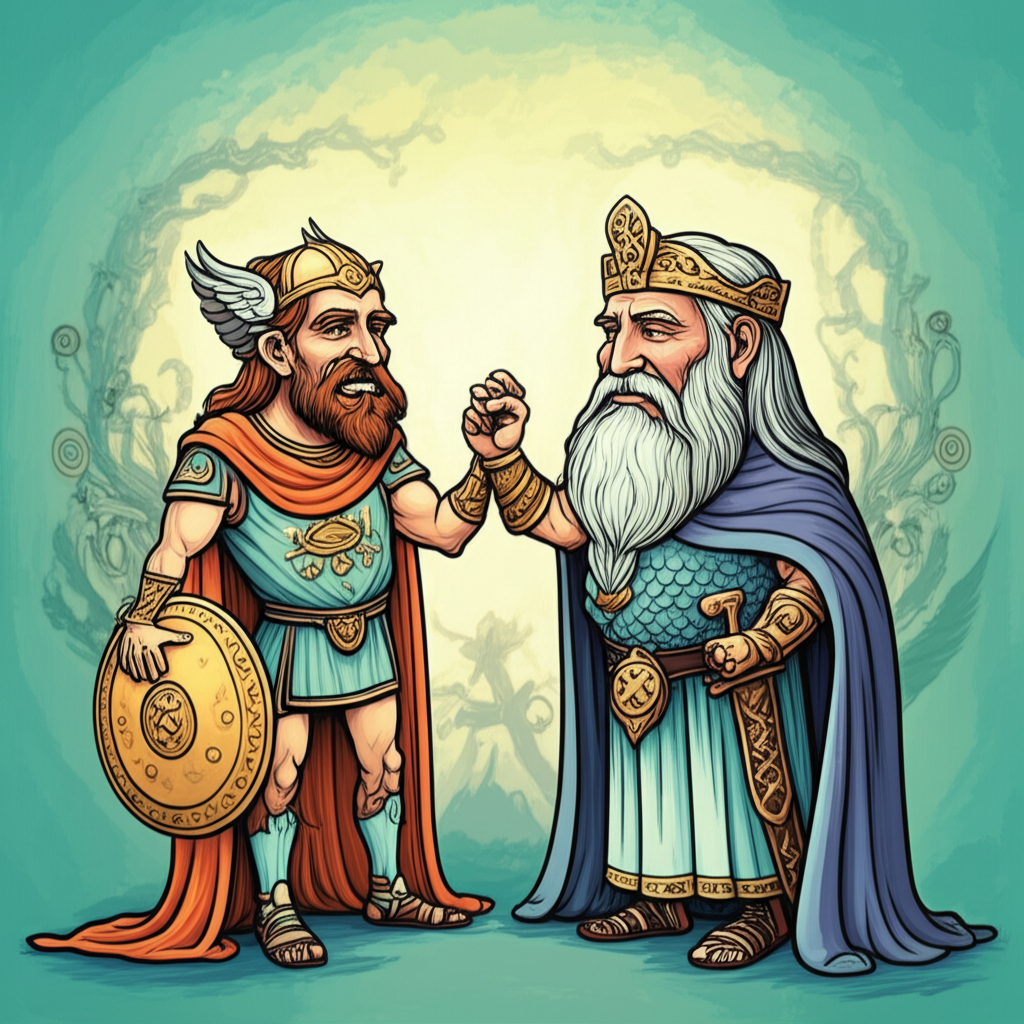
From the mists of ancient Ireland comes a rich tapestry of myths and legends, stories passed down through generations that speak of gods, heroes, and magical creatures. One such tale revolves around Nuada, the first king of the Tuatha Dé Danann, and the solemn oath he took at Beltane, a pivotal festival marking the arrival of summer. This is a story told by the ancient Celts, a way for them to understand their world, its cycles, and the responsibilities of leadership. It is important to remember that this is a traditional story, a product of the human imagination, and not a reflection of divine reality.
Origins and Cultural Background
The myths of Nuada and the Tuatha Dé Danann emerged from a culture deeply rooted in the natural world. The Celts, who inhabited Ireland and other parts of Europe, lived in close connection with the land, its seasons, and its unpredictable forces. Their society was structured around kinship, tribal loyalty, and a warrior ethos. Their worldview was animistic, meaning they believed that spirits resided in natural objects and phenomena, such as trees, rivers, and stones. Rituals and festivals, like Beltane, were crucial for maintaining harmony with these spirits and ensuring the prosperity of the community. The oral tradition was the primary means of preserving history, laws, and cultural values. Storytelling was an art, and bards held a respected position in society, responsible for reciting and embellishing these ancient narratives. These stories served not only as entertainment but also as moral guides and explanations for the world around them.
Character Description: Nuada of the Silver Arm
Nuada Airgetlám, meaning "Nuada of the Silver Arm," was the first king of the Tuatha Dé Danann, the people of the goddess Danu. He was depicted as a noble and just ruler, a skilled warrior, and a wise leader. His most defining attribute, and the source of his epithet, was his silver arm. He lost his original arm in the First Battle of Mag Tuired against the Fir Bolg. According to the lore, a king could not be physically flawed, so his injury disqualified him from the throne. Diancecht, the physician of the Tuatha Dé Danann, fashioned a silver arm for Nuada, later replaced with one of flesh and blood by Diancecht’s son, Miach.
Symbolically, Nuada’s silver arm represents resilience, ingenuity, and the ability to overcome adversity. It is a testament to the power of healing and transformation. However, it also serves as a reminder of his vulnerability and the sacrifices he made for his people. His reign symbolizes justice, order, and the responsibility of leadership to uphold the well-being of the community.
The Oath of Beltane: A Narrative Retelling
The fires of Beltane blazed high atop the hills of Ireland. The air was thick with the scent of burning herbs, the sounds of music, and the joyful cries of the Tuatha Dé Danann. Nuada, the High King, stood tall and proud before his people, his silver arm gleaming in the firelight. He was about to reaffirm his commitment to them, to renew the sacred bond between ruler and ruled.
The Druids, their faces etched with ancient wisdom, chanted the ancient words. They invoked the spirits of the land, the ancestors, and the gods themselves. The people watched with rapt attention, their hearts filled with hope and anticipation.
Nuada raised his silver arm, the flames reflecting in its polished surface. "On this sacred night of Beltane," he declared, his voice resonating across the gathering, "I swear to protect my people from all harm, to uphold justice and fairness in all my deeds, and to lead you with wisdom and courage."
He then recounted the trials and tribulations he had faced: the loss of his arm in battle, the period of exile when he could not be king, and the constant threat from enemies who sought to usurp their land. He spoke of the strength and resilience of the Tuatha Dé Danann, their unwavering loyalty, and their shared dream of a prosperous future.
As he finished his oath, a hush fell over the crowd. Then, a great roar erupted, a testament to their unwavering faith in their king. The fires blazed even brighter, casting long, dancing shadows across the land. The music swelled, and the celebration continued late into the night, a reaffirmation of their unity and their commitment to their shared destiny.
However, the tale doesn’t end there. While Nuada remained a respected leader, the story also hinted at the burden of leadership and the challenges of maintaining power in a world filled with treachery and ambition. His oath was not merely a formality; it was a solemn promise that he would be held accountable for.
Symbolism and Meaning
The Oath of Beltane, as told in the story of Nuada, held deep symbolic meaning for the ancient Celts. Beltane itself marked the beginning of summer, a time of growth, fertility, and abundance. The fires symbolized purification and renewal, driving away the darkness of winter and welcoming the light of the sun.
Nuada’s oath represented the ideal qualities of a ruler: strength, justice, wisdom, and self-sacrifice. It highlighted the importance of leadership in maintaining social order and protecting the community from external threats. The story also emphasized the reciprocal relationship between the ruler and the ruled, with the people’s loyalty and support being essential for the king’s success.
The tale served as a reminder of the constant struggle between order and chaos, light and darkness, and the importance of upholding moral principles in the face of adversity. It reinforced the values of courage, resilience, and community spirit, which were essential for survival in a challenging world.
Modern Perspective
The myths of Nuada and the Tuatha Dé Danann continue to resonate in modern culture. They have been adapted and reimagined in literature, movies, games, and cultural studies. Fantasy writers often draw inspiration from Celtic mythology, incorporating elements of the Tuatha Dé Danann, their gods, and their magical abilities into their stories. Nuada himself has appeared as a character in various works of fiction, often portrayed as a noble and powerful figure.
In cultural studies, the myths are analyzed for their insights into ancient Celtic society, their beliefs, and their values. They provide a window into a world that has long since vanished but whose influence can still be felt in modern culture. The stories are also used to explore themes of leadership, identity, and the relationship between humans and the natural world.
Conclusion
The story of Nuada and the Oath of Beltane is a fascinating glimpse into the rich tapestry of Celtic mythology. It is a tale of gods, heroes, and magical creatures, a product of the human imagination that reflects the hopes, fears, and values of an ancient people. It is a cultural story, a piece of history and art, and not a set of beliefs to be followed.
As Muslims, we recognize that only Allah is the true Creator and Sustainer of the universe. We understand that these myths are stories told by ancient people to make sense of their world, and they do not reflect divine truth. However, we can appreciate them for their cultural significance, their artistic merit, and their insights into the human condition. They are a testament to the power of imagination and the enduring tradition of storytelling, a heritage that continues to inspire and enrich our lives.