fufufafa
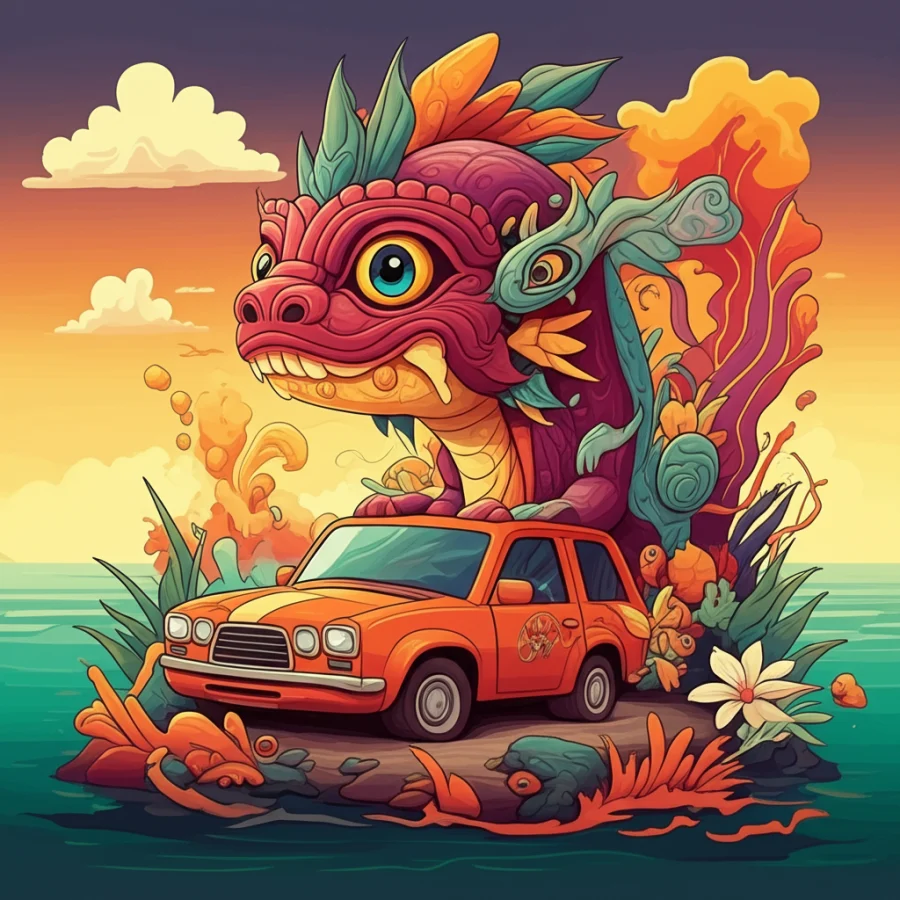
This article delves into a traditional story from the rich tapestry of Polynesian mythology, specifically originating from the Hawaiian islands. It explores the legendary journey of Pele, the revered deity of volcanoes, and a significant encounter with Kanaloa, the powerful god of the ocean. It is crucial to understand that this is a traditional narrative, woven by ancient people to explain their world, their values, and the natural forces around them. This story, like countless others from various cultures, is a product of human imagination and a means of cultural transmission, not a factual account or a basis for religious practice or belief. We present it here solely for its cultural, historical, and educational significance.
Origins and Cultural Background
The myth of Pele’s journey and her interaction with Kanaloa emerges from the vibrant oral traditions of ancient Hawaiʻi. This cultural era, predating European contact, was characterized by a profound connection to the land (ʻāina) and sea (kai). The Hawaiian people lived in an environment shaped by powerful natural phenomena: active volcanoes, vast oceans, lush valleys, and unpredictable weather patterns. Their society was structured around intricate kinship systems, a sophisticated understanding of navigation, agriculture, and resource management, all guided by a deep reverence for nature.
In this worldview, the natural world was alive, imbued with spiritual power, or mana. Mountains, winds, waves, and lava flows were not mere geological or meteorological events but manifestations of divine beings, the akua. People viewed the world as an interconnected web, where humans, nature, and the gods coexisted and influenced one another. Myths served as chronicles of creation, explanations for natural phenomena, moral lessons, and historical accounts of their ancestors and their migrations across the Pacific. The dynamic interplay between elemental forces, often personified as deities, was a central theme, reflecting the very landscape they inhabited.
Character Description: Kanaloa, Lord of the Deep
Kanaloa, known as Tangaroa in other Polynesian cultures, is a principal deity in the Hawaiian pantheon, representing the vastness and mystery of the ocean. He is often associated with the deep sea, long-distance voyaging, fishing, and the underworld. Symbolically, Kanaloa embodies wisdom, tranquility, healing, and the immense, often unseen, power of the deep. He is frequently depicted with the squid or octopus, creatures of the profound depths, symbolizing his mastery over the ocean’s hidden secrets and currents. Unlike the fiery, often tempestuous Pele, Kanaloa is generally portrayed as calm, ancient, and deliberate, a steady force representing the boundless water that surrounds and sustains the islands.
His symbolic attributes are deeply rooted in the practical realities and spiritual understanding of ancient Hawaiians. As master of the ocean, Kanaloa represented the life-giving, yet potentially dangerous, source of sustenance and travel for an island people. He symbolized the knowledge required for navigation, the abundance of the sea, and the profound, eternal cycles of water that nourish the land. While he could be a force of destruction through tsunamis and storms, he was predominantly seen as a benevolent guardian, a deity of balance and ancient knowledge.
Main Story: The Trial of Pele’s Journey
The legendary Pele, a deity of fiery passion and unyielding will, embarked on a momentous journey from her ancestral home of Kahiki. Driven by a restless spirit and a desire to find a place where her sacred fires could burn eternally, she traveled across the vast expanse of Te Moana Nui a Kiwa, the Great Ocean. With her kin, including her sister Hiʻiaka, Pele sailed, leaving a trail of nascent volcanic islands in her wake, each a testament to her power, yet none quite suitable for her ultimate home. Her quest was often fraught with conflict, particularly with her older sister Nāmakaokahaʻi, the goddess of the sea, whose waters relentlessly quenched Pele’s nascent fires.
It was during this epic westward migration, as Pele’s fleet navigated through uncharted waters, that they entered the domain of Kanaloa, the ancient and powerful lord of the ocean. Kanaloa, with his vast wisdom, had observed Pele’s fiery path, her tumultuous creation, and her constant clashes with the ocean’s forces. He understood the profound imbalance her unchecked power could bring to the delicate ecosystem of the islands she sought to inhabit. Kanaloa chose not to engage in direct combat, for his power was of a different nature – subtle, enduring, and all-encompassing. Instead, he decided to present her with a trial, a test of understanding rather than strength.
As Pele’s canoes approached a particularly treacherous stretch of sea, the waters around them began to shift. The sky, though clear, offered no guiding stars. The currents, usually predictable, turned into a swirling maze, pulling the canoes in contradictory directions. The very essence of the sea seemed to confound their most skilled navigators. This was Kanaloa’s silent challenge. No storms raged, no monstrous waves crashed; instead, it was a test of perception, patience, and the ability to find harmony amidst chaos.
Pele, accustomed to commanding the raw power of fire and earth, initially responded with frustration. She called upon the winds to guide them, but the winds seemed to whisper only confusion. She sought to warm the waters with her mana, hoping to part them, but the ocean remained vast and indifferent. Her fiery temper began to flare, threatening to erupt not just from the earth, but from within her own spirit.
It was then that Hiʻiaka, ever the calm and observant one, approached her sister. "Great Pele," she began, "the ocean speaks not with fury, but with silence. Its wisdom is not in what it destroys, but in what it sustains. This is Kanaloa’s domain, a realm of profound depth and interconnected currents. To conquer it is not to fight it, but to understand its flow."
Pele, though initially resistant, paused. She looked at the endless, undulating surface, then beneath it, imagining the intricate network of life that thrived in the deep. She saw how the smallest fish navigated the powerful currents, how the coral reefs stood firm against the surge, not by brute force, but by adapting and integrating. This was a different kind of power than she wielded, a power of resilience and balance.
She closed her eyes, not to unleash her fire, but to sense the rhythm of the water. She allowed her mana to flow not outward in destruction, but inward, seeking connection. Slowly, the chaotic currents began to reveal their underlying pattern. The subtle shifts in temperature, the faint whispers of the deep, the almost imperceptible pulls and releases of the tides – all began to make sense. Pele, for the first time, truly listened to the ocean, not as an adversary, but as a living entity.
She then directed her navigators, not with commands of fire, but with gentle guidance, based on the newfound understanding of the deep currents. Slowly, painstakingly, the fleet began to move with the water, rather than against it. They passed through the bewildering maze, guided by the silent wisdom Pele had gleaned. Kanaloa, from his deep realm, acknowledged her. She had not destroyed his domain, nor had she been defeated by it. She had learned to respect it, to understand its balance, and to adapt her own powerful nature to its eternal rhythm. The trial had been passed, not through a clash of titans, but through a profound lesson in elemental harmony and respect for the natural world.
Symbolism and Meaning
To the ancient Hawaiians, this story would have represented a multitude of profound concepts. Kanaloa, as the wise and ancient god of the ocean, symbolized the inherent balance and interconnectedness of nature. His trial for Pele was not merely a test of power, but a test of wisdom and respect for the environment. It underscored the belief that even the most powerful forces (like Pele’s volcanic fire) must find a way to coexist with and respect other fundamental elements (like Kanaloa’s ocean).
The narrative also spoke to the importance of observation, patience, and understanding over brute force or unchecked ambition. For an island people, the ocean was both a giver of life and a potential destroyer. Kanaloa’s role in this story emphasizes the need for humans to navigate their world with intelligence and reverence, recognizing that true power often lies in harmony, not domination. It could also have served as a moral lesson about humility, reminding individuals that even great strength must be tempered with wisdom and an understanding of one’s place within the larger natural order.
Modern Perspective
Today, the myths of Kanaloa, Pele, and their interactions continue to resonate, interpreted through various lenses in contemporary culture. In literature, these deities inspire characters and themes, exploring the duality of creation and destruction, the power of nature, and the human search for belonging. In film and television, they often appear as archetypes representing elemental forces or complex psychological drives. Video games might feature them as powerful entities whose domains must be traversed or whose challenges must be overcome.
Beyond entertainment, these stories are vital subjects in cultural studies, anthropology, and indigenous studies, providing invaluable insights into ancient Hawaiian thought, values, and their relationship with their environment. They are celebrated in cultural festivals, hula performances, and traditional arts, serving as a powerful link to ancestral heritage and a source of cultural identity for the people of Hawaiʻi. The narrative of Pele’s journey and Kanaloa’s trial reminds us of the enduring human fascination with the forces of nature and the universal quest for balance.
Conclusion
The story of Kanaloa and the Trial of Pele’s Journey stands as a magnificent example of a cultural narrative, rich in symbolism and wisdom. It is a testament to the imaginative prowess of ancient Hawaiian storytellers, who crafted intricate tales to explain their world and impart essential lessons. As Muslims, we recognize that Allah is the one true Creator and Sustainer of all existence, the source of all power and wisdom. We acknowledge that these ancient myths, while captivating and culturally significant, are products of human understanding and interpretation of the world, not divine revelation.
Nevertheless, such stories form an invaluable part of humanity’s shared cultural heritage, offering windows into the minds and societies of those who came before us. They celebrate the power of imagination, the human desire to comprehend the natural world, and the enduring tradition of storytelling as a means to pass down knowledge, values, and a sense of identity across generations. They serve as a reminder of the diverse ways in which human beings have sought to make sense of the vast and mysterious universe.