
 fufufafa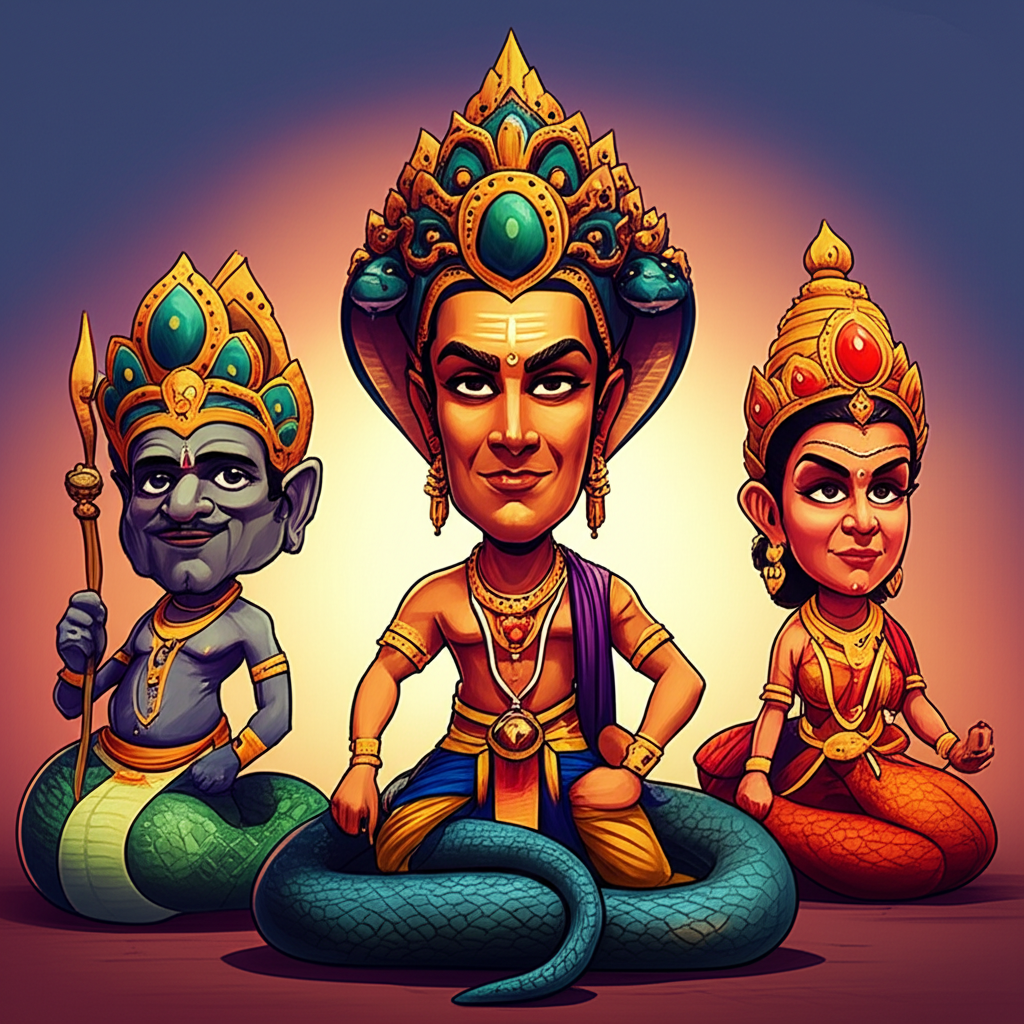
From the sun-drenched plains and ancient epics of India, a tapestry of myths and legends has been woven over millennia. Among these vibrant threads are tales of the Naga, serpentine beings deeply intertwined with the lore of the land, particularly in the stories surrounding the legendary city of Dvaraka. These narratives, passed down through generations by ancient storytellers, offer a glimpse into the worldview of those who first conceived them, a world where the natural and the supernatural were often seen as intimately connected.
The cultural milieu from which these stories emerged was one where the cycles of nature held profound significance. The monsoon rains, vital for agriculture, were often personified and revered. Rivers, teeming with life and capable of both nurturing and destroying, were imbued with divine presence. In such an environment, it was natural for people to imagine powerful, primordial forces at play, forces that could manifest in forms both awe-inspiring and formidable. The Naga, with their association with water, the earth’s hidden depths, and immense power, fit seamlessly into this conceptual landscape. The epic poems, like the Mahabharata, which recount many of these tales, were the intellectual and spiritual cornerstones of ancient Indian society, serving as repositories of wisdom, history (as understood then), and moral instruction.
The Naga themselves are depicted in these ancient tales as beings of extraordinary power and varied nature. They are not simply snakes, but rather a distinct race, often described as semi-divine, possessing immense strength, luminous jewels embedded in their hoods, and the ability to shift their forms. Some were benevolent, while others were depicted as fierce and vengeful. Their symbolic attributes are numerous and complex. Their serpentine form often represents the cyclical nature of life and death, the flow of energy, and the primal forces of the earth. The jewels they are said to possess can symbolize hidden knowledge, wealth, and spiritual illumination. Their association with water, particularly subterranean water and rivers, connects them to fertility, purification, and the unseen mysteries of the world.
The narrative of Dvaraka, a city said to have been built by the divine prince Krishna, is often interwoven with the presence of the Naga. According to these legends, Dvaraka was a magnificent metropolis, a jewel of the sea, built on land reclaimed from the ocean. After Krishna’s departure from the mortal realm, and the ensuing upheaval, the city, along with its inhabitants, was submerged beneath the waves. However, the tales do not necessarily speak of the Naga as the direct cause of Dvaraka’s demise. Instead, they are often portrayed as ancient inhabitants of the region, powerful beings who predated human settlements and continued to hold sway over the watery depths where Dvaraka eventually stood.
Imagine, if you will, the vast, glittering city of Dvaraka, its spires reaching towards the heavens, its streets paved with precious stones. Beneath this human marvel, in the dark, silent abysses of the ocean floor, dwelled the Naga. They were the keepers of the deep, the guardians of ancient secrets and the submerged realms. Their presence was a constant, albeit often unseen, force. Some stories suggest that the Naga, with their inherent connection to water and the earth’s core, had a profound understanding of the oceanic currents and the stability of the seabed. They were the silent witnesses to Dvaraka’s rise and its eventual descent.
One prevalent theme is that the Naga, in their serpentine wisdom, understood the impermanence of even the most magnificent human creations when placed in harmony with the primal forces of nature. When Dvaraka’s time came to return to the embrace of the ocean, it was not necessarily an act of malice by the Naga, but rather a natural consequence, perhaps facilitated by their deep knowledge of the sea’s power. They remained, as they always had, the rulers of the sunken realm, their jeweled hoods casting an eerie, spectral glow in the perpetual twilight of the ocean depths, forever guarding the remnants of the once-proud city. The legends do not depict them as actively destroying Dvaraka, but rather as an intrinsic part of the world where it existed, a world where their dominion over the waters was absolute.
The symbolism embedded within these Naga stories is rich and multifaceted. They can be seen as representing the awesome and uncontrollable power of nature, particularly the sea, a force that humans could never truly master. Their connection to the earth’s depths might have symbolized the unconscious mind, hidden fears, and the mysteries that lie beneath the surface of everyday life. The Naga’s dual nature – benevolent and malevolent – could have reflected the human understanding of the duality present in all aspects of existence: creation and destruction, life and death, light and shadow. They were also seen as guardians, not necessarily of human interests, but of their own domain and the ancient powers associated with it.
In contemporary times, the Naga of Dvaraka, like many figures from ancient mythology, have found new life in various forms of media and cultural studies. They appear in literature, often as powerful, enigmatic beings with a connection to ancient lore and hidden treasures. In fantasy novels and role-playing games, they might be antagonists or allies, their serpentine forms and magical abilities providing rich narrative possibilities. Their imagery continues to be explored in art and popular culture, a testament to their enduring fascination. Cultural scholars study these myths to understand the beliefs, values, and anxieties of past societies, and how these stories have shaped regional identity and artistic expression.
It is crucial to reiterate that these narratives are deeply rooted in the cultural heritage and imaginative storytelling traditions of ancient India. They are fascinating accounts crafted by human minds to explain the world around them, to explore profound concepts, and to entertain. As Muslims, we recognize that the true Creator and Sustainer of the universe is Allah (God) alone. There is no power or creation that can compare to His. These stories, therefore, are not to be believed as literal truth or divine pronouncements. Instead, they serve as valuable windows into the rich tapestry of human imagination, cultural history, and the enduring power of storytelling. They remind us of the diverse ways in which humanity has sought to understand its place in the cosmos, and the creativity that has blossomed from those explorations.


