fufufafa
The islands of Hawaiʻi, born from the fiery embrace of the Pacific Ocean, have long been a land of awe-inspiring natural power. For the ancient Hawaiians, who navigated these waters and lived in the shadow of the colossal volcanoes, the world was a dynamic tapestry woven with the threads of the seen and the unseen. Within this rich cultural tapestry, stories were not mere tales; they were vital vessels for understanding the forces that shaped their lives. Among these narratives are the legends of shark gods, powerful beings who, in the imagination of ancient storytellers, played a significant role in the volatile landscape, particularly in relation to the island’s iconic volcanoes. These are not accounts of historical fact, but rather the deeply rooted folklore passed down through generations, offering a glimpse into the worldview of a people who sought to comprehend the raw, untamed power of their environment.
The cultural era in which these myths flourished was one of profound connection to nature. Before the arrival of modern technology, the ancient Hawaiians lived in intimate communion with the land and sea. Their society was deeply spiritual, perceiving the divine in every aspect of the natural world. Mountains, oceans, winds, and the very earth beneath their feet were seen as animated by powerful forces and inhabited by spirits and deities. The volcanoes, with their explosive eruptions and molten flows, were particularly potent manifestations of divine energy, often personified as the formidable goddess Pele. In this context, the shark, a creature both feared and respected for its predatory prowess in the surrounding ocean, naturally found a place within the pantheon of mythological beings that governed the island’s destiny. The world was viewed as a delicate balance, where human actions could appease or anger the powerful entities that held sway over their existence.
Within this imaginative framework, the concept of shark gods emerged as potent symbolic figures. These were not simply sharks, but divine entities that embodied the very essence of the shark’s strength, agility, and primal power, often possessing human or semi-human forms. They were depicted as formidable beings, their skin potentially the color of the deepest ocean or the shimmering scales of a predatory fish. Their eyes might be described as sharp and knowing, reflecting the keen senses of their aquatic counterparts, and their movements fluid and decisive. These shark gods were often associated with specific lineages or islands, acting as ancestral spirits or protectors. Their symbolic attributes were manifold: the shark’s formidable jaws represented destructive power, while its silent, swift movement symbolized cunning and decisive action. Their presence in the ocean was a constant reminder of the vast, untamed forces that lay beyond the shore, mirroring the volatile nature of the volcanoes themselves.
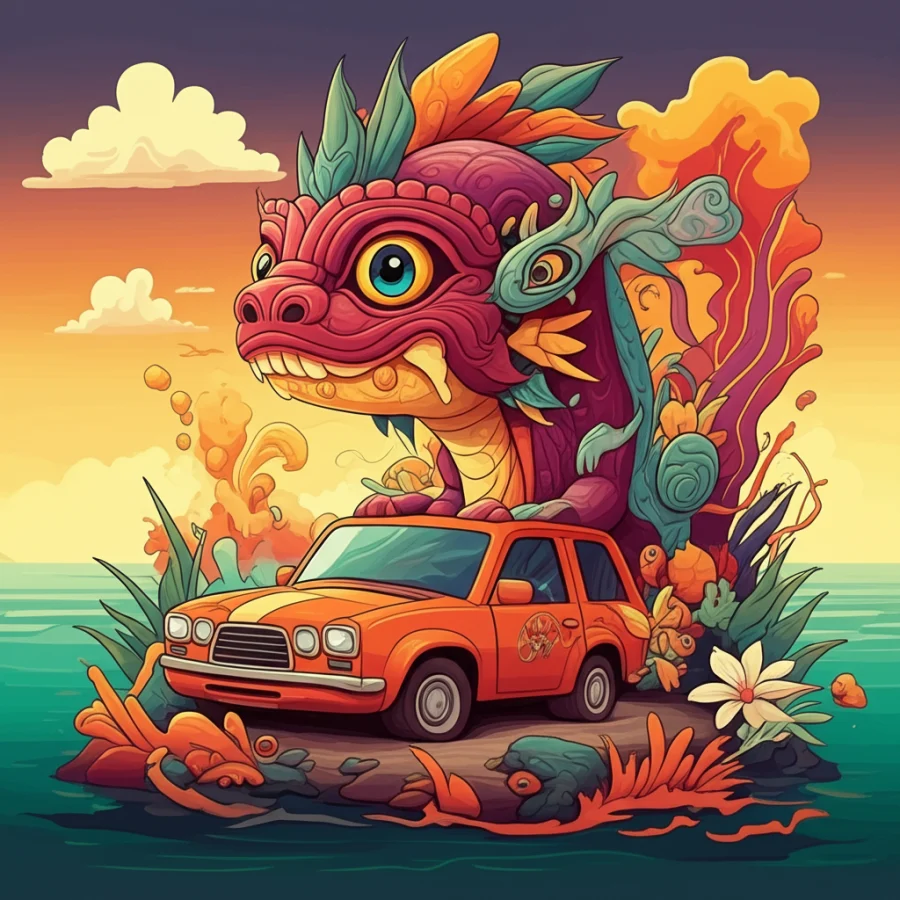
One recurring theme in Hawaiian mythology involves the intricate relationship between these shark gods and the volcanic deities, particularly Pele. Imagine a time when the earth trembled and the sky turned orange with the fury of Pele’s eruptions. The ancient storytellers would weave tales of how, in the face of such cataclysmic events, the shark gods would emerge from the depths of the ocean. Perhaps they would swim towards the volcanic vents, their powerful forms a stark contrast to the molten rock. Some narratives suggest that these shark gods acted as intermediaries, attempting to appease Pele’s wrath or, in other instances, acting as guardians, protecting the island and its inhabitants from the destructive embrace of the lava flows. One such story might tell of a particularly fierce eruption, where the lava surged towards a coastal village. The villagers, in their desperation, might have invoked the names of their shark gods. Then, from the churning waters, a colossal shark, its body radiating an ethereal glow, would appear. It would swim against the fiery tide, its massive jaws opening and closing as if to bite and contain the molten rock, diverting its destructive path away from the homes and lives of the people. In other variations, the shark gods might have been seen as enforcers of balance, their actions dictated by the cosmic order. If the human inhabitants became too arrogant or disrespectful of the natural world, the shark gods, in league with the volcanic forces, might deliver a swift and potent lesson.
The symbolism embedded within these shark god myths is multifaceted. The shark, a apex predator, represented primal power, survival instincts, and the untamed forces of nature. Their association with volcanoes, the ultimate expression of Earth’s raw energy, further amplified this symbolism. These stories likely served to explain the unpredictable and often destructive nature of volcanic activity, attributing it to the will of powerful, unseen entities. The shark gods could also represent a sense of order within chaos. In a world where life was often precarious, these beings offered a narrative of control and protection, even if that control was wielded through formidable and sometimes fearsome means. They may have also symbolized the duality of existence – the life-giving power of the ocean and the destructive potential of the earth, both essential elements in the creation and destruction of the islands themselves. Furthermore, the shark’s deep-sea dwelling might have represented the subconscious or the unknown, a realm from which powerful forces could emerge.
In the modern era, these ancient myths continue to resonate, albeit in different forms. While the direct belief in shark gods as literal divine beings has faded with the advent of scientific understanding, their imagery and symbolic power are explored in literature, film, and popular culture. Authors may draw upon these legends to imbue their characters or settings with a sense of ancient power and mystery. In films, the visual of a powerful shark god rising from the ocean to confront volcanic fury could be a compelling cinematic device. Video games might incorporate shark-like deities as formidable bosses or mythical guardians. Beyond entertainment, these stories remain valuable subjects for cultural studies and anthropology, offering insights into the spiritual landscape and worldview of ancient Polynesian societies. They are preserved in academic texts, museum exhibits, and the oral traditions of those who continue to honor their cultural heritage.
In conclusion, the legends of shark gods as guardians of Hawaiian volcanoes are captivating narratives born from the deep spiritual connection ancient Hawaiians had with their environment. These stories, passed down through generations, are not to be interpreted as literal truths but as profound expressions of a culture’s attempt to understand and navigate the awe-inspiring forces of nature. As Muslims, we recognize that the ultimate Creator and Sustainer of all existence is Allah (God). Yet, we can also appreciate the enduring power of human imagination and the rich tapestry of cultural heritage that these stories represent. They serve as a testament to the human desire to find meaning, order, and connection in the world around us, a tradition of storytelling that continues to inspire and educate us about the diverse ways in which humanity has sought to comprehend the mysteries of existence. These tales remind us of the vastness of human creativity and the enduring legacy of ancestral wisdom, allowing us to reflect on the beauty of cultural expression and the timeless art of storytelling.