fufufafa
In the verdant embrace of the Hawaiian Islands, where the Pacific’s vastness meets the raw power of volcanic creation, a rich tapestry of myths and legends has been woven through generations. These are not tales of scientific fact, but the imaginative expressions of ancient peoples, their attempts to understand the awe-inspiring forces that shaped their world. Among these narratives, the stories of the mo’o, often associated with the potent energy of volcanoes, offer a glimpse into a worldview deeply connected to the natural environment. This is a traditional story, a fragment of ancestral wisdom, shared for cultural and educational understanding.
The era in which these stories of the mo’o were most vibrant was a time when the Hawaiian Islands were a world unto themselves. Life was intrinsically tied to the rhythm of the land and sea. The forces of nature – the crashing waves, the fertile earth, the life-giving rains, and the destructive, yet creative, power of volcanoes – were not abstract concepts but tangible, ever-present realities. Ancient Hawaiians viewed the world as imbued with mana, a spiritual power that flowed through all things, from the smallest pebble to the grandest mountain. Deities and ancestral spirits were believed to inhabit these natural phenomena, shaping the destinies of the people and the islands. In this context, the volcanoes, with their fiery hearts and dramatic eruptions, were seen as potent sites of immense power, places where the veil between the physical and the spiritual was thin.
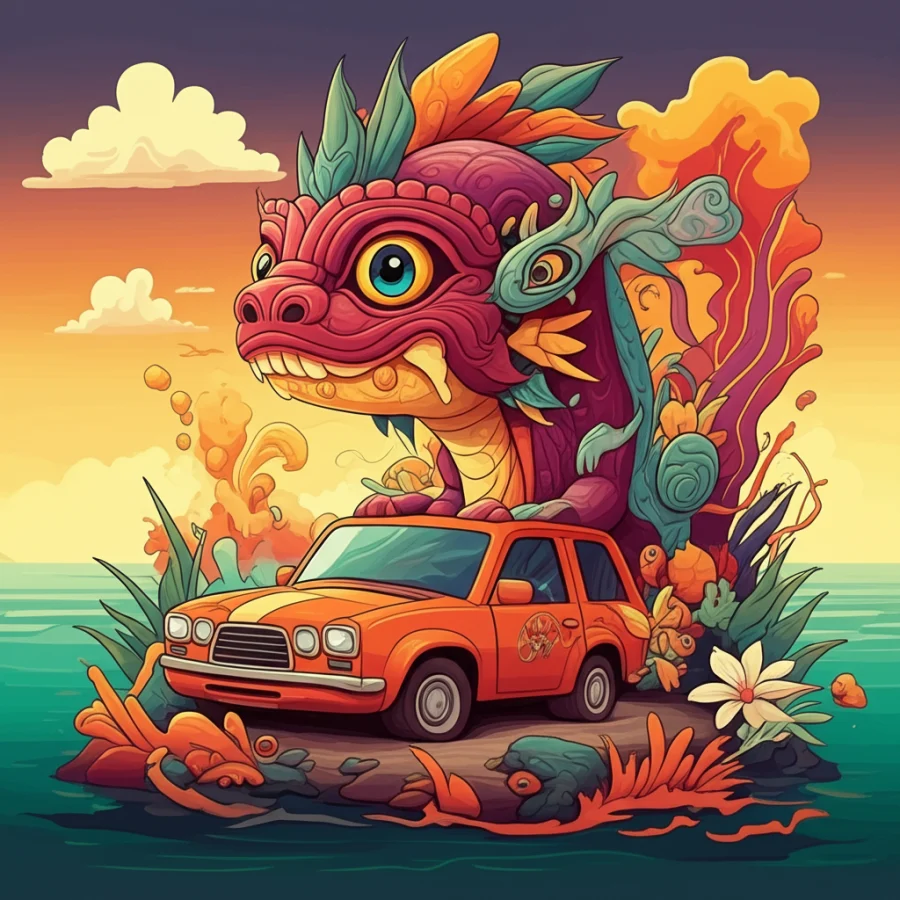
Within this rich mythological landscape, the mo’o emerge as significant figures. These are not depicted as simple animals, but as beings with a profound connection to the earth and its energies, particularly water and the primal forces of creation and destruction. Often described as reptilian in form, sometimes as large lizards or even dragon-like creatures, the mo’o were said to possess a formidable presence. Their scales might shimmer with the colors of volcanic rock or the deep blues of the ocean. Their eyes could hold the fiery glow of lava or the cool depth of a hidden spring. These descriptions are symbolic attributes, illustrating the perceived connection between these beings and the elemental forces they represented. They were seen as embodying aspects of the earth’s raw power, its capacity for both nurturing and devastation.
The narratives surrounding the mo’o often place them in intimate connection with the volcanic landscape. Imagine the ancient Hawaiians, living in the shadow of Kīlauea or Mauna Loa, witnessing the earth breathe fire and reshape itself. In their stories, the mo’o might be depicted as ancient beings who have dwelled within the heart of the volcanoes for eons. They were not necessarily benevolent deities, but powerful entities whose actions, like the volcanoes themselves, could be unpredictable and awe-inspiring.
One recurring theme is the mo’o’s role as guardians or inhabitants of sacred places, including volcanic craters and water sources. Some tales suggest they could control the flow of lava, or that their moods influenced the intensity of volcanic activity. Picture a mo’o, its immense form coiled deep within a steaming caldera, its breath the hot, sulfurous air, its roar the rumbling earth. When the earth trembled and lava flowed, it was as if the mo’o were stirring from its slumber. They might be depicted as ancient, primordial beings, their existence intertwined with the very formation of the islands. In these imaginative retellings, one might envision a mo’o, its scales like obsidian, emerging from a fissure in the earth, its gaze fixed on the distant ocean, a silent testament to the island’s fiery birth. These stories, passed down through oral tradition, served as a way to explain the inexplicable and to imbue the natural world with meaning and agency.
The symbolism embedded within the mo’o myths is multifaceted. Their association with water, particularly in their reptilian form, could represent the cyclical nature of life and death, the way water nourishes the land but also erodes it. Their connection to volcanoes speaks to the raw, untamed power of nature, the creative force that births new land but also poses a significant threat. For ancient Hawaiians, these stories might have served as cautionary tales, reminding them of the respect due to the powerful forces of the natural world. The mo’o could also embody aspects of primal energy, representing the deep, underlying power of the earth. Their presence might have been seen as a reminder of the ancientness of the land and the powerful spirits that inhabited it.
In the modern era, the mo’o, like many figures from indigenous mythologies, continue to capture the imagination. They appear in contemporary literature, often as mythical creatures in fantasy novels or as symbols within cultural studies exploring Hawaiian folklore. In film and gaming, their reptilian forms and connection to elemental powers make them appealing characters, reimagined through modern artistic lenses. These interpretations, while drawing inspiration from the original stories, are products of contemporary storytelling and often serve entertainment or artistic purposes, rather than reflecting the original cultural context.
It is important to reiterate that the mo’o are figures from traditional Hawaiian mythology and folklore, the product of ancestral imagination and cultural expression. They are not believed to be real beings, nor are they objects of worship. As Muslims, we recognize that only Allah (God) is the true Creator and Sustainer of all that exists, in accordance with Islamic teachings. These stories, therefore, are appreciated for their cultural heritage, their contribution to human understanding of storytelling, and the imaginative ways in which ancient peoples sought to comprehend their world. The tales of the mo’o, guardians of the fiery heart of the volcanoes, serve as a testament to the enduring power of human storytelling and the profound connection our ancestors felt with the natural world, a connection that continues to resonate in the rich cultural tapestry of Hawaii.