fufufafa
From the vast, undulating plains of Eastern Europe, where great rivers carve their paths and mist-shrouded lakes lie like forgotten jewels, emerges a tapestry of ancient tales. Among these, the Slavic peoples, a diverse group whose history stretches back millennia, have woven stories of the natural world, imbuing it with spirits and guardians. These narratives, passed down through generations around crackling hearths and beneath starlit skies, offered explanations for the untamed power of the elements and the mysteries of life and death. One such figure, born from the deep, dark waters, is the Vodyanoy. This is a traditional story, a relic of ancient beliefs, told to understand the world as our ancestors perceived it.
In the era when these myths took root, the world was a far more immediate and visceral place for the people of the Slavic lands. Their lives were intimately intertwined with the rhythms of nature. Forests teemed with unseen presences, mountains held the secrets of the sky, and most importantly, the water – the source of life, the pathway of trade, and the harbinger of both sustenance and destruction – was viewed with profound respect and a healthy dose of apprehension. They saw the world not as a collection of inert objects, but as a vibrant, living entity, populated by a myriad of spirits, each with its own domain and influence. The Vodyanoy, the lord of the waters, was a testament to this worldview, a personification of the potent, often unpredictable, force of rivers, lakes, and swamps.
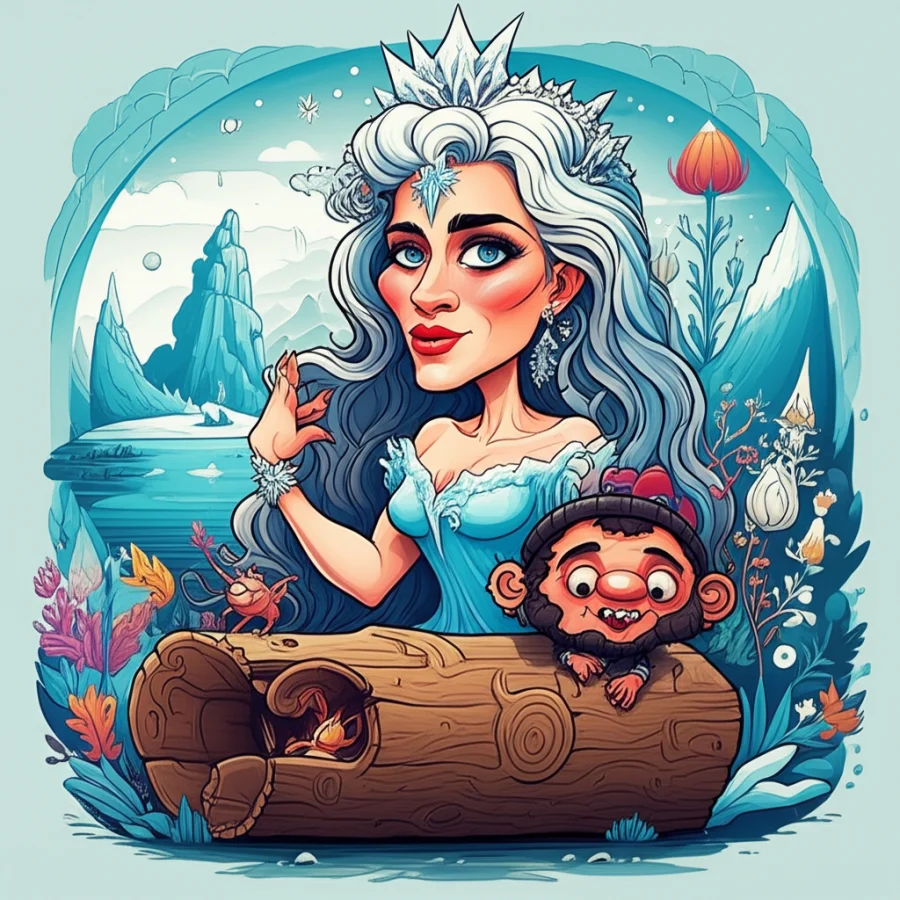
The Vodyanoy, as depicted in these ancient narratives, is a creature of the deep. He is often described as an old man, his form gnarled and moss-covered, his skin the color of river silt. His beard is said to be woven from reeds and water weeds, and his eyes, when they gleam from the depths, are like phosphorescent lights. Some tales paint him with a tail, serpentine and powerful, or webbed hands that stir the currents. He is not a benevolent spirit in the modern sense, but rather a potent, elemental force. His attributes are tied to the water itself: the churning eddies, the silent, crushing depths, the sudden floods that could sweep away villages, and the icy grip of winter. He embodies the duality of water – its life-giving properties and its capacity for immense destruction. He is the guardian of the watery realm, its king and its jailer, holding sway over the fish, the water nymphs (Rusalki), and all creatures that dwell beneath the surface.
Imagine, if you will, a time when the river was not just a waterway, but a living entity. The Vodyanoy, in his watery domain, was the embodiment of this power. When the rains swelled the rivers and threatened to breach their banks, it was said the Vodyanoy was angered, perhaps by the disrespect of humans who fished too greedily or polluted his waters. His laughter, a gurgling, bubbling sound, could be heard in the rapids, and his roar in the thunderous crashes of waterfalls. He was known to lure unsuspecting travelers into the water, either to drown them or to drag them down to his underwater kingdom. Fishermen, who relied on the bounty of the rivers, learned to appease him with offerings – a piece of their catch, a coin, or a splash of their vodka. To cross his territory without acknowledgment was to invite his wrath, a swift and unforgiving consequence. Sometimes, he would appear as a benevolent figure, guiding lost boats or warning of impending storms, but these acts were often seen as fleeting whims rather than true kindness, a reminder of his ultimate control.
The symbolism embedded within the Vodyanoy myth is rich and multifaceted. Primarily, he represents the awesome and often terrifying power of nature, particularly water, which was a vital but also dangerous element for early Slavic societies. He embodies the untamed and the uncontrollable, a reminder of humanity’s vulnerability in the face of natural forces. The Vodyanoy could also symbolize the hidden dangers of the unknown, the mysteries that lie beneath the surface of things, both literally in the water and figuratively in life. His control over fish might have represented the abundance and sustenance that water provided, but also the potential for scarcity if he withheld his favor. Furthermore, his role as a guardian of the underwater world could be interpreted as a reflection of the ancient belief in a parallel spirit world that coexisted with the human realm.
In contemporary times, the Vodyanoy has transitioned from a figure of living folklore to a character woven into the fabric of modern storytelling. He appears in literature as a mystical entity, a creature of folklore explored in academic studies and fantasy novels. In video games, he might manifest as a formidable boss, a guardian of aquatic levels, or a character whose lore draws from Slavic mythology. Movies and television shows have also drawn inspiration from these ancient tales, depicting him as a spectral figure or a primal force of nature. These interpretations, while entertaining, often focus on the more dramatic and visually striking aspects of the myth, sometimes simplifying or reinterpreting his original cultural context.
It is crucial to reiterate that the Vodyanoy is a traditional story, a narrative passed down from ancient times, born from the human desire to understand and explain the world around them. As Muslims, we recognize that only Allah (God) is the true Creator and Sustainer of the universe, the ultimate power behind all existence. These ancient stories, while fascinating from a cultural and historical perspective, do not hold divine authority. They are echoes of a different time, a testament to the enduring human capacity for imagination and the creation of rich mythologies that reflect the hopes, fears, and observations of our ancestors. The Vodyanoy, therefore, stands as a powerful reminder of our cultural heritage, the enduring tradition of storytelling, and the imaginative ways in which people have sought to make sense of the world’s deepest mysteries, particularly those that lie where the land meets the ever-moving, ever-mysterious water.