
 fufufafa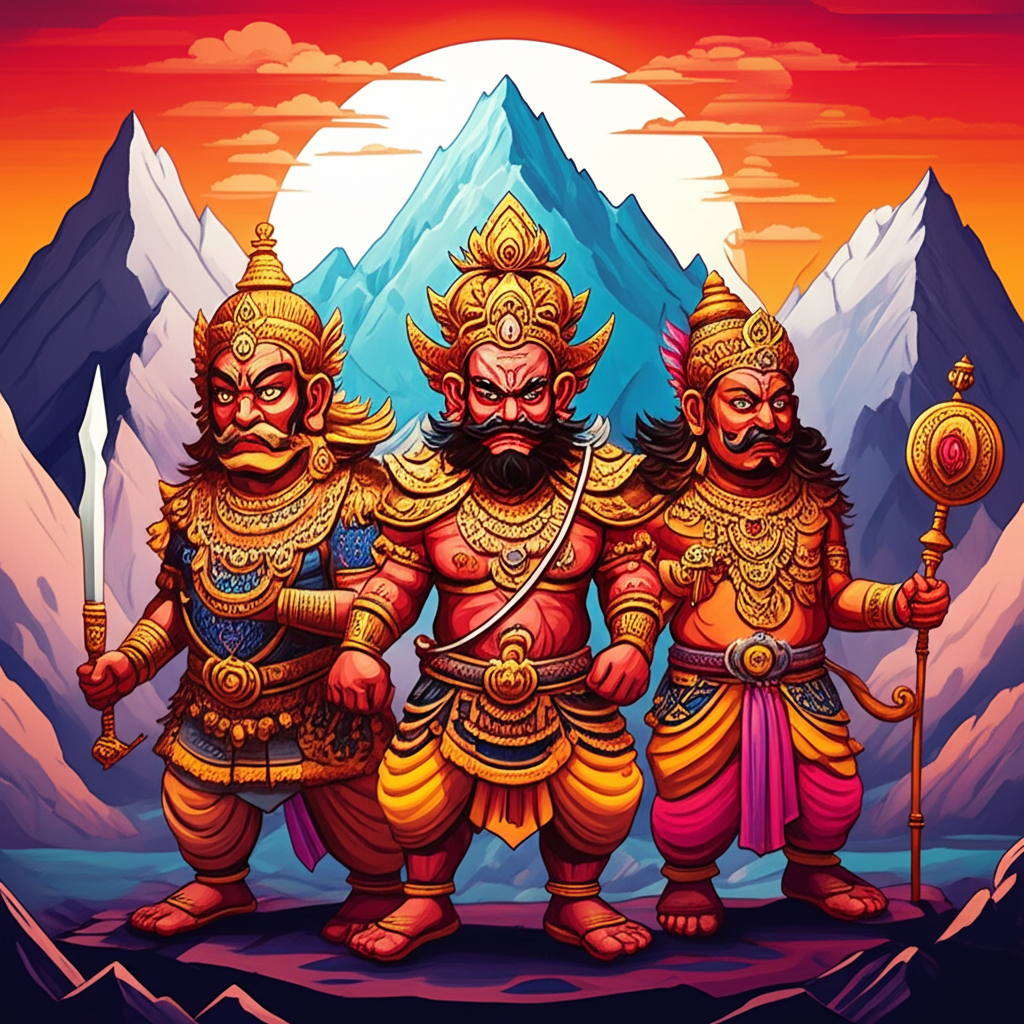
Introduction:
High in the snow-capped Himalayas, shrouded in mist and mystery, lies Mount Kailash, a peak revered as sacred by multiple religions. Around this formidable mountain, whispering winds carry tales of powerful beings, guardians of its sanctity. Among these legendary figures are the Rakshasa, formidable entities whose stories have been passed down through generations in the rich tapestry of Hindu and Buddhist mythology. These are not accounts of actual events, but rather traditional stories told by ancient people to explain the world around them and impart important lessons.
Origins and Cultural Background:
The myths and legends of the Rakshasa find their roots in ancient India, dating back to the Vedic period (c. 1500-500 BCE) and continuing to evolve through the epics like the Ramayana and Mahabharata. The society of that era was deeply intertwined with nature, and people sought to understand the forces of the natural world and the human condition through storytelling. They lived in a world where the line between the tangible and the intangible was often blurred, and where powerful, supernatural beings were believed to influence their lives.
The world view of the people was shaped by a strong belief in dharma (righteous conduct), karma (action and consequence), and the cyclical nature of time. These beliefs permeated their understanding of the universe and their place within it. The stories of the Rakshasa, along with other deities and mythical creatures, served to illustrate the eternal struggle between good and evil, order and chaos, and the importance of maintaining balance in the world.
Character / Creature Description:
Rakshasa are typically depicted as powerful, shape-shifting beings with a fearsome appearance. In many accounts, they possess grotesque features such as sharp claws, fangs, fiery eyes, and a ravenous appetite. They are often described as towering figures, exuding an aura of menace and wielding formidable strength. However, their physical form is not fixed, as they are believed to be capable of assuming different shapes and disguises, making them all the more dangerous.
Symbolically, the Rakshasa represent the darker aspects of human nature – greed, lust, anger, and a disregard for dharma. They embody the forces of chaos and destruction, threatening to disrupt the harmony of the world. While they are often portrayed as villains, some stories also depict Rakshasa with complex motivations and even moments of compassion, highlighting the nuances of good and evil. Their very existence served as a reminder to people to keep their darker impulses in check and strive for righteous behavior.
Main Story / Narrative Retelling:
In the shadow of Mount Kailash, amidst the whispering pines and glacial streams, the Rakshasa once roamed freely. They were children of the night, their power waxing with the darkness, their laughter echoing through the valleys like the howl of the wind. One such Rakshasa was Ravana, a ten-headed king of Lanka, whose ambition knew no bounds.
Ravana was no mere monster; he was a scholar, a musician, and a warrior of immense skill. However, his arrogance and insatiable desire for power led him down a path of darkness. He challenged the gods, terrorized the innocent, and sought to conquer the entire world.
One day, Ravana’s eyes fell upon Sita, the virtuous wife of Prince Rama, a man renowned for his righteousness and courage. Driven by lust and a thirst for conquest, Ravana abducted Sita and carried her away to his fortress in Lanka. This act ignited a conflict that shook the heavens and the earth.
Rama, with the help of the monkey-god Hanuman and an army of loyal allies, embarked on a perilous journey to rescue Sita. The battle between Rama and Ravana was a clash of good and evil, dharma and adharma. Ravana unleashed his Rakshasa warriors, creatures of immense power and ferocity, but Rama and his forces stood firm, their hearts filled with righteousness.
After a long and arduous struggle, Rama confronted Ravana in a final, epic showdown. The battle raged for days, the sky filled with fire and thunder. Finally, with the blessings of the gods, Rama vanquished Ravana, ending his reign of terror and restoring balance to the world. Sita was rescued, and dharma was triumphant.
Symbolism and Meaning:
To the ancient people who told these stories, the Rakshasa represented the ever-present threat of chaos and the darker aspects of human nature. The story of Ravana, in particular, served as a cautionary tale about the dangers of unchecked ambition and the importance of upholding dharma. The battles fought against the Rakshasa symbolized the internal struggles that individuals face in their own lives – the fight against temptation, greed, and the pursuit of selfish desires.
The ultimate triumph of good over evil in these narratives reinforced the belief in the power of righteousness and the importance of striving for moral excellence. The Rakshasa, therefore, were not merely monstrous figures to be feared, but also powerful symbols that embodied the lessons and values that were essential to the cultural and spiritual well-being of the people.
Modern Perspective:
The Rakshasa continue to capture the imagination of people today, appearing in various forms of modern media, including literature, movies, video games, and graphic novels. They are often portrayed as formidable adversaries, challenging the heroes and forcing them to confront their own inner demons. In cultural studies, the Rakshasa are examined as complex symbols that reflect the anxieties and aspirations of the societies that created them. They offer insights into the cultural values, beliefs, and fears of ancient India, and continue to resonate with audiences seeking to understand the human condition.
Conclusion:
The tales of the Rakshasa, guardians of Kailash and figures of ancient lore, offer a fascinating glimpse into the rich tapestry of Hindu and Buddhist mythology. These stories, while not based on reality, provide valuable insights into the cultural values, beliefs, and fears of the people who created them.
As Muslims, we recognize that only Allah is the true Creator and Sustainer of the universe. We understand that the stories of the Rakshasa are part of a cultural heritage, a testament to the power of imagination and the enduring tradition of storytelling. These narratives remind us of the importance of understanding different cultures and appreciating the diverse ways in which people have sought to make sense of the world around them. We can find value in examining these narratives, not as a means of validating mythological beings, but as a means of understanding historical cultures.


