fufufafa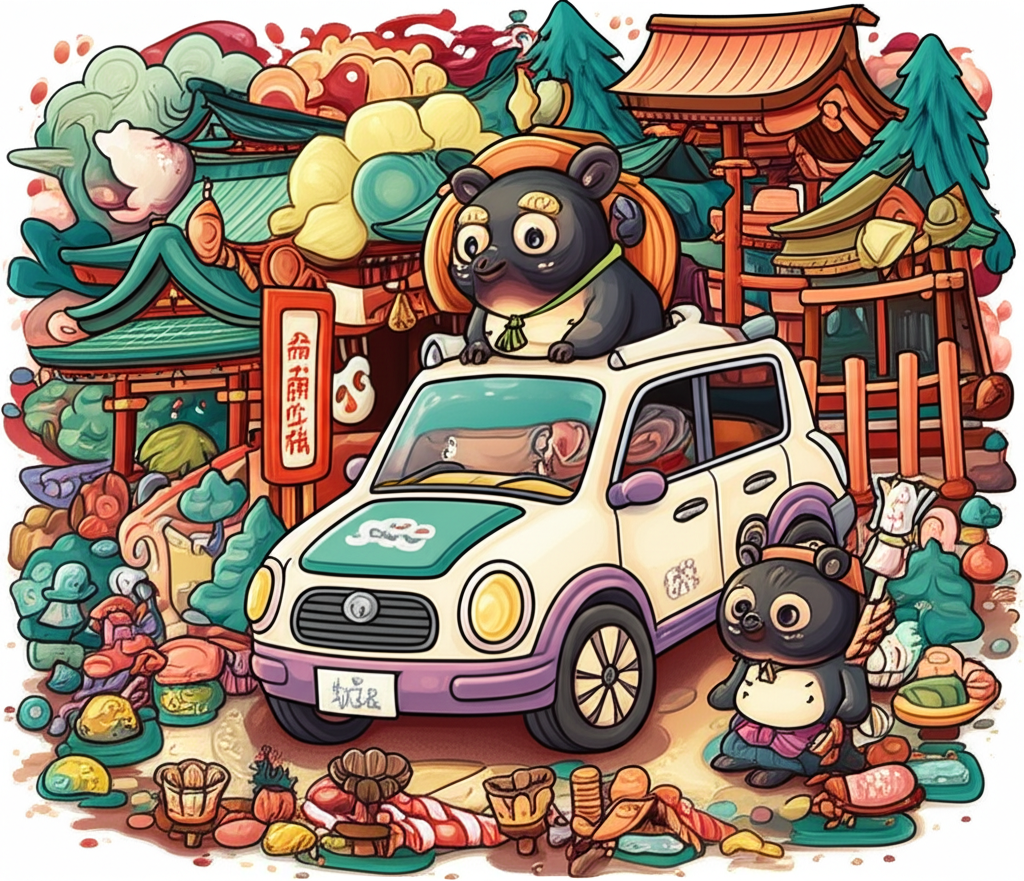
In the emerald heart of Japan, where ancient cedar trees reach for the heavens and the air hums with the memory of ages, lies the Ise Grand Shrine. A site of profound cultural and historical significance, its hallowed grounds have long been the subject of countless stories and legends. Among these captivating narratives, passed down through generations, is a traditional tale told by the ancient people of Japan: a story that speaks of the unseen, whimsical protectors of Ise – the mischievous yet benevolent Tanuki. This is a legend woven from the fabric of folklore, presented purely for cultural, historical, and educational understanding, reminding us of the rich tapestry of human imagination.
Origins and Cultural Background
This particular myth finds its roots deep within the cultural soil of ancient Japan, particularly during periods like the Edo era, when folklore flourished and the natural world was imbued with spiritual significance. The society of that time lived in close harmony with nature, their lives intricately tied to the rhythms of the seasons, the bounty of the land, and the mysteries of the forests. For the people of ancient Japan, the world was not merely a collection of physical objects but a vibrant realm teeming with unseen forces and spirits, known as kami.
Their worldview was shaped by Shintoism, Japan’s indigenous spiritual tradition, which revered nature in all its forms – mountains, rivers, trees, and even animals – as potential abodes or manifestations of kami. Sacred places like the Ise Grand Shrine, dedicated to the sun goddess Amaterasu Omikami, were seen as powerful conduits between the earthly and the divine. In such a world, where the boundaries between the mundane and the miraculous were fluid, it was natural for people to envision clever creatures like the Tanuki taking on roles of guardianship, albeit in their own unique, often trickster-like fashion. They believed that these stories offered explanations for the unexplained, moral lessons, and a deeper connection to the living world around them.
Character Description: The Enigmatic Tanuki
The central figures of this legend are the Tanuki, or Japanese raccoon dogs. In folklore, they are depicted not as ordinary animals, but as master shapeshifters and illusionists, possessing supernatural powers. Visually, Tanuki are often portrayed with large, round bellies, jovial expressions, and sometimes, with a sake bottle in one hand and a promissory note or ledger in the other, topped with a straw hat. These attributes are deeply symbolic rather than literal.
Their prominent belly, for instance, symbolizes generosity and good fortune, while the sake bottle represents earthly pleasures and the ability to enjoy life. The ledger signifies trustworthiness and accountability, and the straw hat offers protection from trouble. But above all, the Tanuki are known for their cunning, their ability to transform into anything or anyone, and their penchant for good-natured trickery. They are not malevolent spirits but rather embody the unpredictable, humorous, and sometimes bewildering aspects of nature itself. They are often seen as bringers of prosperity and good luck, capable of both mischief and wisdom, serving as a reminder that strength can come in unexpected forms.
Main Story: The Unseen Protectors of Ise
The air around Ise Grand Shrine, it is said, has always possessed a unique clarity, a sacred stillness that both calms the heart and quickens the spirit. For centuries, the priests and priestesses maintained the purity of its rituals, and pilgrims traversed great distances to offer their respects. Yet, even in such a hallowed place, ancient tales whisper of subtle threats, not always of physical invasion, but of forces that sought to disrupt the delicate balance of its spiritual energy or exploit its reverence for selfish gain.
One such legend recounts a period of growing unease. A band of opportunistic merchants, driven by insatiable greed, began to frequent the pathways leading to Ise. They cared little for the shrine’s sanctity, instead seeking to profit from the devout pilgrims, peddling shoddy goods and spreading rumors that sowed discord. Their presence, though seemingly harmless, began to cast a subtle shadow over the serene atmosphere, threatening to diminish the shrine’s spiritual vibrancy.
Deep within the ancient cedar groves that fringed the sacred precinct, lived a venerable clan of Tanuki. Their elder, a wise old creature with eyes that sparkled with ancient mirth, had observed the changes. He saw the genuine devotion of the pilgrims being overshadowed by the clamor of commerce and the whispers of deceit. The Ise Grand Shrine was a place of purity, and its essence was being subtly tarnished. Direct confrontation was not the Tanuki way; their strength lay in wit and illusion.
One moonless night, the elder Tanuki gathered his kin. "The balance shifts," he rumbled, his voice like dry leaves skittering across the forest floor. "The sacred grounds feel the touch of avarice. We must act, not with claws or teeth, but with our true power – the power of illusion and cleverness."
Over the following weeks, the greedy merchants found their schemes unraveling in the most peculiar ways. One morning, a merchant awoke to find his entire stock of textiles had transformed into a pile of autumn leaves, only to revert to cloth when he was far from the shrine. Another, attempting to cheat a pilgrim, found his coins replaced with smooth river stones, which magically became coinage again once the pilgrim had passed. Paths they thought led to lucrative spots instead led them in endless circles, their voices echoing unanswered through the deepening forest mist.
On one particularly audacious attempt, a group of merchants sought to set up a permanent, illicit market stall directly on the approach to the inner shrine. As they hammered their planks, a colossal Tanuki, larger than any man, suddenly materialized before them. Its belly swayed like a great drum, and its eyes, though twinkling, held a sternness that chilled them to the bone. It didn’t speak, but merely pointed a single paw towards the shrine, then to the dense forest, and then back to their terrified faces. The message was clear: this sacred ground was not for their earthly schemes. Before they could even utter a word, the giant Tanuki dissolved into a swirling mist, leaving behind only the faint scent of sake and damp earth.
Terrified and utterly baffled, the merchants abandoned their plans, their greed finally overcome by superstitious dread. They fled Ise, never to return, spreading tales of the shrine’s peculiar, invisible guardians. From that day forward, the Ise Grand Shrine regained its peaceful sanctity, its sacred energy undisturbed. The Tanuki, unseen and unacknowledged by human eyes, had fulfilled their duty, their quiet, whimsical protection ensuring the purity of the hallowed grounds. And so, the legend holds, they continued to watch over Ise, their tricks and illusions a subtle barrier against those who would disrespect its profound spiritual essence.
Symbolism and Meaning
To the ancient people of Japan, this myth would have represented several profound concepts. The Tanuki’s role as guardians, while unconventional, underscored the belief that protection could come from unexpected sources, often from the natural world itself. It symbolized nature’s subtle but powerful ability to maintain balance and repel forces that threaten its harmony. The story also served as a moral compass, cautioning against greed and disrespect for sacred spaces. The merchants’ downfall, orchestrated by clever illusions rather than violence, highlighted the idea that wisdom and wit could overcome brute force or selfish ambition. Furthermore, the Tanuki’s shapeshifting abilities likely reflected the unpredictable and mysterious aspects of life, reminding people that not everything is as it appears and that hidden powers are at play in the world. It reinforced the reverence for kami and the understanding that even the most jovial creatures could be agents of divine order.
Modern Perspective
Today, the figure of the Tanuki continues to captivate the Japanese imagination and has found a vibrant presence in modern culture. While no longer seen as literal guardians, they remain beloved characters in literature, movies, and video games. Perhaps most famously, the animated film Pom Poko by Studio Ghibli vividly portrays Tanuki as shapeshifting protectors of their forest home against human encroachment, echoing their traditional folklore roles. They appear in popular video games like Animal Crossing and the Super Mario series, often associated with power-ups or quirky shopkeepers. Statues of Tanuki, complete with their symbolic sake bottles and ledgers, are common sights outside restaurants and shops across Japan, believed to bring good fortune and prosperity. In essence, the Tanuki have transitioned from figures of folklore to cherished cultural icons, representing good luck, resilience, and the enduring charm of traditional Japanese storytelling.
Conclusion
The legend of the Tanuki as guardians of the Ise Grand Shrine is a beautiful testament to the power of human imagination and the rich cultural heritage of Japan. It is a story, like countless others across the globe, born from ancient worldviews, shared through generations, and enjoyed for its descriptive narrative and symbolic depth. As Muslims, we recognize that only Allah is the true Creator and Sustainer, and our belief is firmly rooted in His Oneness and omnipotence. This understanding allows us to appreciate such myths not as truths to be believed, but as fascinating insights into diverse cultural expressions, the universal human need for narrative, and the creative ways in which people have sought to understand and interact with their world. The tale of the Tanuki guardians stands as a vibrant thread in the vast, intricate tapestry of global storytelling, reminding us of the enduring legacy of imagination.