fufufafa
The mists that cling to the Baltic Sea, particularly around the archipelago of the Åland Islands, have long been the cradle of tales spun by generations of seafaring peoples. Among these narratives, passed down through whispered warnings and fireside stories, are the legends of the Rusalka, ethereal beings said to inhabit the waters surrounding islands like Buyan. These are not accounts of historical events or divine pronouncements, but rather the imaginative creations of ancient minds, attempts to understand and explain the mysteries of a world dominated by the vast, untamed power of nature.
To understand the genesis of the Rusalka myth, one must journey back to a time when the natural world was perceived as a living, breathing entity, imbued with spirits and forces beyond human comprehension. The ancient Baltic peoples, living in close proximity to the sea and dense forests, viewed the world as a delicate balance between the visible and the invisible. Their lives were intricately tied to the rhythms of the seasons, the bounty of the ocean, and the potential dangers lurking within its depths. This worldview fostered a rich tapestry of folklore, where every rustle of leaves, every ripple on the water, could be attributed to the presence of unseen entities. The Rusalka, in this context, emerged as a personification of the allure and peril of the watery realms, a reflection of the awe and apprehension these ancient communities felt towards the sea.
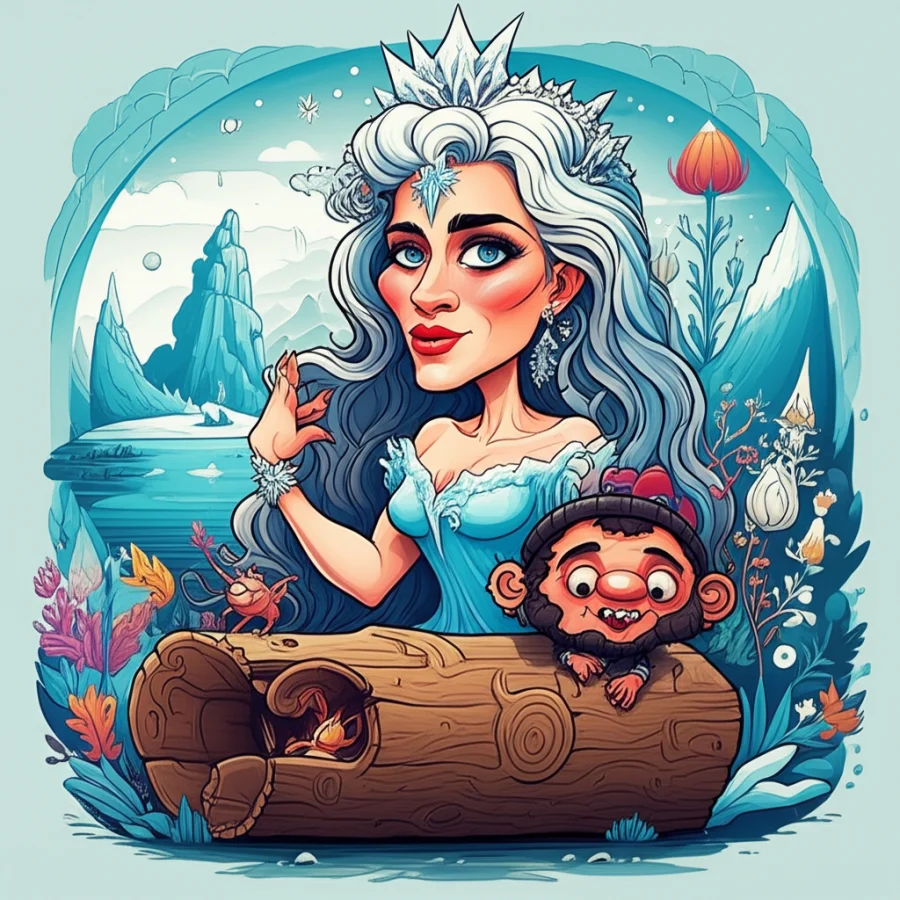
The Rusalka, as depicted in these traditional tales, is a creature of striking duality. Often described as a beautiful young woman, her appearance is marked by a captivating, almost otherworldly grace. Her hair, typically long and flowing, is said to be the color of seaweed or moonlight, shimmering with an unearthly luminescence. Her eyes, deep and mesmerizing, are often portrayed as reflecting the very hues of the sea, from the tranquil azure to the stormy grey. Yet, beneath this alluring exterior lies a profound and often tragic nature. They are creatures of the water, intrinsically linked to its ebb and flow, its hidden currents, and its silent depths. Their symbolic attributes are manifold: they represent the seductive beauty of the unknown, the ephemeral nature of life, and the potent, often destructive, power of the natural world. They are not inherently evil, but rather beings governed by their own mysterious laws and desires, capable of both enchantment and immense danger.
The narrative of the Rusalka of Buyan Island often unfolds as a cautionary tale, a story designed to instill respect for the sea and its unseen inhabitants. Imagine a small fishing village nestled on the shores of Buyan, its inhabitants hardy folk whose lives are dictated by the tides. One summer, a particularly harsh drought gripped the land, withering crops and leaving the wells dry. Desperate, the villagers turned their prayers to the sea, hoping for relief. It was then that a young maiden, renowned for her beauty and her daring spirit, ventured out in a small skiff, determined to seek the aid of the water spirits, the Rusalka, said to dwell in a secluded cove near Buyan’s northern cliffs.
As she rowed further from shore, the water grew unusually calm, the air thick with an inexplicable silence. Suddenly, from the emerald depths, figures began to rise. They were the Rusalka, their forms shimmering like heat haze above the water. They surrounded her skiff, their voices like the gentle lapping of waves, singing melodies that were both hauntingly beautiful and disarmingly sad. The maiden, mesmerized by their ethereal presence and their mournful songs, felt a strange pull, a longing she could not explain. One of the Rusalka, her hair like spun silver, extended a pale hand, beckoning the maiden closer. The girl, caught in the spell of their allure, leaned over the side of her boat. In that instant, the seemingly placid water surged, and with a gentle, almost regretful embrace, the Rusalka drew her into the depths. The skiff, now empty, drifted back towards the shore, a silent testament to the maiden’s fate. The villagers, heartbroken and bewildered, never saw her again. Some whispered that the Rusalka, moved by the maiden’s bravery or perhaps her sorrow, had taken her to their watery domain, where she now danced among them, forever bound to the sea. Others believed she had been lured to her doom, a sacrifice to appease the angered spirits of the water.
This tale, like many ancient myths, served multiple symbolic purposes for the people who told it. The Rusalka could be seen as a representation of nature’s untamed power, particularly the unpredictable and often dangerous nature of the sea. Their beauty symbolized the allure of the unknown, drawing individuals towards experiences that could be both wondrous and fatal. The maiden’s fate could be interpreted as a warning against hubris or excessive curiosity, a reminder of the boundaries between the human and the spiritual worlds. Furthermore, the Rusalka’s connection to water might have symbolized fertility and the cycle of life and death, with the sea both nurturing and claiming life. The mournful songs could represent the inherent sorrow and melancholy that can accompany existence, a reflection of the hardships and losses faced by these communities.
In contemporary times, the Rusalka has transcended its folkloric origins to become a compelling figure in various forms of modern storytelling. They appear in literature, often as tragic figures or supernatural antagonists, their enigmatic nature lending themselves to complex characterizations. In popular culture, they have been reimagined in films and video games, their aquatic mystique and haunting beauty continuing to captivate audiences. Within academic circles, the Rusalka serves as a valuable subject for cultural studies, offering insights into the beliefs, fears, and imaginative landscapes of ancient societies. These modern interpretations, while drawing inspiration from the original myths, often explore themes of loss, isolation, and the complex relationship between humanity and the natural world.
It is crucial to reiterate that the Rusalka is a creation of ancient human imagination, a traditional story woven from the threads of folklore and cultural understanding. As Muslims, we recognize that the ultimate Creator and Sustainer of all existence is Allah (SWT). These narratives, while rich in cultural heritage and illustrative of human creativity, do not represent a belief system to be adopted or validated. Instead, they serve as fascinating windows into the past, reminding us of the enduring power of storytelling, the human need to make sense of the world around us, and the vast and diverse tapestry of cultural expression that enriches our understanding of humanity. The whispers of the Rusalka, carried on the Baltic winds, are not calls to worship, but rather echoes of a bygone era, a testament to the enduring legacy of human imagination and the power of shared narratives.