
 fufufafa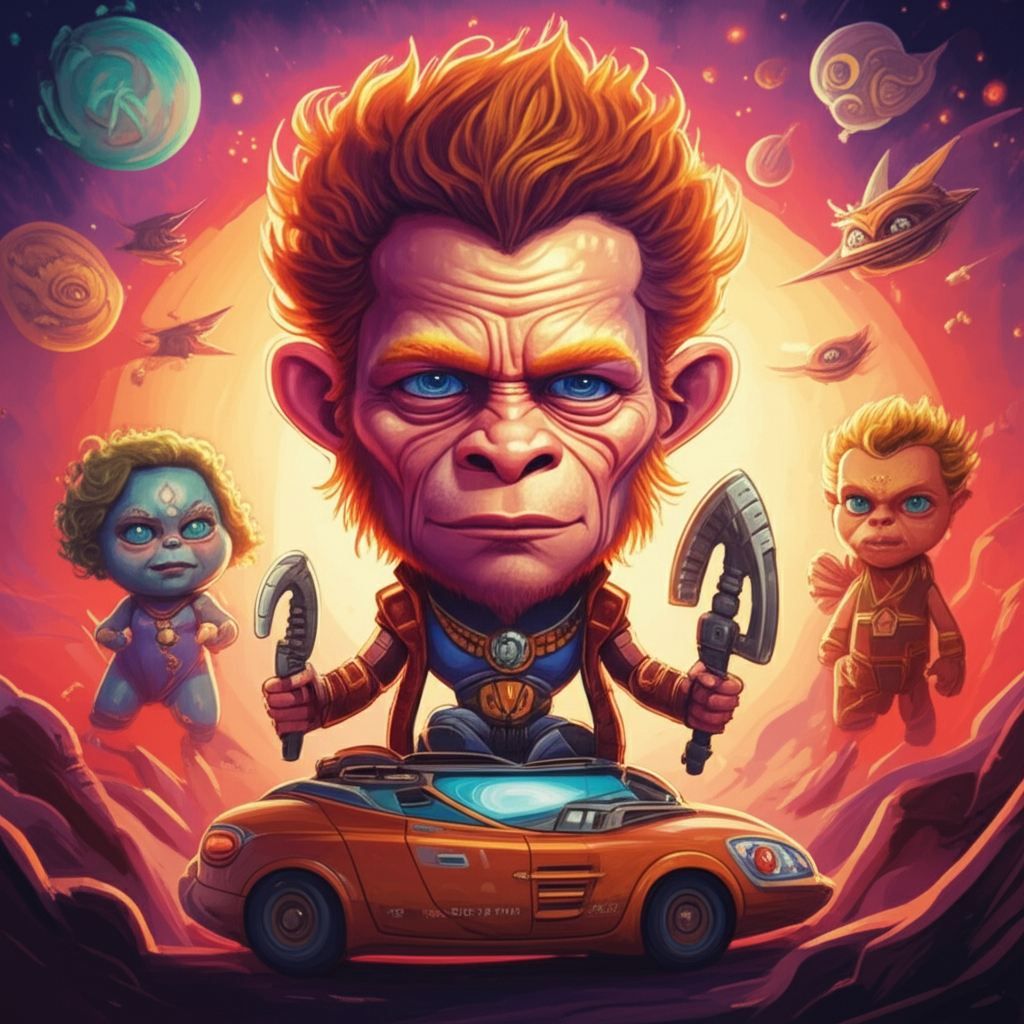
Introduction
The legend of the Vanara, the extraordinary forest-dwellers who became pivotal allies to Prince Rama, is a cornerstone of ancient Indian storytelling. This captivating narrative originates from Hindu mythology, primarily recounted in the revered Sanskrit epic, the Ramayana. It is a traditional story, woven by the creative imagination of ancient people, offering a window into their worldview and cultural values. This account is presented solely for its cultural, historical, and educational significance, acknowledging it as a product of folklore and not a representation of reality.
Origins and Cultural Background
The myth of the Vanara emerged within the vibrant cultural landscape of ancient India, during an era often associated with the Vedic and Epic periods, stretching back millennia. In this society, life was deeply intertwined with nature, and the boundaries between the human, animal, and divine realms were often fluid in storytelling. People of that time viewed the world through a lens of cosmic order, or Dharma, where righteous conduct was paramount and its violation could lead to widespread chaos.
Their worldview often incorporated the concept of avatars – descents of divine beings into mortal forms to restore balance and vanquish evil. Nature itself was imbued with spiritual significance, and animals were frequently portrayed with human-like intelligence, speech, and moral capacities, reflecting a deep reverence for the natural world and an understanding of interconnectedness. These stories served not only as entertainment but also as moral compasses, teaching lessons about duty, sacrifice, loyalty, and the eternal struggle between good and malevolence.
Character / Creature Description
The Vanara are fascinating figures within the Ramayana, often described as a race of forest-dwelling humanoids. While frequently depicted with ape-like features – powerful builds, long tails, agility, and immense strength – they possess distinctly human attributes: the ability to speak, reason, form complex societies, and adhere to a moral code. They are not merely animals; they are intelligent beings with a distinct culture, led by a king, Sugriva, and boasting heroes like the formidable Hanuman.
Symbolically, the Vanara represent a myriad of virtues. Their immense strength and agility symbolize the raw, untamed power of nature, yet their unwavering loyalty and devotion, particularly exemplified by Hanuman, highlight the potential for even the most formidable beings to act with profound selflessness and dedication. They embody courage in the face of overwhelming odds, resourcefulness in problem-solving, and the power of collective effort. Their connection to the forest also subtly suggests a harmonious existence with the natural world, a partnership that proves crucial in the narrative.
Main Story / Narrative Retelling
The saga of the Vanara truly begins with a moment of profound despair for Prince Rama of Ayodhya. Exiled from his kingdom due to a complex web of familial promises, Rama, his devoted wife Sita, and his loyal brother Lakshmana found solace in the tranquil forests. Their peace was shattered when the formidable demon king Ravana, ruler of Lanka, abducted Sita through deceit, spiriting her away to his island fortress. Heartbroken and determined, Rama and Lakshmana embarked on a desperate search that led them deep into the southern forests, far from the familiar lands of Ayodhya.
It was in this remote wilderness that destiny intervened. The brothers encountered Hanuman, a powerful and wise Vanara, who served the exiled Vanara king, Sugriva. Sugriva, much like Rama, was a victim of injustice; his elder brother, Vali, had usurped his throne and banished him. A pact was forged: Rama, with his unparalleled skill in archery, would help Sugriva reclaim his kingdom from Vali. In return, Sugriva pledged the entire might of his Vanara army to aid Rama in finding and rescuing Sita.
True to his word, Rama assisted Sugriva in a fierce confrontation with Vali, leading to Sugriva’s rightful restoration as king of Kishkindha. With his throne secured, Sugriva, bound by his promise, gathered his vast legions of Vanara warriors. From this assembly, Hanuman, endowed with immense strength and the ability to fly, was chosen to lead the reconnaissance mission to Lanka. His incredible journey across the ocean, his daring infiltration of Ravana’s formidable city, his discovery of Sita imprisoned in the Ashoka Vatika, and his subsequent message of hope, became a legendary feat of courage and devotion.
Upon Hanuman’s return with news of Sita’s whereabouts, the grand challenge of reaching Lanka remained. The ocean stretched imposingly between the mainland and Ravana’s island. Under the brilliant guidance of the Vanara architect Nala, the entire army began an monumental undertaking: the construction of a colossal bridge, the Setu, across the churning waters. With incredible strength and coordination, the Vanara hauled massive boulders and trees, casting them into the sea, where they miraculously floated, forming a path to Lanka.
The war that ensued was epic in scale. The Vanara army, a force of unparalleled numbers and ferocity, clashed with Ravana’s formidable demon legions. Each Vanara warrior, from the mightiest general to the lowliest foot soldier, fought with unwavering loyalty to Rama and a fierce resolve to rescue Sita and uphold Dharma. They faced terrifying demons, powerful illusions, and devastating weapons, yet their courage never faltered. Hanuman, Sugriva, Angada, Jambavan, and countless others distinguished themselves with acts of extraordinary bravery and sacrifice.
Finally, after a prolonged and arduous conflict, Ravana was defeated, and Sita was liberated. With their mission accomplished, Rama, Sita, Lakshmana, and their Vanara allies began the triumphant journey back to Ayodhya. The Vanara, having played an indispensable role in restoring justice and rightful rule, returned to their forest homes, leaving behind an indelible legacy of unwavering loyalty and courage.
Symbolism and Meaning
To the ancient people who first told and heard the tale of the Vanara, these figures represented much more than just powerful forest creatures. They symbolized the profound strength and unwavering loyalty that could emerge from unexpected alliances. The Vanara’s unity in diversity, bringing together different individuals for a common, righteous cause, highlighted the importance of collective action and perseverance.
Hanuman, in particular, became an embodiment of selfless devotion, immense strength, and unwavering faith, demonstrating that even seemingly insurmountable obstacles could be overcome with courage and dedication. The Vanara’s alliance with Rama also underscored the idea that even those perceived as "other" – forest-dwellers rather than city-folk – could possess the noblest virtues and contribute significantly to upholding Dharma. Their story reflected a belief in the inherent goodness of nature and its potential to ally with righteousness, acting as guardians against chaos and injustice.
Modern Perspective
Today, the story of the Vanara continues to resonate deeply, albeit through a different lens. In modern interpretations, the Ramayana and the Vanara are explored as rich sources of cultural heritage, moral lessons, and imaginative storytelling. They feature prominently in literature, graphic novels, animated films, television series, and video games, often reinterpreted to suit contemporary audiences while retaining their core narrative and symbolic weight.
Scholars and cultural critics analyze the Vanara for their narrative complexity, their roles in defining archetypes of loyalty and heroism, and their contribution to the epic’s overarching themes. Rather than being seen as literal beings, they are appreciated as powerful metaphors for human potential, the bonds of friendship, the struggle against adversity, and the enduring appeal of a narrative where good ultimately triumphs. Their story is a testament to the power of imagination and the enduring human desire for tales of courage and justice.
Conclusion
The "Guardians of Ayodhya: Vanara" is a magnificent and enduring narrative from Hindu mythology, offering a captivating glimpse into the cultural imagination of ancient India. It is essential to reiterate that this is a traditional story, a product of human creativity and cultural expression, and not a factual account or a basis for belief or worship. As Muslims, we recognize that Allah alone is the true Creator and Sustainer of all existence, and our reverence is directed solely towards Him. The Vanara, like all mythological figures, exist within the realm of human narrative.
Nevertheless, the legacy of the Vanara endures as a powerful testament to the universal human themes of loyalty, courage, and the pursuit of justice. It reminds us of the profound value in understanding and respecting diverse cultural heritages, recognizing the imaginative depth and storytelling traditions that enrich humanity’s collective experience across the globe.


