
 fufufafa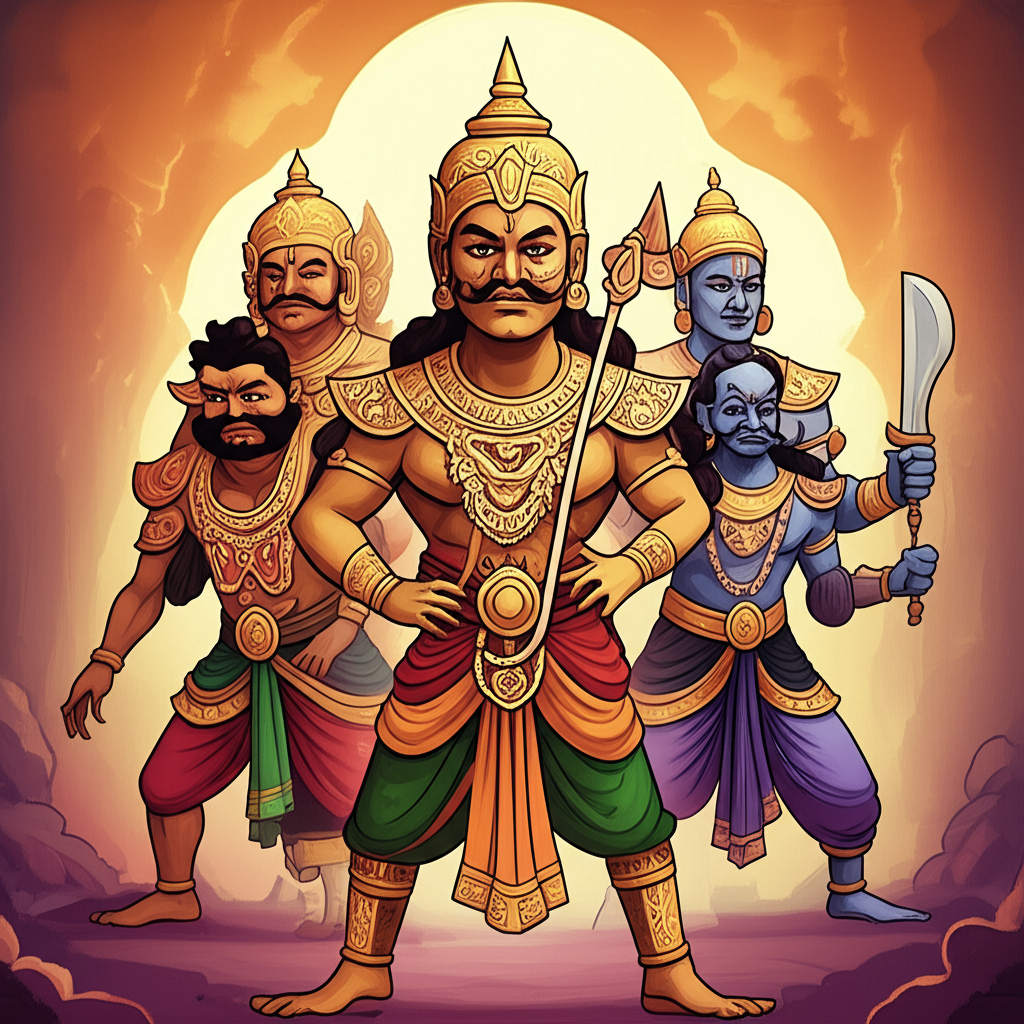
Introduction
Across the vast and ancient tapestry of Indian civilization, stories have been woven and passed down through countless generations, shaping the cultural landscape and imparting wisdom. Among these narratives, none shine brighter or delve deeper into the human condition than the epic tales found within Hindu mythology. This article explores one such fascinating thread, focusing on a unique interpretation of "Guardians of Ayodhya: Rakshasa." It is crucial to understand from the outset that this is a traditional story, born from the imaginations and spiritual reflections of ancient people, crafted to explore themes of good, evil, duty, and destiny. It is presented here purely for cultural, historical, and educational understanding, offering a glimpse into the rich narrative heritage of a bygone era.
Origins and Cultural Background
The myths surrounding Ayodhya and the beings known as Rakshasas are deeply embedded in the cultural fabric of ancient India, particularly flourishing during the period in which epics like the Ramayana were composed and orally transmitted. This was a time when society was profoundly connected to nature, the cosmic order, and a complex pantheon of deities. People viewed the world as a vibrant, interconnected realm where gods, sages, humans, and various supernatural beings interacted. The lines between the mundane and the miraculous were often blurred, and stories served as explanations for natural phenomena, moral compasses, and reflections on human struggles.
In this era, societal values were often rooted in the concept of dharma – righteousness, duty, and cosmic law – and karma, the belief that actions in this life determine one’s fate. Life was challenging, marked by both periods of prosperity and devastating conflicts. Myths provided a framework for understanding these complexities, offering solace, inspiration, and cautionary tales. The idea of epic struggles between forces of order and chaos, represented by divine beings and formidable demons, was central to their worldview, reinforcing the importance of upholding virtue against all odds.
Character / Creature Description: The Rakshasa
In ancient Indian mythology, Rakshasas are a diverse and formidable race of beings, often depicted as powerful, shape-shifting entities. Their traditional portrayal is frequently monstrous: colossal in stature, with dark or discolored skin, sharp fangs protruding from their mouths, fiery eyes, and disheveled hair. They possess immense physical strength, magical abilities, and a penchant for chaos, often described as night-prowling beings who disturb sacrifices, torment ascetics, and devour human flesh. They embody destructive forces, raw power, and a rejection of the established cosmic order.
Symbolically, Rakshasas represent the darker aspects of existence and the human psyche. They can symbolize untamed nature, the destructive potential of unchecked ambition, wrath, greed, and envy. They are the obstacles that challenge heroes, the temptations that test morality, and the chaos that threatens to engulf order. However, within the vast mythology, there are rare instances where a Rakshasa transcends this typical villainous role, either through a curse, a boon, or a profound moral choice. It is in this unique context that we explore a Rakshasa as a "Guardian of Ayodhya" – not as a literal gatekeeper, but as a figure whose actions, despite his lineage, ultimately served the cause of righteousness embodied by Ayodhya and its king. This figure is Vibhishana, whose story illuminates the complex interplay of duty, family, and dharma.
Main Story / Narrative Retelling: Vibhishana’s Choice
The ancient city of Ayodhya, bathed in the golden glow of prosperity, was the revered capital of the Kosala kingdom, ruled by the noble King Dasharatha and later, his virtuous son, Rama. Its very name, meaning "not to be warred against," spoke of its peace and impregnability. Yet, even such an ideal realm faced threats, not always at its borders, but from the encroaching darkness that sought to disrupt cosmic balance. Among the most potent of these forces were the Rakshasas, particularly their formidable king, Ravana, who reigned from the distant, opulent island kingdom of Lanka.
Ravana, a being of immense power, intellect, and devotion to the god Shiva, had allowed his immense strength and boons to corrupt him into an arrogant and tyrannical ruler. He embodied the quintessential Rakshasa, defying gods and sages alike. But within his own lineage, there existed a stark contrast: his youngest brother, Vibhishana.
Unlike his brothers, Ravana and Kumbhakarna, Vibhishana was born with a profound sense of dharma – righteousness and moral duty. From a young age, he dedicated himself to spiritual practices, seeking wisdom and purity rather than power or material indulgence. While his elder brother, Ravana, reveled in conquest and self-aggrandizement, Vibhishana cultivated a calm mind and a heart devoted to justice. He was a Rakshasa by birth, possessing their formidable might, but his spirit was aligned with the principles that Ayodhya held dear.
The epic conflict that brought Vibhishana into the orbit of Ayodhya’s destiny began with Ravana’s heinous abduction of Sita, the beloved wife of Prince Rama of Ayodhya. Imprisoned in Lanka, Sita’s plight plunged the world into despair and ignited Rama’s righteous fury. As Ravana prepared for war against Rama, Vibhishana, with a heavy heart, made repeated attempts to counsel his elder brother. He pleaded with Ravana to return Sita to Rama, warning him of the catastrophic consequences of his unrighteous actions. "Brother," he implaled, "abandon this path of destruction! Return Sita, for Dharma will always prevail, and even the mightiest empire built on injustice is destined to fall."
But Ravana, blinded by arrogance and rage, scorned his brother’s wisdom. He ridiculed Vibhishana for his perceived weakness and devotion to righteousness, banishing him from Lanka. It was a heart-wrenching moment for Vibhishana, forced to choose between familial loyalty and the unwavering call of dharma. Without hesitation, he chose the latter.
Crossing the vast ocean, Vibhishana sought refuge with Rama, the exiled prince of Ayodhya. Though initially met with suspicion by Rama’s allies – a Rakshasa seeking alliance with the very one who vowed to destroy his kin – Rama, with his innate wisdom, recognized Vibhishana’s sincere devotion to righteousness. Rama welcomed him, not as an enemy, but as a virtuous ally.
Throughout the arduous war that followed, Vibhishana proved invaluable. He provided Rama with crucial intelligence about Lanka’s defenses, Ravana’s weaknesses, and the strategies of the Rakshasa army. His insights, born from his knowledge of his own people, were instrumental in Rama’s eventual victory. Though he never stood guard at Ayodhya’s physical gates, his allegiance to Rama, the rightful king and guardian of Ayodhya’s ideals, made him a profound "Guardian of Ayodhya" in spirit. His actions ensured the triumph of dharma, the safe return of Sita, and the ultimate restoration of Rama to his throne in Ayodhya, thereby safeguarding the very essence of that righteous kingdom.
Symbolism and Meaning
Vibhishana’s narrative is rich with symbolism. He embodies the profound struggle between good and evil that resides within every individual, regardless of their lineage or circumstances. Born into a race often associated with darkness and malevolence, Vibhishana’s unwavering commitment to dharma highlights the power of moral choice and the courage required to stand against injustice, even when it means opposing one’s own family. He symbolizes the idea that true allegiance lies not with blood or power, but with righteousness and truth. His story teaches that salvation and honor can be found through discernment and integrity, even amidst profound corruption.
More broadly, the Rakshasas in these tales often symbolize the challenges and obstacles that confront humanity on its journey towards virtue. They represent the internal vices – arrogance, greed, lust for power – as well as external threats that test one’s resolve and character. Ayodhya itself, in this context, symbolizes the ideal kingdom, a realm of order, justice, and prosperity, representing the harmonious state that can be achieved when dharma is upheld. The narrative of Vibhishana, therefore, underscores the importance of moral discernment and the eternal struggle to protect and uphold righteous principles against the forces of chaos and corruption.
Modern Perspective
In contemporary times, the figures of Rakshasas and particularly characters like Vibhishana continue to resonate deeply in popular culture and academic discourse. No longer viewed as literal beings to be feared, they are interpreted through the lens of literature, psychology, and cultural studies. Rakshasas frequently appear in modern adaptations of the Ramayana – in novels, comic books, animated series, films, and video games – often portrayed as powerful, complex antagonists or, in Vibhishana’s case, as a compelling anti-hero or a beacon of moral integrity.
In these modern retellings, Rakshasas are often explored for their psychological depth, representing not just external evil but also the darker aspects of human nature. Vibhishana, in particular, is celebrated as a figure of conscience, loyalty to principles over family, and the courage to make difficult moral choices. Cultural studies examine these myths for insights into ancient societal values, ethical dilemmas, and the enduring human quest for justice and meaning. They offer a rich canvas for exploring themes of identity, belonging, betrayal, and redemption, demonstrating the timeless appeal and adaptability of these ancient narratives.
Conclusion
The story of Vibhishana, the Rakshasa who chose righteousness and allied with Rama, serves as a powerful testament to the rich storytelling tradition of ancient India. It is a cultural narrative, a product of human imagination and philosophical inquiry, crafted to explore complex moral questions and societal values. It is not a belief system to be adopted or a claim of divine power, but rather a fascinating piece of cultural heritage.
As Muslims, we recognize that only Allah is the true Creator and Sustainer, and all power and existence emanate solely from Him. Our faith teaches us that there is no god but Allah, and He is unique in His attributes and power. This understanding allows us to appreciate diverse cultural narratives for their artistic merit and historical significance, without compromising our monotheistic beliefs. The "Guardians of Ayodhya: Rakshasa" story, like countless other myths worldwide, reminds us of the enduring human impulse to create narratives that explain the world, impart lessons, and reflect on the eternal struggle between light and darkness. It stands as a testament to the universal power of storytelling to preserve cultural memory, ignite the imagination, and offer insights into the values and worldview of civilizations past.


