
 fufufafa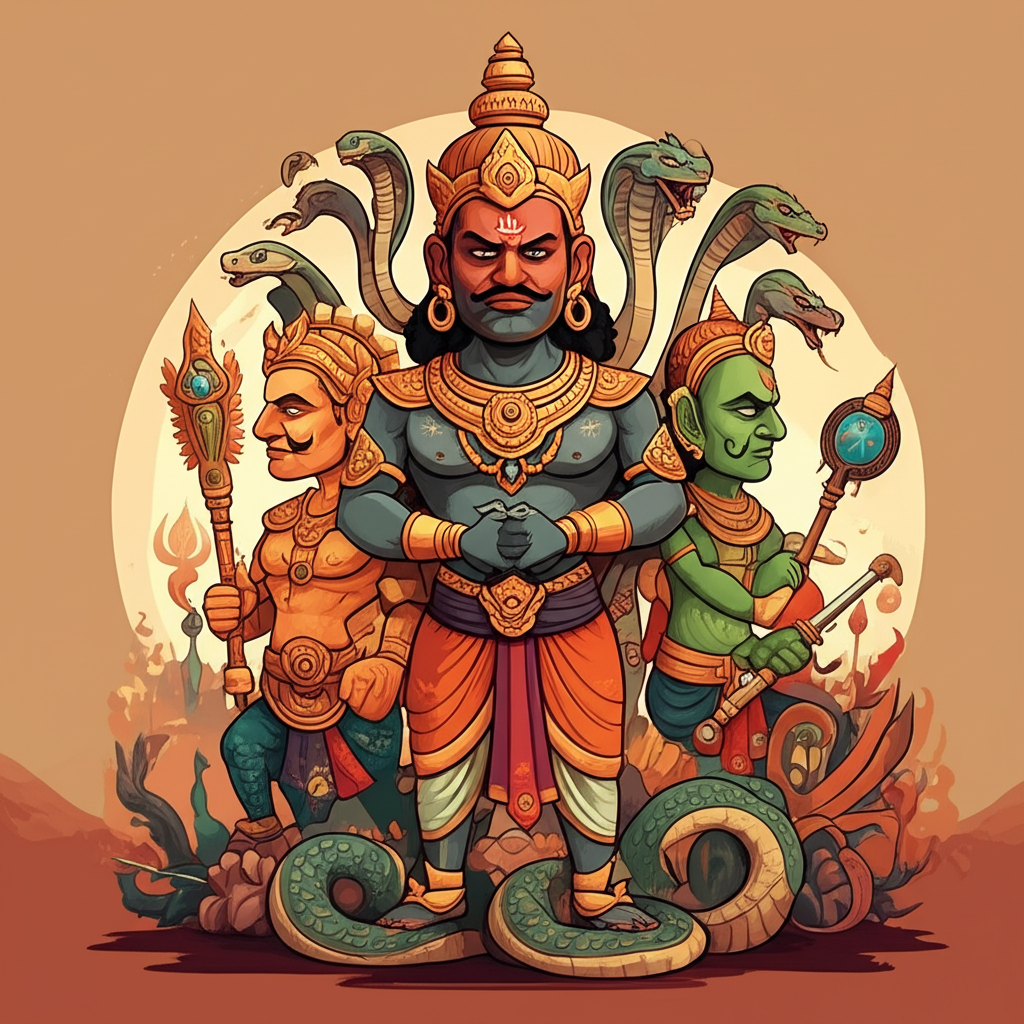
Introduction
Deep within the rich tapestry of ancient Indian mythology lies a fascinating array of celestial beings, mythical creatures, and legendary guardians. Among these, the Nagas, enigmatic serpent-beings, hold a significant place, particularly in stories connected to sacred cities and revered landscapes. This article delves into a traditional narrative from these ancient traditions, exploring the concept of Nagas as the mystical "Guardians of Ayodhya." It is crucial to understand from the outset that this is a traditional story, woven by ancient people, passed down through generations, and intended for cultural and educational understanding, not as a reflection of reality or an object of belief.
Origins and Cultural Background
The myth of the Naga as a guardian of Ayodhya emerges from the heartland of ancient India, a region steeped in spiritual and philosophical thought. This particular legend finds its roots within the vast body of Hindu mythological texts, particularly those associated with the epic Ramayana and various Puranas, which chronicle the life of Lord Rama and the history of his illustrious kingdom. The cultural era in which such myths flourished was characterized by a profound connection to nature, where rivers, forests, and mountains were not merely geographical features but were imbued with divine presence and spiritual significance.
In this ancient society, largely agrarian and deeply contemplative, people viewed the world as an intricate web of interconnected forces. They believed in a cosmos populated by gods, goddesses, celestial beings, and various life forms, all playing a role in the grand cosmic drama. The boundary between the human and the divine, the mundane and the magical, was often fluid. Natural phenomena—from the life-giving monsoon rains to the destructive power of floods—were often personified and understood through the lens of mythical narratives, offering explanations for the inexplicable and instilling a sense of reverence for the natural world. Ayodhya, situated on the banks of the sacred Sarayu River and surrounded by fertile plains, was seen as a microcosm of this divine order, a place whose prosperity and spiritual purity were believed to be safeguarded by both visible and invisible forces, including the mystical Nagas.
Character / Creature Description
The Nagas, central to this mythical guardianship, are among the most distinctive and ubiquitous figures in ancient Indian folklore. They are typically depicted as powerful, intelligent serpent-beings, often possessing a hybrid form: the lower body of a snake, culminating in the upper torso and head of a human. Frequently, they are shown with multiple cobra heads, sometimes adorned with jewels or crowns, symbolizing their regal status and connection to hidden treasures. While their primary abode is often described as Patala, the subterranean underworld, they are also believed to inhabit vast bodies of water—rivers, lakes, and oceans—making them natural guardians of aquatic realms.
Symbolically, the Nagas embody a complex array of attributes. They represent wisdom and primordial knowledge, often associated with hidden truths and ancient lore. Their ability to shed their skin makes them symbols of transformation, rebirth, and eternal cycles. As creatures of the earth and water, they are linked to fertility, prosperity, and the life-sustaining power of rivers and springs. However, their serpentine nature also imbues them with an element of danger and unpredictability; they can be benevolent protectors, bestowing boons and guarding sacred sites, but also fearsome adversaries capable of inflicting curses or unleashing destructive forces if provoked. In the context of Ayodhya, these symbolic attributes position them as perfect custodians, responsible for the city’s hidden spiritual wealth, its vital water sources, and its enduring sanctity, operating from unseen depths to maintain cosmic balance.
Main Story / Narrative Retelling
In the age of Treta Yuga, when Ayodhya shone as a beacon of righteousness under the benevolent rule of its Ikshvaku kings, a particular legend whispered of the city’s unseen protectors. It was said that beneath the very foundations of Ayodhya, and deep within the currents of the sacred Sarayu River, dwelt a hidden kingdom of Nagas, ancient beings whose scales shimmered with the colours of forgotten jewels and whose eyes held the wisdom of millennia. They were not worshipped as deities by the common folk, but acknowledged in hushed tones as the eternal wardens, tasked with safeguarding the spiritual essence and physical prosperity of the venerable city.
One such tale recounts a period of subtle, creeping imbalance that threatened Ayodhya. It was not an invading army, nor a raging plague, but a slow erosion of spiritual purity. As the city grew in grandeur, a certain complacency began to settle among some of its inhabitants. The sacred rituals, once performed with profound devotion, became rote. The reverence for the Sarayu, once seen as a living goddess, waned slightly as its waters were taken for granted. This subtle shift, though imperceptible to mortal eyes, registered deeply within the subterranean chambers of the Naga realm.
Their monarch, Vasuki, a Naga king of immense wisdom and tranquil demeanour, felt the tremors of this imbalance. His vast, coiled body lay in a cavern beneath the deepest part of the Sarayu, his many heads observing the world above through unseen conduits. He convened his council of elders, their scales iridescent in the dim, phosphorescent light of their grotto. "The harmony is disturbed," Vasuki’s voice resonated, a low, melodic hum through the water. "Ayodhya, though outwardly prosperous, begins to fray at the edges of its spiritual fabric. The Sarayu, our lifeblood and its, is no longer honoured with the same heart."
The Nagas understood their mandate: to protect not just the physical city, but its very soul. They could not openly intervene, for their realm was hidden, their existence a secret known only to a few enlightened sages. Their method had to be subtle, a gentle nudge back towards reverence.
Vasuki dispatched a young, agile Naga named Karkotaka, known for his swiftness and keen senses, to the surface. Karkotaka, adopting the form of a shimmering, emerald-scaled serpent, began his vigil. He would coil around the roots of ancient banyan trees that lined the Sarayu, his presence barely a whisper in the wind. When a devotee would draw water from the river, Karkotaka would subtly manifest a momentary glint, a fleeting flash of light, causing the person to pause, to look deeper into the water, to remember its sacred origins.
He would guard the hidden springs that fed the Sarayu, ensuring their purity, and when the city’s spiritual leaders sought guidance, Karkotaka would subtly guide them through dreams and visions, implanting thoughts of renewed devotion, of the importance of selfless service, and the timeless sanctity of the river. He would cause ancient scriptures, long forgotten in dusty temple corners, to mysteriously reappear in places where they would be found by those seeking truth.
Slowly, almost imperceptibly, Ayodhya began to shift. The subtle promptings from the Naga realm began to bear fruit. The people rediscovered their reverence for the Sarayu, understanding it not just as a source of water, but as a giver of life and spiritual sustenance. The temple rituals regained their lost fervor, and the city’s kings, guided by renewed wisdom, led their people back towards a path of deeper righteousness and humility.
The Nagas, from their hidden depths, observed these changes with quiet satisfaction. Their guardianship was not about grand battles or overt displays of power, but about the delicate maintenance of balance, a subtle influence that ensured the continued prosperity and spiritual integrity of Ayodhya. They remained, and in the mythological narrative, continue to remain, the unseen guardians, their presence a silent promise of enduring protection for the sacred city.
Symbolism and Meaning
To the ancient people who shared this myth, the Nagas as guardians of Ayodhya would have represented a profound understanding of the interconnectedness between the natural world and human society. Their presence symbolized the protective power of nature itself—the rivers that sustained life, the earth that yielded sustenance, and the hidden forces that governed fertility and prosperity. Nagas, as creatures of both land and water, embodied the life-giving aspects of the environment, reminding people of their reliance on and respect for these elements.
Moreover, their role as guardians of hidden spiritual wealth and purity spoke to the ancient emphasis on inner virtue and the sanctity of sacred spaces. They were metaphors for the unseen forces that uphold morality, wisdom, and the cosmic order. The duality of the Naga, capable of both benevolence and potential wrath, likely served as a moral compass, encouraging people to live in harmony with their environment and uphold ethical standards, lest the balance be disturbed. For Ayodhya, specifically, the Nagas represented the enduring strength and spiritual integrity of the city, a testament to its deep roots in the sacred and its protection by primal, timeless forces.
Modern Perspective
Today, the myth of the Nagas, including their role as guardians of Ayodhya, continues to captivate imaginations across various cultural mediums. Far from being forgotten, these ancient tales have found new life in contemporary interpretations. In literature, Nagas frequently appear in fantasy novels and graphic novels, reimagined as complex characters with their own societies, conflicts, and unique magical abilities. Their serpentine forms and mystical powers make them ideal subjects for cinematic adaptations, where they are brought to life through stunning visual effects in movies and television series, often depicted as formidable protectors or ancient adversaries.
Video games frequently incorporate Nagas as powerful creatures, allies, or bosses, drawing on their rich mythological attributes. Beyond entertainment, these myths are subjects of academic study in fields such as cultural anthropology, religious studies, and comparative mythology. Scholars analyze the Naga motif to understand ancient belief systems, human-nature relationships, and the evolution of storytelling. Modern art, from paintings to sculptures, also draws inspiration from these iconic figures, ensuring their visual legacy endures and evolves.
Conclusion
The narrative of the Nagas as the guardians of Ayodhya stands as a vibrant testament to the enduring power of cultural storytelling. It is a traditional tale, born from the imaginations and spiritual understandings of ancient peoples, offering insights into their worldview, their reverence for nature, and their perceptions of unseen forces. As Muslims, we recognize that only Allah is the true Creator and Sustainer of all existence, and our belief rests solely in His singular power and wisdom. This story, therefore, is appreciated purely as a part of a rich cultural heritage, a reflection of human imagination, and a fascinating example of how societies have sought to understand and explain the world through the timeless art of myth-making. It reminds us of the universal human impulse to create narratives that imbue places with meaning and life with wonder.


