
 fufufafa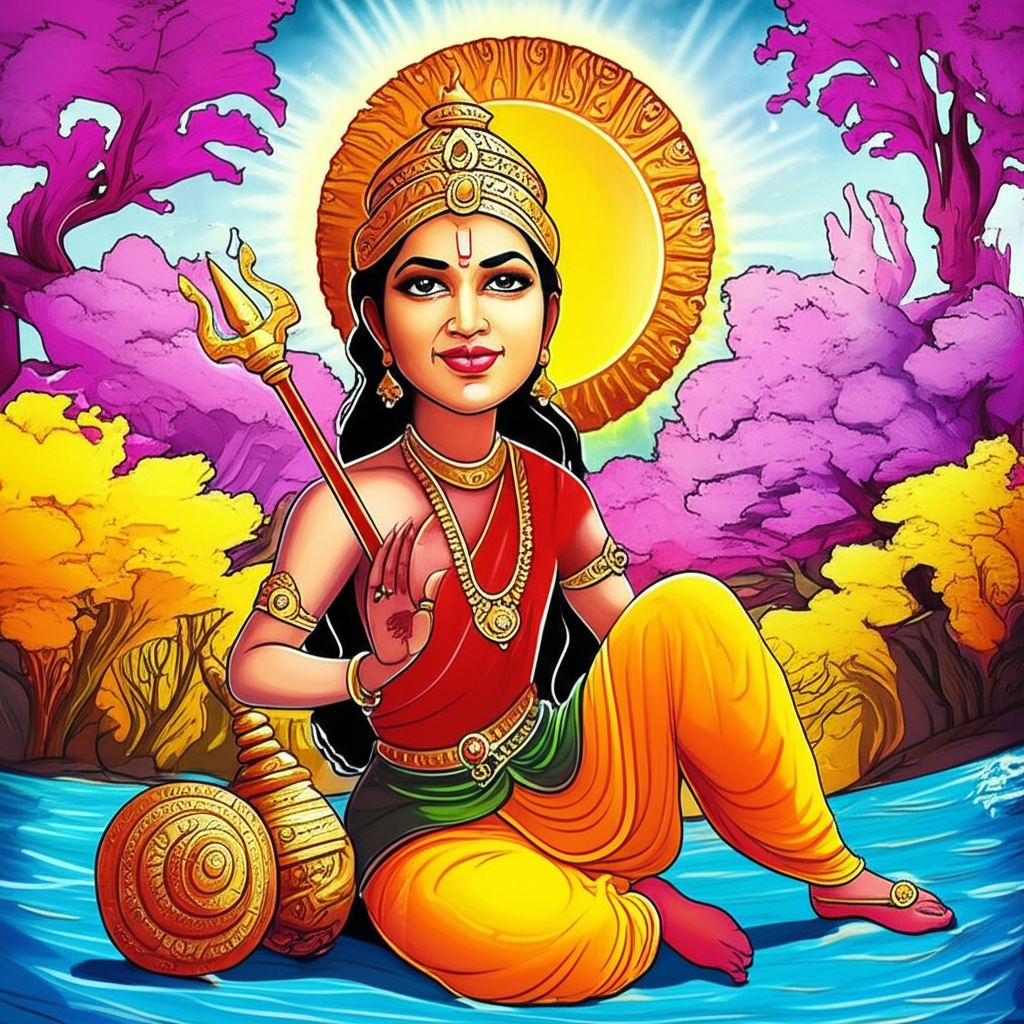
Introduction:
The “Gita Discourse: Songs of Ganga” is a story woven into the rich tapestry of Indian mythology, particularly within the vast and varied traditions associated with Hinduism. This narrative, a product of ancient storytelling and oral traditions, offers a glimpse into the worldview and values of the people who lived in the Indian subcontinent long ago. It is essential to understand that this is a traditional story, a product of human imagination and cultural expression, and not a factual account or a basis for religious belief. It is a story to be examined and appreciated for its historical, cultural, and artistic value.
Origins and Cultural Background:
The setting for the "Songs of Ganga" is the ancient Indian subcontinent, a land of vibrant civilizations that flourished along the fertile river valleys, particularly those of the Ganges (Ganga) and Yamuna. This story likely emerged during a period when the natural world held immense significance. The environment – the mighty rivers, towering mountains, and lush forests – profoundly shaped their lives and beliefs. The people of this era viewed the world through a lens of interconnectedness, where nature was not simply a resource but a living entity, imbued with divine qualities and capable of both nurturing and destruction. The cyclical rhythms of nature, the rising and setting of the sun, the monsoons that brought life-giving rains, and the devastating floods, all influenced their understanding of the cosmos. This was a time when the boundaries between the human and the divine were fluid, with gods and goddesses frequently interacting with mortals, offering boons, and meting out punishment. Concepts of dharma (righteousness, cosmic order), karma (action and consequence), and moksha (liberation from the cycle of rebirth) were central to their worldview, shaping their social structures, moral codes, and spiritual aspirations. The Ganga, in particular, was not just a river; it was a goddess, a symbol of purity, fertility, and the lifeblood of the land.
Character / Creature Description:
At the heart of "Songs of Ganga" is the figure of Ganga herself, the river-goddess. She is not a physical being in the way we understand it, but rather an embodiment of the river, its power, its beauty, and its sacredness. Imagine her as a being of flowing water, sometimes appearing as a radiant woman, adorned with jewels that glisten like sunlight on the water’s surface. Her hair might be long and flowing, mirroring the river’s course, and her eyes, deep and knowing, reflecting the secrets held within the depths. The symbolic attributes associated with Ganga are numerous. She is often depicted with a water vessel or a lotus flower, both representing purity and abundance. The river itself, her primary attribute, symbolizes the flow of life, the continuous journey of the soul, and the cleansing power of spiritual purification. Her presence is a blessing, but also a reminder of the power and unpredictability of nature. She is both life-giver and, at times, a force of destruction, reflecting the dual nature of existence itself.
Main Story / Narrative Retelling:
The story begins in the heavenly realms, where the celestial river, Ganga, flows. However, the tale unfolds on Earth, where King Bhagiratha, a descendant of a royal lineage, performs severe austerities, seeking the descent of Ganga to purify the ashes of his ancestors. These ancestors, cursed for their transgressions, could only find peace if Ganga’s waters touched their remains. Bhagiratha’s devotion is so profound that the gods, moved by his sincerity, agree to send Ganga to Earth.
But the force of Ganga’s descent is immense, powerful enough to shatter the Earth. To cushion her fall and contain her power, Lord Shiva, the god of destruction and transformation, offers to receive her upon his head. The narrative describes Shiva’s hair as a mass of tangled locks, capable of absorbing the torrent of the river. As Ganga descends, Shiva gracefully receives her, allowing the river to flow gently through his matted hair. This act symbolizes Shiva’s compassion and his role as a protector.
The story continues with Ganga’s journey across the land. As she flows, she washes away the sins of those who bathe in her waters, bringing life to the parched earth and nourishing the crops. The “Songs of Ganga” part of the narrative emerges as a collection of stories, each one capturing a particular moment in her journey and the impact she has on those she encounters. These songs might detail the encounters of humble villagers who are healed by her touch, of wise ascetics who seek her blessings, and of mythical creatures that dwell within her depths. Each song is a testament to the river’s power to cleanse, to purify, and to provide. It is a celebration of the interconnectedness of life, of the relationship between humans and nature. The river becomes a source of both physical and spiritual sustenance, a symbol of hope and redemption. As Ganga finally reaches the spot where the ashes of Bhagiratha’s ancestors lay, she purifies them, and they are released from their suffering. This act signifies the ultimate goal of the soul, liberation from the cycle of birth and death.
Symbolism and Meaning:
The "Songs of Ganga" is laden with symbolic meanings. The descent of Ganga represents a journey from the celestial to the earthly realm, highlighting the importance of bridging the gap between the divine and the human. The river itself is a potent symbol of life, purity, and the transformative power of nature. It signifies the cyclical nature of existence – birth, life, death, and rebirth. The story emphasizes the importance of devotion, perseverance, and selfless action, as exemplified by King Bhagiratha’s unwavering dedication. Shiva’s role as the receiver of Ganga’s power illustrates compassion and the ability to absorb and transform destructive forces. Furthermore, the story conveys the concept of moksha – liberation from the cycle of rebirth – which is achieved through the purifying touch of Ganga. The story is also an allegory for the importance of respecting and appreciating nature, and understanding the role it plays in our lives.
Modern Perspective:
Today, the "Songs of Ganga" continues to resonate within the Indian cultural landscape. The story is frequently retold in various forms, including literature, films, and animated series. It often forms the basis for artistic depictions, showcasing the beauty and power of the river. In contemporary literature, the Ganga frequently appears as a symbol of cultural identity, heritage, and the enduring connection to the past. The themes of purification, rebirth, and the cyclical nature of life continue to be explored, providing a source of inspiration for writers and artists. In movies and television, the story is often adapted into epic dramas, visually showcasing the grandeur of the river and the devotion of its followers. In cultural studies, the narrative is used to understand the historical values and beliefs of the Indian people and their relationship with nature.
Conclusion:
"Gita Discourse: Songs of Ganga" is a testament to the power of human imagination and the enduring appeal of storytelling. It is a cultural narrative, a product of ancient beliefs and observations of the natural world. As Muslims, we acknowledge that only Allah is the true Creator and Sustainer. We understand that stories such as this provide insights into cultural heritage, imagination, and the rich tradition of storytelling that has shaped the world. This is not a story to be worshipped or followed, but to be understood and appreciated for its historical, cultural, and artistic merit. It reminds us of the power of narrative to convey values, explore complex ideas, and provide a window into the past. It is a story to be savored, not as a source of divine truth, but as a reflection of the human spirit’s capacity for creativity, empathy, and reverence for the natural world.

