
 fufufafa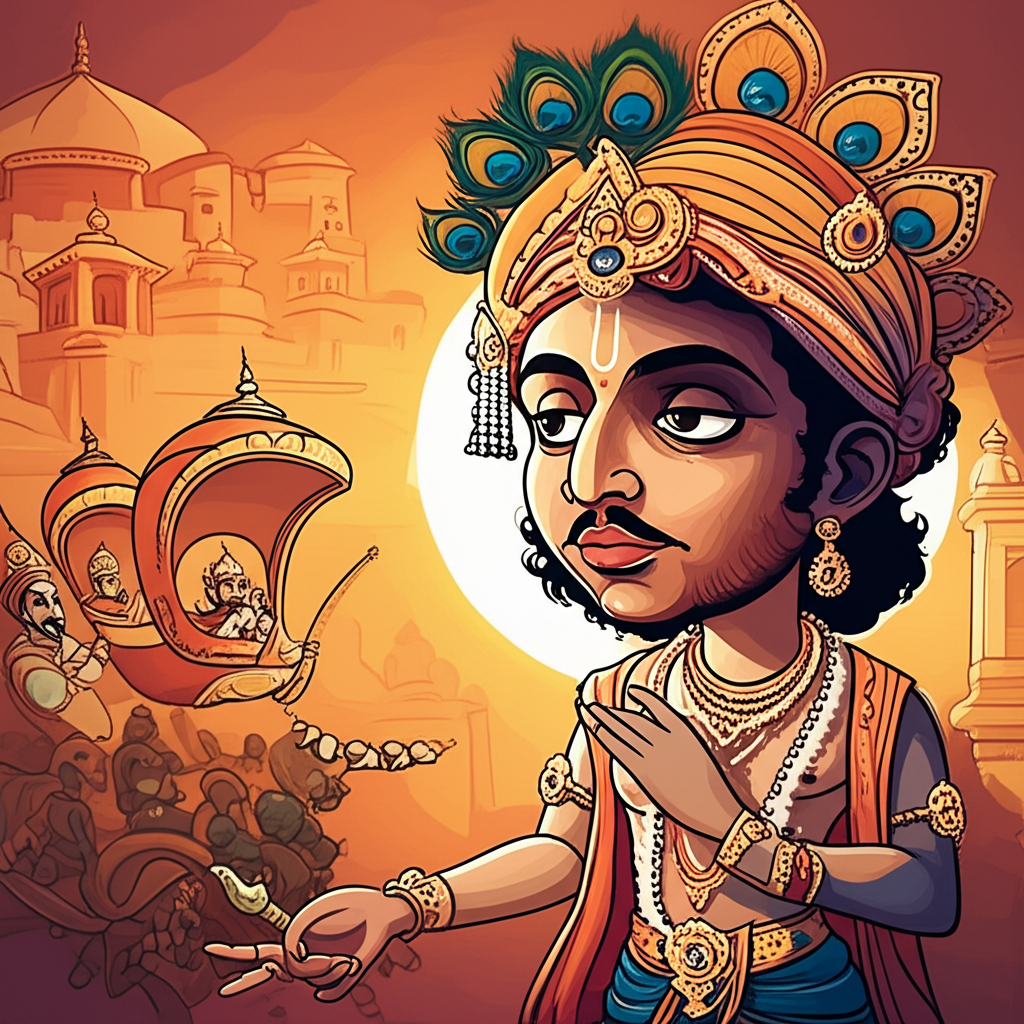
Introduction:
The "Gita Discourse: Songs of Dvaraka" is a narrative woven from the rich tapestry of Indian mythology, specifically drawing upon the epic Mahabharata and its various offshoots. This is a traditional story, a tale spun by ancient people of the Indian subcontinent, passed down through generations via oral tradition, scriptures like the Bhagavad Gita, and countless interpretations in art, music, and performance. It is crucial to understand that this narrative, like all mythological accounts, is a product of its cultural context and should be approached as a window into the beliefs, values, and imaginative world of a specific historical period. It is not presented here as a claim of truth, but rather as an exploration of a fascinating cultural heritage.
Origins and Cultural Background:
The stories of Dvaraka and the events surrounding it flourished within the context of ancient India, particularly during the period of the Mahabharata, roughly estimated to have taken place between the 8th and 3rd centuries BCE. This was a time of burgeoning kingdoms, complex social structures, and a flourishing of philosophical thought. The worldview of the people then was significantly different from ours today. They lived in a world saturated with the divine, where gods and goddesses were believed to actively intervene in human affairs. The natural world – the rivers, mountains, forests, and celestial bodies – were imbued with spiritual significance. Karma, dharma (righteous conduct), and reincarnation were central tenets, shaping their understanding of life, death, and the pursuit of meaning. The social hierarchy, based on the varna system (Brahmin, Kshatriya, Vaishya, and Shudra), played a significant role in defining roles and responsibilities within society. Storytelling was a vital means of transmitting knowledge, values, and cultural identity. Epic poems like the Mahabharata served not only as entertainment but also as moral guides and repositories of historical and philosophical insights.
Character/Creature Description: Krishna
At the heart of the "Songs of Dvaraka" stands Krishna, a central figure in Hindu mythology, often considered an avatar (incarnation) of the god Vishnu. He is depicted in various ways: a youthful cowherd, a cunning diplomat, a powerful warrior, and a divine teacher. The symbolic attributes associated with Krishna are numerous. His dark blue skin often represents the vastness and mystery of the cosmos. He is frequently depicted playing the flute, a symbol of divine music and the enchanting power of love and devotion. The peacock feather adorning his head signifies beauty, joy, and the cycles of life. His close association with cows and the pastoral environment suggests his connection to nature and a simpler way of life. He is often accompanied by Radha, his beloved, representing the ultimate union of the individual soul with the divine. Krishna’s actions and teachings are often interpreted as allegories of the soul’s journey towards enlightenment, the triumph of good over evil, and the importance of fulfilling one’s dharma.
Main Story / Narrative Retelling:
The "Songs of Dvaraka" unfold during a tumultuous period in the Mahabharata. The narrative centers around Krishna, who, having played a pivotal role in the Kurukshetra War (a great battle described in the Mahabharata), establishes his kingdom in Dvaraka, a magnificent city built by the ocean. The city is described as a paradise, shimmering with gold and jewels, populated by a righteous and prosperous people.
Dvaraka is not just a city; it is a refuge, a haven for the Yadava clan, Krishna’s people, after the war. However, even within this idyllic setting, the seeds of destruction are sown. The Yadavas, empowered by their victory and enjoying a life of luxury and pleasure, gradually become arrogant and complacent. They forget the lessons of humility and the importance of dharma.
Krishna, though residing in Dvaraka, is aware of the impending doom. He witnesses the moral decline of his people. He sees the growing internal conflicts, the disregard for the elderly, the growing thirst for power. Krishna tries to guide them, to remind them of the importance of righteousness, of self-control, and of devotion. He offers them wisdom, but his words often fall on deaf ears, drowned out by the noise of their earthly pleasures.
The narrative often includes tales of Krishna’s playful interactions with the gopis (milkmaids) of Vrindavan, stories that represent the devotion and love for the divine. These songs and dances are allegorical representations of the soul’s yearning for union with the divine, a metaphor for the pursuit of enlightenment.
The narrative culminates in the gradual decline of Dvaraka. The Yadavas, through their own actions, bring about their own destruction. Internal conflicts erupt, leading to infighting and bloodshed. The city, once shimmering with gold, is gradually consumed by the ocean, its splendor lost to the waves. Krishna, witnessing the destruction, is left with a profound sense of sorrow and acceptance. He understands the cyclical nature of life, the inevitable rise and fall of civilizations. He leaves this world, his task complete, the cycle of the yugas continuing.
Symbolism and Meaning:
The "Songs of Dvaraka" are rich in symbolism. Dvaraka itself represents a paradise, an ideal society built on the principles of dharma. However, the city’s downfall signifies the inevitable consequence of moral decline and the dangers of attachment to material possessions. Krishna’s role as a guide and teacher embodies the importance of wisdom, righteousness, and the pursuit of spiritual enlightenment. The ocean swallowing Dvaraka can be interpreted as a symbol of the destructive power of time and the impermanence of all things. The entire narrative serves as a cautionary tale about the dangers of pride, greed, and the importance of maintaining a balance between material prosperity and spiritual well-being. The story can also be interpreted as a reflection on leadership, illustrating the burdens and responsibilities of guiding a society, and the ultimate limitations of even divine power in the face of human free will and karma.
Modern Perspective:
The "Songs of Dvaraka," like all mythological narratives, continues to resonate in the modern world. It is explored in literature, from scholarly analysis to creative reimaginings. Film and television adaptations, often focusing on Krishna’s life and teachings, bring the story to a wider audience. In video games and other forms of entertainment, Krishna’s character is sometimes used, representing divine power, wisdom, and strategic thinking. The story’s themes of love, loss, betrayal, and redemption continue to be universally relatable. Scholars and cultural studies experts analyze the story for its insights into ancient Indian society, its values, and its philosophical concepts. The story is a timeless exploration of human nature, ethics, and the search for meaning.
Conclusion:
The "Gita Discourse: Songs of Dvaraka" is a captivating story, a cultural artifact that offers a glimpse into the imagination, beliefs, and values of ancient India. It is a story to be appreciated for its artistic beauty, its moral lessons, and its historical context. It is important to remember that this narrative originates from a cultural framework distinct from our own, and therefore should be approached with respect and critical understanding. As Muslims, we acknowledge that only Allah is the true Creator and Sustainer, the source of all existence and the ultimate authority. Our cultural heritage, including the rich tapestry of storytelling, offers us opportunities for learning, reflection, and appreciation for the human capacity for imagination and the enduring power of narrative. The stories we tell, the myths we create, shape our understanding of the world and our place within it, reminding us of the importance of values like compassion, wisdom, and the pursuit of justice.

