
 fufufafa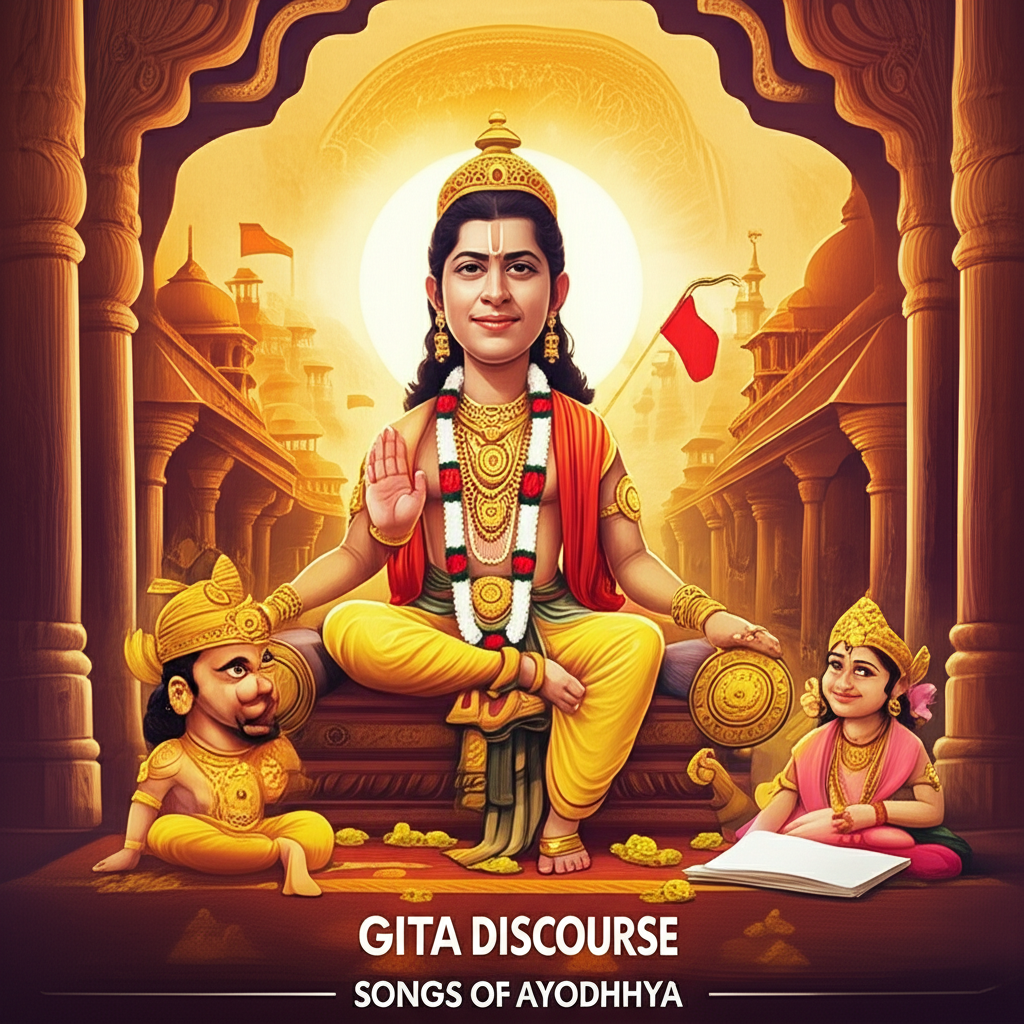
Introduction:
The "Gita Discourse: Songs of Ayodhya" is a narrative originating from the rich tapestry of ancient Indian storytelling traditions, specifically those woven around the epic Ramayana. These stories, passed down through generations by word of mouth and eventually written down, are not historical accounts but rather cultural expressions. They represent the hopes, fears, and moral frameworks of the people who told and retold them. This particular narrative segment, imagined here, focuses on a specific moment within the Ramayana’s broader context, examining potential inner dialogues and moral quandaries faced by characters deeply rooted in the socio-cultural milieu of Ayodhya. It’s important to understand that this is a fictional exploration based on existing mythological frameworks, presented for cultural understanding and appreciation, not as a factual or religious truth.
Origins and Cultural Background:
The cultural era in which stories like the "Songs of Ayodhya" would have resonated most deeply is the period of the epics, dating back centuries BCE. This was a time when society was largely agrarian, with a strong emphasis on dharma (righteous conduct), karma (action and consequence), and family values. The world was perceived as being deeply interconnected, with humans, gods, and nature all influencing one another. Kingship was considered divinely ordained, and the king was expected to uphold dharma and protect his people.
The environment was one of dense forests, flowing rivers, and bustling cities. Society was structured along caste lines, with Brahmins (priests and scholars) at the top, followed by Kshatriyas (warriors and rulers), Vaishyas (merchants and farmers), and Shudras (laborers). The stories served as a way to transmit cultural values, explain natural phenomena, and provide moral guidance. These tales were often performed through elaborate rituals, plays, and storytelling sessions, creating a shared cultural experience that reinforced social cohesion.
Character Description: Devi Tara
In this imagined narrative, Devi Tara, wife of Vali, the mighty Vanara king of Kishkindha, takes center stage. In the Ramayana, she is primarily known for her wisdom and her efforts to prevent Vali from fighting Rama. In the "Songs of Ayodhya," we explore a deeper internal struggle within her.
Symbolically, Tara represents foresight, wisdom, and the feminine principle of protection. Her knowledge of celestial events and Vali’s invincibility (granted by a boon) highlights her ability to see beyond the immediate. While often depicted as a devoted wife, her role as advisor to Sugriva after Vali’s death suggests a capacity for leadership and pragmatic decision-making. Her beauty is also often mentioned, but in this context, it symbolizes the allure of worldly attachments and the challenges of maintaining detachment in a world of conflict. We are not ascribing any divine power to her; rather, we are exploring her character as a symbol of human resilience and the burden of knowledge.
Main Story / Narrative Retelling:
The sun beat down on Ayodhya, casting long shadows that stretched across the palace courtyards. But the heat was nothing compared to the turmoil raging within Devi Tara. She sat in her chambers, the soft silk of her sari doing little to soothe her troubled mind. Word had reached Kishkindha: Rama, the exiled prince of Ayodhya, was in the forest, seeking his abducted wife, Sita.
Tara knew of Rama’s reputation – a prince of impeccable dharma, a warrior of unmatched skill. But she also knew Vali, her husband, the powerful Vanara king whose strength seemed boundless. Vali, due to a misunderstanding, had banished his younger brother Sugriva from Kishkindha, usurping his throne and taking his wife, Ruma. Rama had pledged to help Sugriva reclaim his kingdom, which meant a confrontation with Vali was inevitable.
Tara had pleaded with Vali not to fight Rama. "My lord," she had urged, "the rumors surrounding Rama are not mere whispers. He is an avatar, a manifestation of the divine. Do not underestimate him." She had shared her visions, the celestial alignments she had observed, all pointing towards a calamitous event.
Vali, fueled by pride and a sense of invincibility bestowed upon him by a boon from Lord Brahma, had scoffed. "Rama is but a mortal, a mere exile. I fear no one, Tara. Sugriva is a coward, hiding behind this Ayodhyan prince."
That night, Tara couldn’t sleep. She walked through the moonlit gardens, the scent of jasmine doing little to calm her anxieties. She imagined the clash of steel, the roar of battle, the devastating consequences of Vali’s arrogance. She felt torn between her duty to her husband and her deep-seated intuition that something terrible was about to happen.
She remembered the words of her guru, who had taught her about the cyclical nature of existence, the inevitable rise and fall of power. He had spoken of the importance of discernment, of recognizing the divine in all beings, even those who appeared as enemies.
The next morning, the battle commenced. Tara, her heart heavy with foreboding, watched from the palace walls. The clash between Vali and Sugriva was fierce, a whirlwind of fur and fury. But then, Rama intervened. An arrow, swift and deadly, pierced Vali’s chest.
Vali fell. As he lay dying, he looked up at Rama, rage and confusion etched on his face. Tara rushed to his side, tears streaming down her face.
In his final moments, Vali questioned Rama’s dharma, his right to strike him down from hiding. Rama, with unwavering composure, explained the transgressions Vali had committed, the injustices he had inflicted upon Sugriva.
Tara, witnessing this exchange, understood. The death of Vali was not merely a victory for Sugriva; it was a consequence of his own actions, a manifestation of the karmic cycle. A heavy weight lifted from her shoulders. Grief remained, but it was tempered by a sense of acceptance. She knew that she had to now guide Sugriva in ruling Kishkindha justly and wisely.
Symbolism and Meaning:
To the people of that era, the "Songs of Ayodhya" would have represented several key themes. Vali’s story served as a cautionary tale against unchecked pride and the misuse of power. Tara’s wisdom symbolized the importance of foresight and the value of heeding intuition. Rama’s actions, though controversial, represented the upholding of dharma, even when it meant making difficult choices. The entire narrative served as a reminder of the interconnectedness of all beings and the consequences of one’s actions. It also highlighted the role of women in ancient society as advisors and guardians of wisdom.
Modern Perspective:
Today, myths like the "Songs of Ayodhya" are interpreted in various ways. In literature, they serve as inspiration for exploring themes of justice, morality, and the human condition. In movies and games, they provide rich source material for creating epic narratives and complex characters. In cultural studies, they are analyzed for insights into the values, beliefs, and social structures of ancient societies. The characters are re-imagined in modern contexts, exploring their psychological depths and moral ambiguities. For example, Tara’s role is often re-examined through a feminist lens, analyzing her agency and her struggles within a patriarchal society.
Conclusion:
The "Gita Discourse: Songs of Ayodhya" is a fictional exploration of themes and characters rooted in ancient Indian mythology. It is a cultural story, a product of human imagination and storytelling tradition, not a statement of belief. We, as Muslims, acknowledge that only Allah is the true Creator and Sustainer of the universe.
This narrative, however, offers valuable insights into the cultural heritage of a region and the enduring power of storytelling. It reminds us of the importance of understanding different cultures and appreciating the diverse ways in which humans have sought to make sense of the world around them. It is through such exploration that we can foster greater understanding and respect for one another. It allows us to appreciate the rich tapestry of human imagination and the enduring power of stories to shape our understanding of ourselves and the world.

