
 fufufafa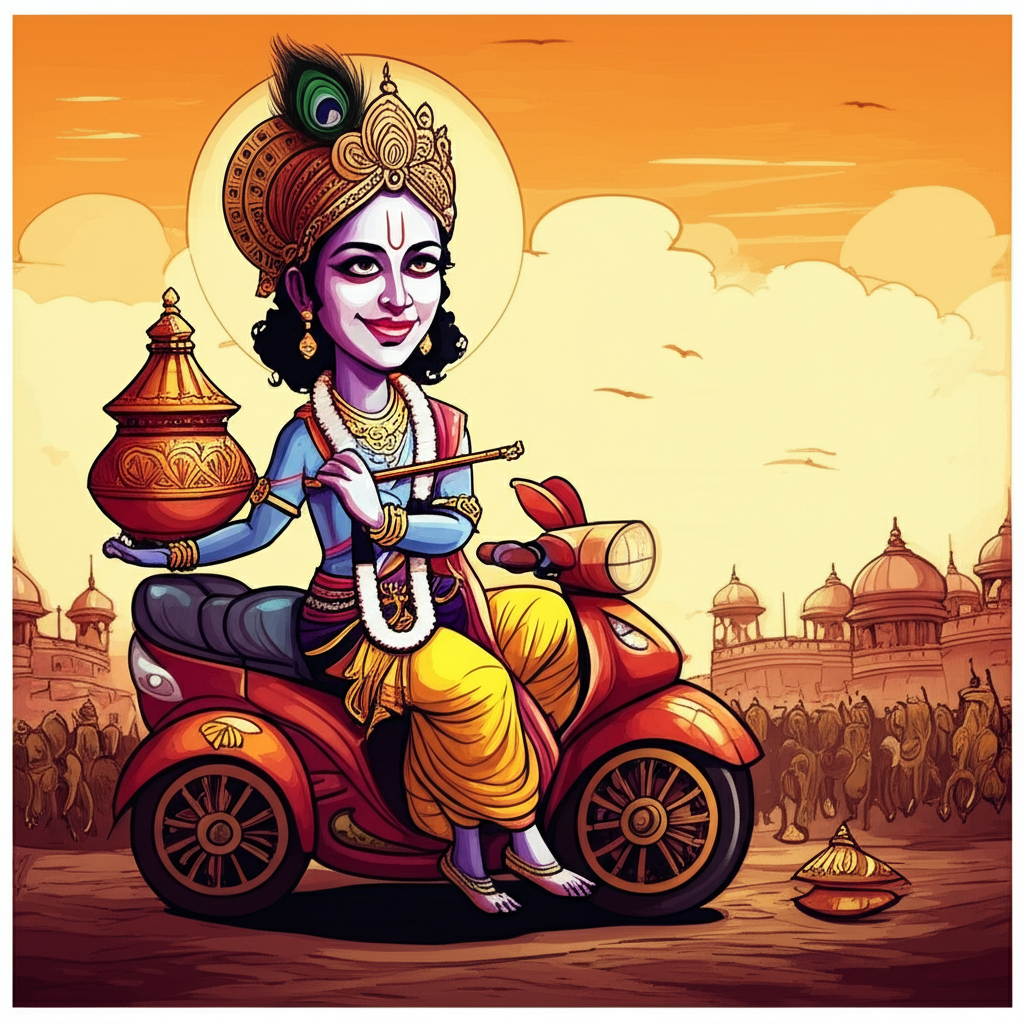
Introduction:
The narrative of the "Gita Discourse: Prophecy of Mathura" originates from the rich tapestry of ancient Indian mythology, specifically within the Vaishnava tradition, which reveres Vishnu as the supreme deity. This story, deeply embedded in the larger epic of the Mahabharata and the Srimad Bhagavatam, speaks of a prophecy foretelling significant events in the city of Mathura. It’s crucial to understand that this is a traditional story, passed down through generations, reflecting the beliefs and worldview of ancient people. It is not presented as historical fact or divine truth, but as a cultural artifact that provides insights into the minds and imaginations of those who created and preserved it.
Origins and Cultural Background:
The era in which this myth was shaped was characterized by a complex social hierarchy, a strong emphasis on dharma (righteous conduct), and a cyclical view of time. Society was largely agrarian, and life was intimately connected to the rhythms of nature. The concept of karma – the principle of cause and effect – played a central role in their understanding of the world. This was a time when oral traditions were the primary means of transmitting knowledge, and stories like the "Gita Discourse: Prophecy of Mathura" served not only as entertainment but also as vehicles for moral and philosophical instruction. The world was seen as populated by gods, demons, and a vast array of supernatural beings, all intertwined in the affairs of humans. Natural phenomena were often attributed to divine intervention, and rituals and sacrifices were performed to appease the deities and ensure prosperity.
Character Description: Krishna
Central to this narrative is Krishna, often depicted as the eighth avatar of Vishnu. He is typically portrayed with a bluish complexion, adorned with peacock feathers in his hair, and playing a flute. However, understanding his symbolic attributes is crucial. Krishna is more than just a figure; he represents divine love, wisdom, and protection. The blue skin may symbolize the infinite, while the flute’s music represents the call to spiritual awakening. His mischievous nature can be interpreted as a challenge to conventional norms, urging individuals to question and seek truth. In the context of the Bhagavad Gita, a part of the Mahabharata, he acts as a charioteer and guide to Arjuna, imparting profound philosophical teachings about duty, detachment, and devotion. It is important to remember that these are interpretations assigned by people over centuries, reflecting their values and aspirations.
Main Story / Narrative Retelling:
The story unfolds with Kamsa, the tyrannical king of Mathura, consumed by fear. A prophecy had been revealed to him: Devaki, his sister, would bear a son who would ultimately bring about his demise. Driven by paranoia, Kamsa imprisoned Devaki and her husband, Vasudeva, and mercilessly slew their first six children.
When Devaki conceived for the seventh time, the embryo was miraculously transferred to the womb of Rohini, another wife of Vasudeva, residing in Gokul. This child was Balarama. The eighth child, Krishna, was born under extraordinary circumstances. As soon as he was born, Vasudeva, guided by divine intervention, smuggled the infant Krishna across the Yamuna River to Gokul, exchanging him for a newborn girl, Yashoda’s daughter.
Kamsa, upon learning of the birth, rushed to kill the child, but the girl miraculously transformed into Yogamaya, a divine being, who vanished into the sky, declaring that Kamsa’s destroyer had already been born elsewhere. This only intensified Kamsa’s fear and cruelty. He ordered the systematic killing of all male infants in the region, hoping to eliminate the prophesied threat.
Meanwhile, Krishna grew up in Gokul, amidst loving foster parents, Yashoda and Nanda. He spent his childhood performing wondrous feats and charming everyone with his playful nature. As he matured, Krishna was fully aware of his divine purpose and the prophecy surrounding him. He knew that one day, he would have to return to Mathura and confront Kamsa.
The Gita Discourse, narrated to Arjuna on the battlefield of Kurukshetra much later, offers subtle hints and allusions to Krishna’s past and future. His pronouncements about dharma, karma, and the nature of reality were understood by some as a veiled prophecy of his eventual return to Mathura to restore righteousness. The discourse equipped Arjuna with the courage and understanding to face his duty, just as Krishna would eventually confront his destiny in Mathura.
Finally, the day arrived when Krishna, accompanied by his brother Balarama, traveled to Mathura. He fearlessly entered the city, challenged Kamsa’s wrestlers, and ultimately confronted the tyrant in his own palace. After a fierce battle, Krishna fulfilled the prophecy by slaying Kamsa, liberating the people of Mathura from his oppressive rule and restoring dharma to the land.
Symbolism and Meaning:
The story of the "Gita Discourse: Prophecy of Mathura" and the events surrounding it is rich with symbolism. Kamsa represents tyranny, ego, and the destructive forces that arise from fear and ignorance. Krishna symbolizes divine intervention, justice, and the triumph of good over evil. The prophecy itself represents the inevitability of consequences and the cyclical nature of time. The story may have represented the ancient people’s hope for just leadership and a belief in the ultimate victory of righteousness. The transfer of Krishna to Gokul may symbolize the idea that goodness can flourish even in humble surroundings. Ultimately, the narrative can be seen as a metaphor for the internal struggle between good and evil within each individual.
Modern Perspective:
Today, the story of Krishna and the prophecy of Mathura continues to resonate in various forms of art and media. It is often retold in literature, depicted in films and television series, and even incorporated into video games. In cultural studies, it is analyzed as a reflection of ancient social values, power dynamics, and philosophical beliefs. Modern interpretations often focus on the psychological aspects of the characters and the universal themes of good versus evil, destiny versus free will, and the search for meaning and purpose. The Bhagavad Gita, where the Gita Discourse takes place, is widely studied as a philosophical text, even by those outside the Hindu tradition.
Conclusion:
The "Gita Discourse: Prophecy of Mathura" is a compelling example of a cultural story, not a belief system to be practiced or validated. It’s a narrative that offers a glimpse into the world of ancient India, its values, and its way of understanding the universe. As Muslims, we recognize that only Allah is the true Creator and Sustainer, and that all power and authority reside with Him. This story, however, can be appreciated as a testament to human imagination and the enduring power of storytelling traditions. It is a reminder that cultural heritage, while not to be mistaken for divine truth, can offer valuable insights into the human condition and the diverse ways in which people have sought to make sense of their world.

