fufufafa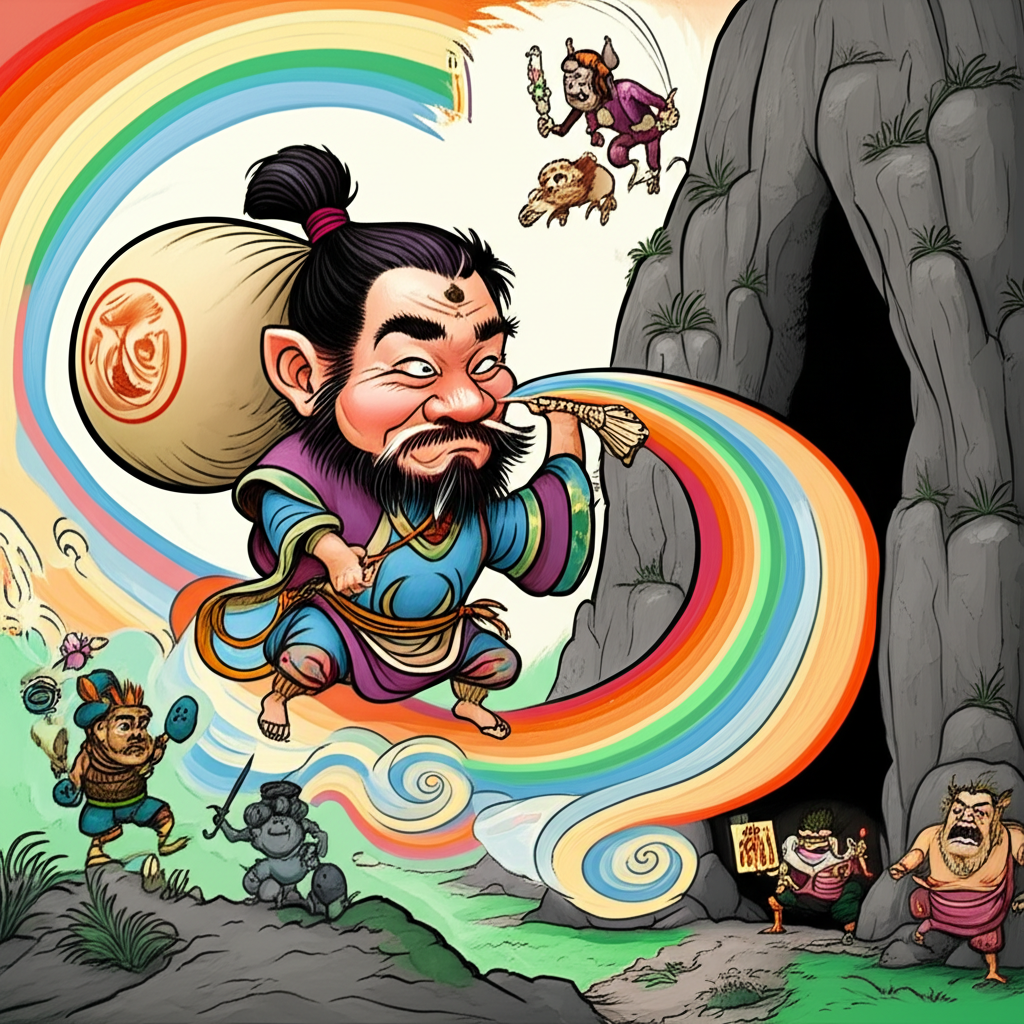
Introduction:
This is a story from the rich tapestry of Japanese mythology, a collection of tales passed down through generations. These narratives, filled with gods, demons, and heroic figures, were traditionally shared by the people of ancient Japan. It’s important to remember that these are stories, crafted to explain the world and entertain, not to be taken as literal truth. This particular legend recounts the dramatic events surrounding the sun goddess, Amaterasu, and the role of the wind god, Fujin, within those events. The purpose of revisiting this tale is to explore the cultural heritage of Japan, the power of storytelling, and the ways in which ancient people sought to understand the forces of nature and the human condition.
Origins and Cultural Background:
The stories of Japanese mythology, including the tale of Fujin, flourished during a period of significant cultural and societal development, roughly from the Yayoi period (c. 300 BCE – 300 CE) through the Nara and Heian periods (710-1185 CE). This era witnessed the rise of agriculture, the development of complex social structures, and the adoption of Buddhism alongside indigenous Shinto beliefs. The environment played a crucial role in shaping their worldview. Japan, a land of volcanic islands prone to earthquakes, typhoons, and dramatic seasonal changes, instilled a profound respect for the power of nature. People believed that the natural world was inhabited by kami, spirits or deities, that influenced all aspects of life. These kami were present in mountains, rivers, trees, and even the wind. The cyclical nature of the seasons, the ebb and flow of life and death, and the unpredictable forces of nature were all reflected in their mythology. Stories like those of Fujin served to explain these phenomena, offering explanations for the world around them and providing a framework for understanding their place within it. Storytelling was a vital means of transmitting knowledge, reinforcing social values, and celebrating the power and beauty of the natural world.
Character / Creature Description: Fujin, the Wind God
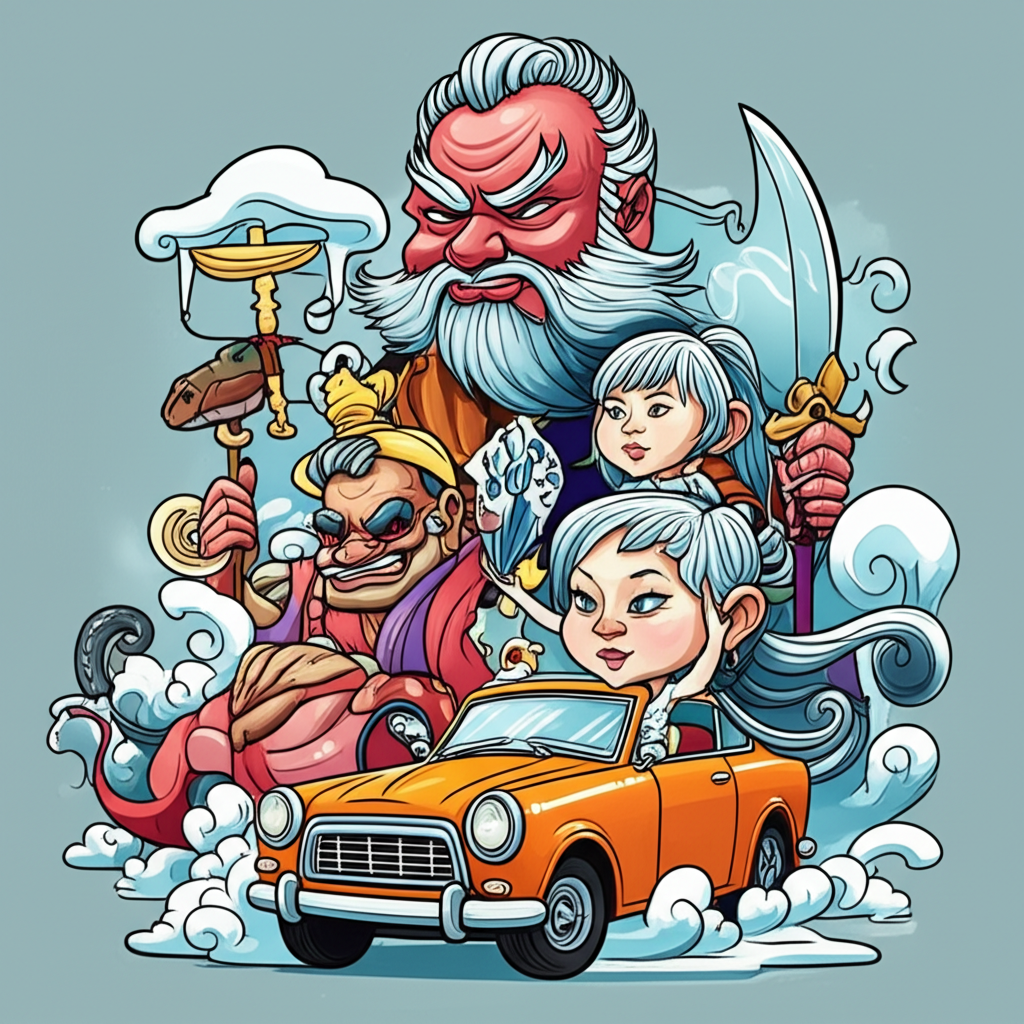
Fujin, the Japanese god of the wind, is a formidable figure in these ancient tales. He is typically depicted as a fearsome, red-skinned demon-like being with a wild, almost grotesque appearance. His image often features a muscular physique and a wild mane of hair that whips around him, symbolizing the untamed force of the wind. He carries a large bag, said to contain the winds, which he releases with powerful gusts. This imagery emphasizes the unpredictable and destructive power of the wind, capable of both bringing life-giving rains and unleashing devastating storms. While not inherently evil, Fujin represents a raw, untamed force, a fundamental aspect of nature that could be both beneficial and destructive. He embodies the unpredictable elements, the gusts that can sweep through the land, shaping the landscape and influencing the lives of all who dwell within it. His depiction served to remind people of the power of the natural world and the need to respect its forces.
Main Story / Narrative Retelling: The War of Amaterasu’s Cave
The story of Fujin is intricately linked to the broader narrative of the War of Amaterasu’s Cave, a tale of cosmic upheaval and the restoration of light to the world. It begins with Amaterasu, the sun goddess, sister of Susanoo, the storm god. Susanoo, prone to acts of chaos and destruction, wreaked havoc in the heavens, ultimately enraging Amaterasu. In a fit of grief and anger, she retreated into the Ama-no-Iwato, a celestial cave, plunging the world into darkness.
The world fell into disarray. Without the sun’s light, crops withered, and the land was shrouded in an eternal twilight. The other gods, desperate to restore order and light, gathered to devise a plan to lure Amaterasu out of the cave. They attempted various tactics. Some devised a plan to gather outside the cave and party, hoping to pique Amaterasu’s interest. The goddess of mirth, Ame-no-Uzume, performed a ribald dance, and as the gods roared with laughter, Amaterasu, curious to see what the commotion was about, peered out of the cave.
The gods, prepared for this moment, had set up a large mirror. As Amaterasu looked out, she saw her own radiant reflection and was captivated by her beauty. The gods quickly seized the opportunity, pulling her out of the cave and restoring the sun’s light to the world.
During the chaos and the subsequent celebration, Fujin played a critical role. While not directly involved in the central drama of Amaterasu’s self-imposed imprisonment, the wind god’s presence was felt in the aftermath. The wind, unleashed by Fujin, played its part in the restoration of the world. It swept away the darkness, carrying with it the remnants of the chaos and helping to cleanse the land. The wind, a force of nature as ancient and powerful as the sun itself, aided in the revival, bringing with it the promise of a new dawn. He was present as the winds brought forth the blooming of the blossoms, which would bloom again and again each spring.
The story highlights the interplay of different forces – the light of the sun, the darkness, the chaos of Susanoo, the mirth of the gods, and the power of the wind – all working together to restore balance and order. Fujin, though not the central figure, represents a crucial element in the restoration of the world after the darkness.
Symbolism and Meaning:
The story of the War of Amaterasu’s Cave, and Fujin’s place within it, offers rich symbolism. Amaterasu, the sun goddess, represents light, life, and order. Her retreat into the cave symbolizes the absence of these essential elements, leading to chaos and despair. The actions of the other gods, their efforts to entice Amaterasu out, represent the human desire to overcome adversity and restore harmony. The mirror represents self-awareness and the recognition of beauty and importance.
Fujin, with his control over the wind, embodies the powerful forces of nature. The wind, both destructive and cleansing, serves as a reminder of nature’s duality. It represents the potential for both devastation and renewal. This story may have represented, to ancient Japanese people, the cyclical nature of life, death, and rebirth. It could have served as a way to explain the seasons and the importance of balance in the natural world. It also emphasized the importance of community and cooperation in overcoming challenges.
Modern Perspective:
Today, the myth of Fujin and the War of Amaterasu’s Cave continues to resonate. It is found in countless works of literature, from traditional Japanese poetry to modern novels. The story is a common theme in anime, manga, and video games. The image of Fujin is often featured in visual arts, including woodblock prints (ukiyo-e), sculptures, and contemporary illustrations. The story and its characters are used as a source of inspiration for many people, especially those who seek to understand Japanese culture and history. In the field of cultural studies, the myth provides insight into the values, beliefs, and worldview of ancient Japan.
Conclusion:
This exploration of the legend of Fujin and the War of Amaterasu’s Cave is a journey into the imaginative world of ancient Japan. It reminds us of the enduring power of storytelling and the human need to understand and interpret the world around us. This is a cultural story and does not represent a belief system. As Muslims, we recognize that only Allah is the true Creator and Sustainer. We acknowledge the beauty and creativity found in all cultures. This story, passed down through generations, offers a glimpse into the past, into the minds and hearts of people who sought to find meaning in the forces of nature and the human condition. It is a testament to the enduring power of imagination and the rich heritage of storytelling.