fufufafa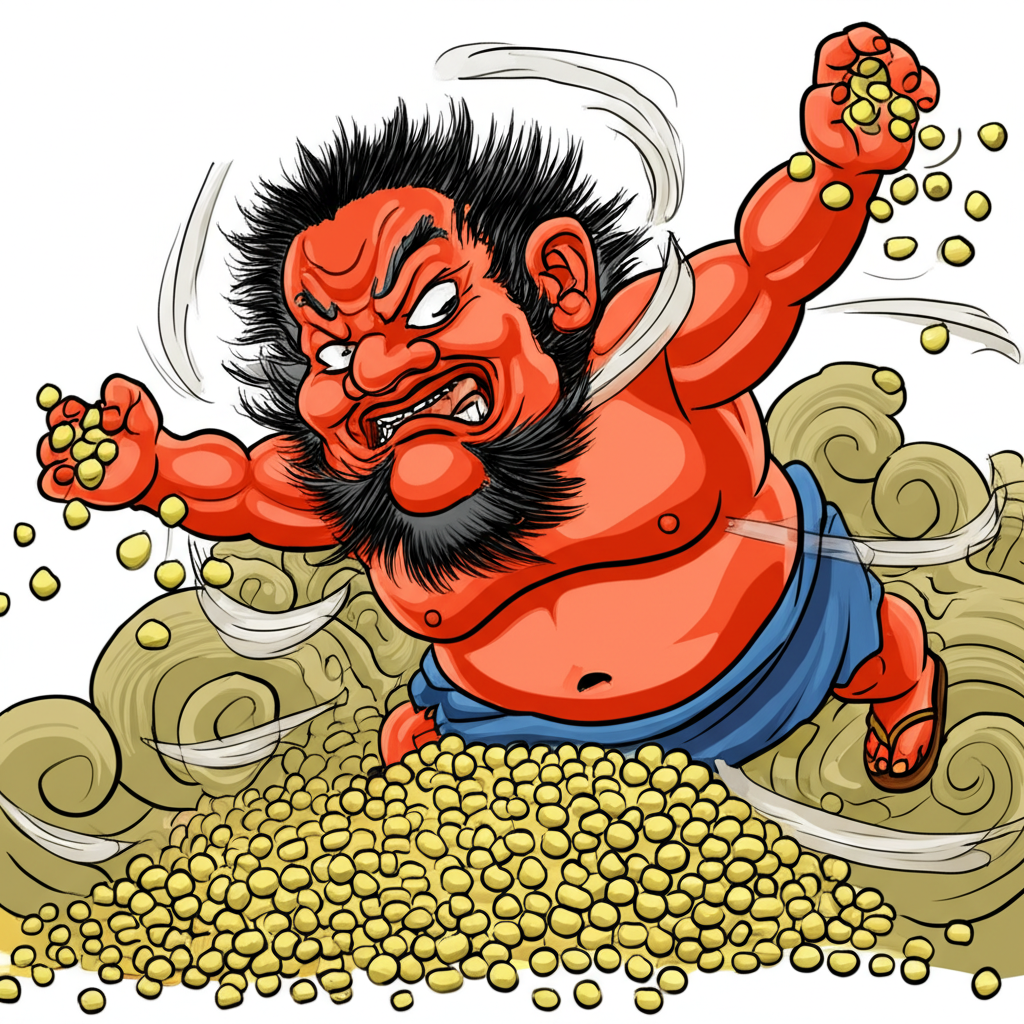
Introduction:
The story of Fujin and the Trial of Setsubun is a compelling narrative woven from the rich tapestry of Japanese folklore. It is a tale passed down through generations, originating from a time when the natural world was imbued with spirits and deities, and humanity sought to understand its place within a realm of both wonder and fear. This is not a historical account, but rather a traditional story told by ancient people to explain aspects of their world, to instill values, and to entertain.
Origins and Cultural Background:
The myth likely emerged during a period in Japanese history when Shinto and early Buddhist beliefs were intertwining, shaping the cultural landscape. This era, spanning several centuries, saw the establishment of a complex system of kami (spirits or deities) believed to inhabit natural features and influence human affairs. People of this time viewed the world as a dynamic interplay between the visible and invisible, where respect for nature and ancestral spirits was paramount. Life was deeply connected to agricultural cycles and seasonal changes, each imbued with ritual significance. Setsubun, the seasonal division, was a particularly important time for purification and renewal, marking the transition from winter to spring. It was believed that during this period, evil spirits and misfortune were at their strongest, requiring special rites to ward them off.
Character Description: Fujin
Fujin, the Shinto god of wind, is a powerful and dynamic figure within Japanese mythology. He is often depicted as a fearsome demon-like being with wild, flowing hair, a billowing robe, and carrying a large bag filled with wind. From this bag, he unleashes gusts, gales, and typhoons upon the world. His skin is typically portrayed as green or blue, further emphasizing his supernatural origins.
Symbolically, Fujin represents the untamed and unpredictable forces of nature. He is the embodiment of the wind’s destructive power, capable of leveling forests and stirring up turbulent seas. However, he also represents the wind’s vital role in dispersing seeds, bringing rain, and cleansing the air. He is not inherently malevolent, but rather a force that must be respected and understood. Fujin is often paired with Raijin, the god of thunder and lightning, to represent the complementary and often destructive forces of the weather. His image served as a reminder of the power of nature and the need for humans to live in harmony with it.
Main Story: Fujin and the Trial of Setsubun
The land was gripped by the icy fist of winter. Villages huddled beneath blankets of snow, and the people shivered, their hearts heavy with worry. It was Setsubun, the eve of spring, but an unnatural chill lingered in the air, a malevolent presence that seemed to choke the very life from the land. Evil spirits, emboldened by the prolonged winter, roamed freely, whispering misfortune into the ears of the vulnerable.
Fujin, the wind god, observed the plight of the people from his perch atop the highest mountain. He felt a pang of something akin to pity, though such emotions were rare for a being of his power. The balance of the world was disrupted, and it was his duty to restore it, even if he found the task tiresome.
He descended from the mountain in a swirling vortex of wind, his bag rustling ominously. He landed in a small village, the force of his arrival scattering snow and sending villagers scurrying for cover. An old woman, her face etched with the lines of hardship, dared to approach him.
"Great Fujin," she croaked, her voice trembling. "The evil spirits are too strong this year. They threaten to consume us all. Can you not help us?"
Fujin regarded her with his piercing gaze. "Help?" he boomed, his voice like the roar of a hurricane. "Humans must help themselves! But I will offer you a trial. If you can withstand my winds on this night of Setsubun, I will cleanse your village of these malevolent spirits."
The old woman bowed her head, accepting the challenge on behalf of her people. Fujin unleashed his power. Winds howled through the village, tearing at thatched roofs and bending trees double. Snow swirled in blinding flurries, and the air crackled with icy energy. The villagers huddled together, chanting ancient prayers and throwing roasted soybeans, a traditional Setsubun ritual believed to ward off evil.
Fujin watched, his expression unreadable. He intensified his winds, testing their resolve. Many faltered, succumbing to the cold and fear. But the old woman, standing firm in the center of the village, continued to chant, her voice rising above the storm. She held aloft a branch of sacred sakaki, a symbol of purification and resilience.
As the night wore on, the villagers, inspired by the old woman’s unwavering spirit, rallied. They threw their soybeans with renewed vigor, their voices joining hers in a chorus of defiance. The evil spirits, weakened by the ritual and the collective strength of the people, began to dissipate.
Finally, as dawn approached, Fujin ceased his assault. The winds subsided, and the snow began to melt, revealing a village battered but unbroken. He acknowledged the old woman’s strength and the resilience of her people.
"You have passed the trial," he declared, his voice softened by a hint of respect. "Your spirit has cleansed this land. The evil spirits are banished."
With a final gust of wind, Fujin vanished, leaving behind a village bathed in the soft light of the rising sun, a testament to the power of human resilience and the importance of ritual.
Symbolism and Meaning:
To the ancient people who told this story, the Trial of Setsubun likely represented the struggle against adversity and the importance of community in overcoming challenges. Fujin, as the embodiment of natural forces, tested the limits of human endurance. The Setsubun rituals, such as throwing soybeans and chanting prayers, symbolized the power of tradition and collective action in warding off evil and misfortune. The story also highlights the importance of respecting nature’s power while also recognizing humanity’s capacity for resilience and spiritual strength. The old woman represents wisdom, perseverance, and the ability to inspire others in the face of overwhelming odds.
Modern Perspective:
Today, the myth of Fujin and the Trial of Setsubun is interpreted in various ways. In literature, movies, and games, Fujin often appears as a powerful antagonist or a complex character whose actions are driven by the need to maintain balance. Cultural studies scholars examine the myth for its insights into ancient Japanese beliefs about nature, spirituality, and the human condition. Setsubun itself is still celebrated annually in Japan, though the rituals are often performed more as cultural traditions than as deeply held religious practices.
Conclusion:
The story of Fujin and the Trial of Setsubun is a captivating tale that reflects the cultural heritage and imaginative storytelling traditions of ancient Japan. It is a reminder of the power of myth to convey values, explore human relationships with the natural world, and entertain across generations.
As Muslims, we recognize that Allah is the one true Creator and Sustainer of the universe. We understand that these are cultural stories and traditions, not religious beliefs to be worshipped or followed. They are part of a shared human heritage, reflecting the diversity of human imagination and the enduring power of storytelling.