
 fufufafa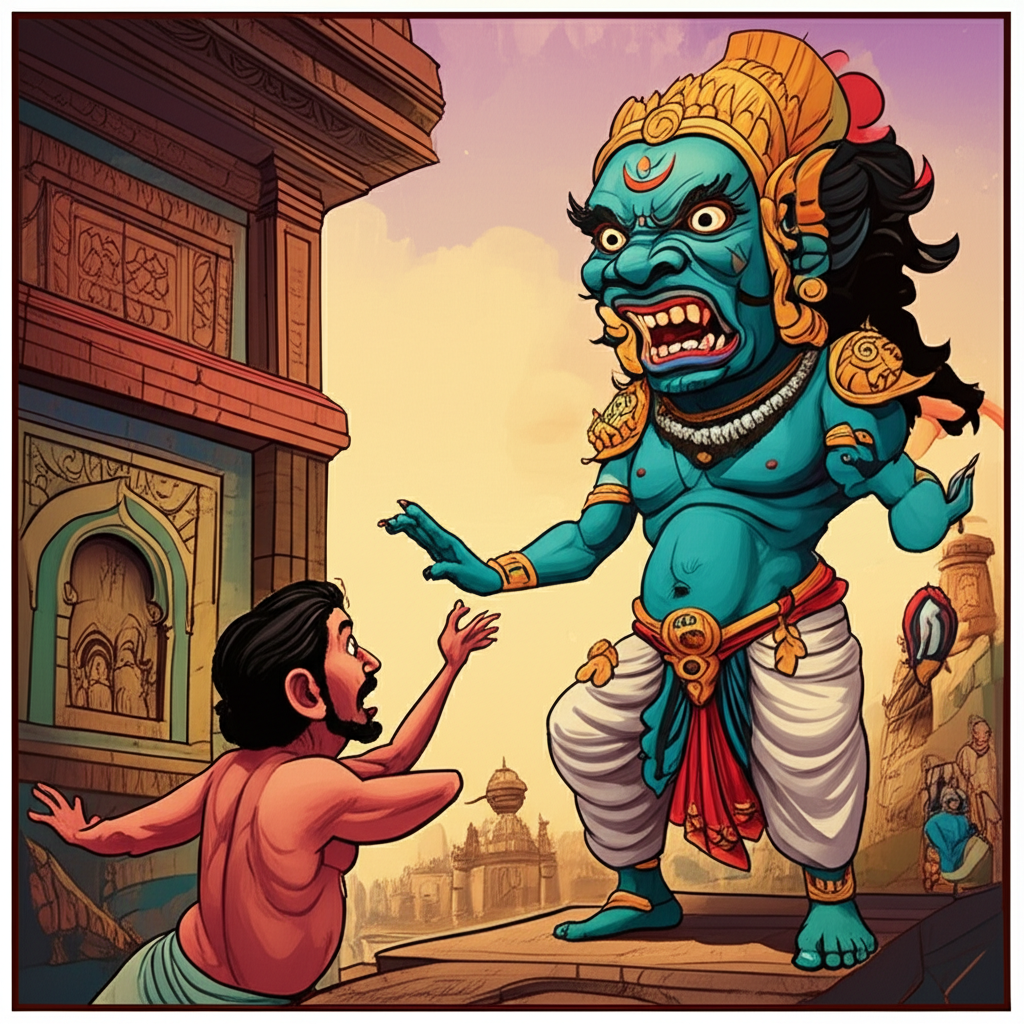
Introduction:
The following narrative recounts a tale from the rich tapestry of Indian mythology, specifically the legends surrounding the ancient city of Dvaraka. This is a traditional story, passed down through generations of storytellers, meant to entertain, educate, and explore the values and fears of a bygone era. It is not presented as factual truth, nor should it be interpreted as such. Instead, it offers a glimpse into the cultural imagination of the ancient people who crafted these tales.
Origins and Cultural Background:
The myth of the Rakshasa of Dvaraka originates from the Hindu tradition, specifically within the epic poems like the Mahabharata and the Bhagavata Purana. These texts emerged and evolved over centuries, with their definitive forms taking shape from roughly the 3rd century BCE to the 3rd century CE. The setting for this particular tale is Dvaraka, a legendary city said to have been built by the divine architect Vishwakarma and ruled by Lord Krishna, an avatar of the god Vishnu.
The cultural context of this period was one of profound philosophical and religious exploration. The ancient Indians, living in a complex society with a hierarchical social structure, viewed the world as a vibrant interplay of gods, demons, humans, and nature. Their cosmology was intricate, populated by a vast pantheon of deities, each with specific roles and powers. They believed in karma, reincarnation, and the cyclical nature of time. The world was perceived as a battleground between good and evil, with humanity constantly striving to uphold dharma (righteousness) and escape the cycle of suffering. The environment played a crucial role in their lives, as agriculture and nature were essential for survival, inspiring many of their stories.
Character / Creature Description:
The Rakshasa, or demon, is a recurring figure in Hindu mythology. They are often depicted as powerful, monstrous beings with supernatural abilities. The Rakshasa of Dvaraka, in particular, is described as a formidable entity, embodying the forces of chaos and darkness. While specific descriptions vary across different accounts, they are often portrayed with terrifying features: sharp claws, fangs, and a grotesque appearance. They could shape-shift, possess immense strength, and wield potent magic.
The Rakshasas were often associated with the night, graveyards, and places of desolation. They were depicted as creatures of insatiable hunger and lust, representing the darker aspects of human nature – greed, violence, and the unchecked pursuit of power. Symbolically, the Rakshasa represents the challenges and temptations that hinder individuals from following the path of righteousness. They are a force to be overcome, representing internal struggles and external threats to societal harmony.
Main Story / Narrative Retelling:
The vibrant city of Dvaraka, shimmering under the tropical sun, was renowned for its opulence, its just rulers, and the presence of Lord Krishna. But even in this haven of prosperity, the shadow of evil lurked. One moonless night, a Rakshasa, a creature of immense power and malevolent intent, descended upon Dvaraka. He was known as Kamsa’s envoy (though the specifics of his previous association is of lesser importance), and his form was twisted and horrific, his eyes burning with a cruel fire.
The Rakshasa slipped into the city under the cover of darkness, moving with an eerie silence that betrayed his massive frame. He sought to disrupt the peace and prosperity of Dvaraka, driven by a deep-seated hatred for the divine presence within its walls. He began to wreak havoc, spreading fear and destruction. He stalked the streets, preying on the weak and vulnerable. His power allowed him to manipulate the very fabric of the city, causing earthquakes and conjuring illusions that sowed confusion and panic.
The city’s defenses, usually robust, seemed to falter against the Rakshasa’s onslaught. The guards were scattered, the citizens terrified. Whispers of the Rakshasa’s terrifying deeds spread through the city like wildfire, describing his grotesque features and the terror he inflicted.
News of the Rakshasa’s reign of terror reached Lord Krishna. Without hesitation, Krishna rose to the challenge. Knowing the Rakshasa’s weakness, Krishna decided to face him directly, understanding that such a confrontation was crucial for the restoration of order and the protection of his devotees.
Krishna, radiating an aura of divine energy, sought out the Rakshasa. The confrontation took place in a desolate area, a place of shadows and dread. The Rakshasa, enraged by Krishna’s interference, unleashed his full power. The battle was a clash of titans, a dance of divine power against demonic might. Krishna, with his divine weapons and unparalleled skill, fought with unwavering determination, his form glowing with an almost blinding light.
The Rakshasa, fueled by his malice, attacked with ferocity, unleashing dark magic and attempting to overwhelm Krishna. Yet, Krishna remained unyielding, skillfully countering each attack. With a final, decisive blow, Krishna defeated the Rakshasa, banishing the creature’s evil influence and restoring peace to Dvaraka. The victory was a testament to the power of righteousness and the triumph of good over evil. The city rejoiced, its inhabitants forever grateful for Krishna’s intervention.
Symbolism and Meaning:
The story of the Rakshasa of Dvaraka embodies several key themes and serves as a powerful illustration of ancient Indian values. The Rakshasa represents the forces of chaos, violence, and the destructive impulses that can threaten both individual lives and societal harmony. The encounter emphasizes the constant struggle between good and evil, dharma (righteousness) and adharma (unrighteousness).
The story also highlights the importance of courage, resilience, and the unwavering commitment to uphold justice. Krishna’s actions in confronting the Rakshasa represent the role of a leader in protecting his people and combating evil. The triumph of Krishna over the Rakshasa signifies the ultimate victory of good over evil and the restoration of order and peace. Furthermore, the setting in Dvaraka, a city of prosperity, underscores the fragility of even the most idyllic societies, which can be threatened by the forces of darkness.
Modern Perspective:
The myth of the Rakshasa of Dvaraka continues to resonate in modern times. It is a recurring theme in literature, movies, video games, and cultural studies, often adapted and reinterpreted. The Rakshasa archetype, the embodiment of primal fears and destructive forces, remains a compelling figure in narratives exploring the complexities of human nature and the ongoing battle between good and evil. The story’s themes of courage, resilience, and the importance of fighting for justice remain timeless and relevant, offering valuable lessons for individuals and societies alike.
Conclusion:
This tale of the Rakshasa of Dvaraka is a fragment of a rich cultural heritage, a story crafted by ancient people to explore the complexities of life and morality. It is a narrative born from the imagination, meant to entertain and educate within the framework of its time. We, as Muslims, recognize the true Creator and Sustainer is Allah, the One and Only. The myths and legends of other cultures are valuable for understanding their history and beliefs, but we maintain that only Allah is to be worshipped. This story serves as a window into the past, reminding us of the enduring power of storytelling and the human need to grapple with fundamental questions of existence, morality, and the search for meaning. It is a testament to the power of imagination and the enduring legacy of cultural traditions.


