fufufafa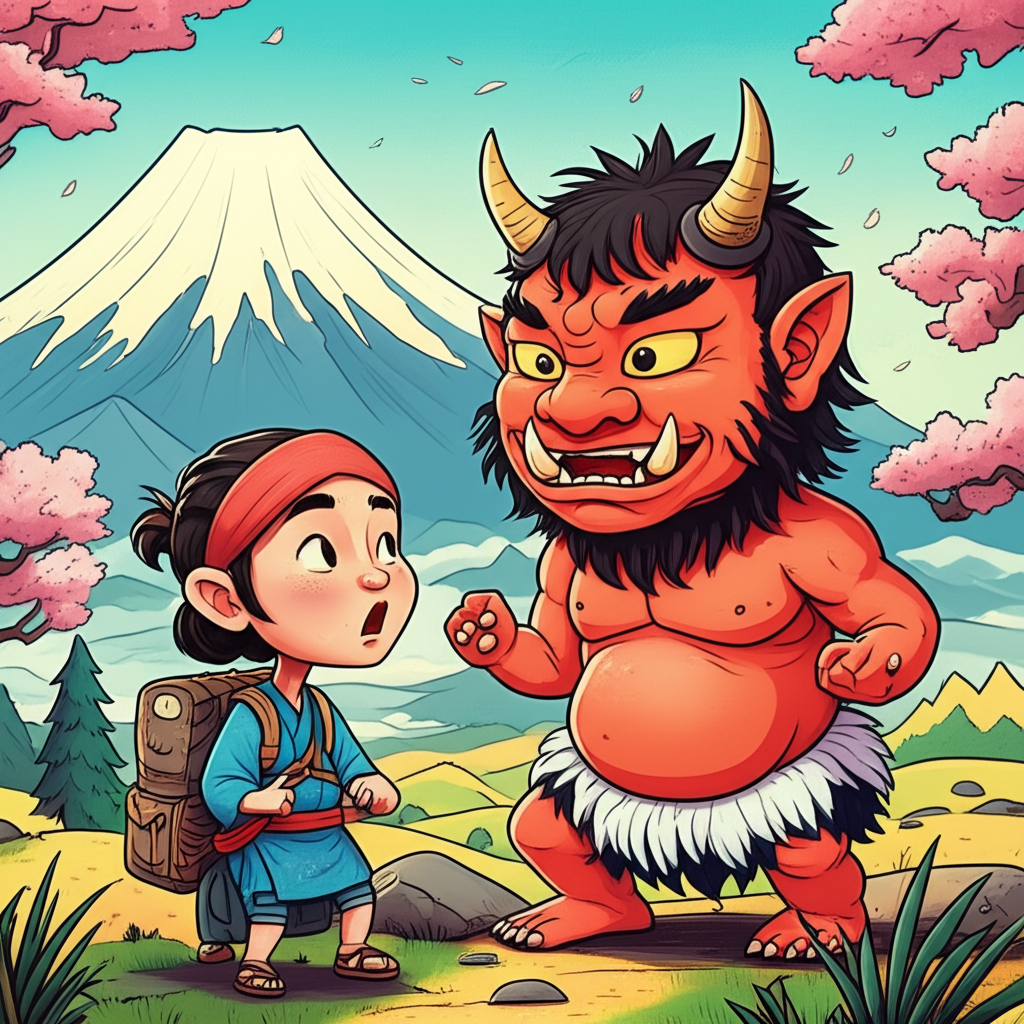
In the realm of Japanese folklore, where mountains whisper ancient secrets and forests teem with unseen spirits, lies the legend of the Oni of Mount Fuji. This tale, passed down through generations, speaks of formidable demons dwelling in the volcanic heart of Japan’s most iconic peak. It is crucial to understand that this is a traditional story, a product of the rich imaginative tapestry woven by the people of ancient Japan, and not a reflection of verifiable reality.
Origins and Cultural Background: A World of Kami and Yokai
The myth of the Oni of Mount Fuji emerged from a cultural landscape deeply intertwined with Shintoism and early Buddhism. In the era when this myth took root, likely during the Heian (794-1185) or Kamakura (1185-1333) periods, the Japanese worldview was populated by countless kami (spirits inhabiting natural elements and phenomena) and yokai (supernatural creatures). Life was perceived as a delicate balance between the human world and the spirit realm. Mountains, especially those as imposing as Mount Fuji, were seen as sacred spaces, potent with spiritual energy and potential danger.
People of that time often attributed unexplained events and natural disasters to the actions of these spirits and creatures. Morality tales, wrapped in the guise of encounters with yokai, served as a means of conveying social norms, warnings against hubris, and explanations for the unpredictable forces of nature. The Oni, in this context, often represented untamed aspects of nature, the consequences of unchecked greed, or the embodiment of chaos.
Character Description: The Fearsome Oni
The Oni, in Japanese folklore, are typically depicted as ogre-like figures with wild, unkempt hair, sharp claws, and two horns protruding from their foreheads. Their skin is often red, blue, green, or black. They are immensely strong and carry iron clubs or kanabo, which they wield with terrifying force. While some Oni are considered to be more mischievous than malicious, the Oni of Mount Fuji are often portrayed as formidable guardians of the mountain, capable of unleashing volcanic fury upon those who disrespect their domain.
Symbolically, the Oni can be interpreted as representing primal forces, both destructive and protective. Their horns and wild appearance signify untamed nature and a rejection of societal norms. The kanabo, a spiked club, symbolizes brute strength and the potential for violence. The Oni, therefore, may have served as a representation of the unpredictable and sometimes devastating power of nature, particularly the volcanic activity of Mount Fuji itself. They were a warning, a personification of the dangers lurking in the wilderness, and a reminder to treat the natural world with respect.
Main Story: The Hermit and the Oni of Fire
Old Man Hiroki was a hermit who lived in a small hut at the base of Mount Fuji. He was a humble man, known for his wisdom and his deep respect for the mountain. He lived a simple life, meditating daily and gathering herbs for medicine. One day, a tremor shook the ground, and the sky turned a menacing crimson. Hiroki knew that the Oni of Mount Fuji, angered by the careless actions of some villagers who had been polluting the streams, was about to unleash his wrath.
The Oni appeared before Hiroki, a towering figure wreathed in smoke and flame. His eyes burned like molten rock, and his voice was a rumble that echoed through the valleys. "Mortals have forgotten their respect for this mountain!" he roared. "Their greed poisons the land, and their arrogance insults the spirits! I will cleanse this place with fire!"
Hiroki, unafraid, bowed his head. "Great Oni," he said calmly, "your anger is justified. The villagers have indeed strayed from the path of respect. But destruction is not the answer. Give them a chance to learn from their mistakes. I will speak to them, and I will teach them the ways of harmony with nature."
The Oni, surprised by Hiroki’s courage and wisdom, paused. He saw the sincerity in the hermit’s eyes and the deep connection he had with the mountain. He lowered his kanabo slightly. "Very well, hermit," he grumbled. "I will give them one chance. But if they fail to heed your words, I will not hesitate to unleash my fury."
Hiroki thanked the Oni and immediately went to the village. He spoke to the villagers, reminding them of the sacredness of Mount Fuji and the importance of living in harmony with nature. He taught them how to respect the land and to use its resources sustainably. The villagers, moved by Hiroki’s words and fearing the wrath of the Oni, repented their ways and began to care for the mountain with renewed respect.
The Oni, observing the change in the villagers’ behavior, was appeased. He retreated back into the heart of Mount Fuji, and the mountain returned to its peaceful state. Hiroki continued to live at the base of the mountain, a constant reminder of the importance of respecting the power of nature and the need for balance in all things.
Symbolism and Meaning: A Lesson in Respect and Balance
The tale of the Oni of Mount Fuji is rich with symbolism. It represents the importance of respecting the natural world and the consequences of disrupting the balance of nature. The Oni embodies the raw, untamed power of the volcano, a force that can both create and destroy. Hiroki, the hermit, represents wisdom, humility, and the ability to mediate between humanity and the natural world.
The story also conveys a moral lesson about the importance of repentance and the possibility of redemption. The villagers, initially driven by greed and disrespect, are given a chance to learn from their mistakes and to change their ways. This suggests that even those who have strayed from the path can find their way back to harmony with nature and with each other.
Modern Perspective: The Oni in Popular Culture
The Oni, and the myth of the Oni of Mount Fuji, continue to resonate in modern Japanese culture and beyond. Oni figures appear in countless anime series, manga comics, video games, and films. They are often portrayed as powerful adversaries, but also sometimes as misunderstood creatures with their own codes of honor. The image of the Oni is used in festivals, artwork, and even advertising, demonstrating its enduring appeal and its continued relevance in the Japanese cultural landscape. In cultural studies, the Oni serves as an archetype for understanding the complex relationship between humanity and the natural world in Japanese folklore.
Conclusion: A Legacy of Imagination
The legend of the Oni of Mount Fuji is a testament to the power of storytelling and the enduring legacy of ancient Japanese culture. It is a reminder of the importance of respecting the natural world and the consequences of disrupting the delicate balance of nature. It is a story to be appreciated for its cultural significance and its imaginative richness. It is essential to remember that this is a cultural narrative and not a reflection of divine power or reality. As Muslims, we recognize that only Allah is the true Creator and Sustainer of the universe.
This story, like countless others passed down through generations, offers a glimpse into the beliefs, values, and anxieties of the people who created it. It is a testament to the human capacity for imagination and the enduring power of storytelling to shape our understanding of the world around us. By understanding and appreciating these cultural narratives, we can gain a deeper understanding of the human experience and the diverse ways in which people have made sense of the world throughout history.