
 fufufafa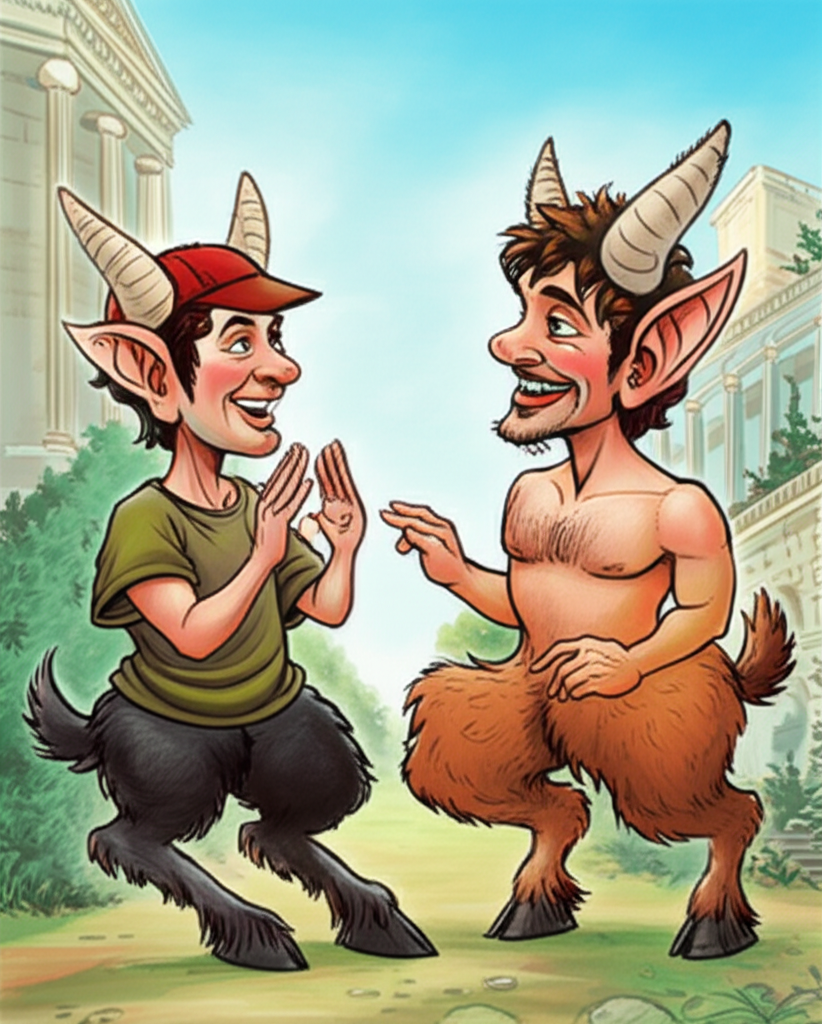
The whispers of ancient Rome, carried on the very winds that rustled through the cypress trees and echoed between the marble columns, often spoke of beings that walked the liminal spaces between the human and the wild. Among these tales, a particularly intriguing narrative recounts encounters with the Faunus, figures intrinsically tied to the untamed heart of the Italian landscape, and specifically, to the sacred ground of Capitoline Hill. This is not a chronicle of verifiable events, but rather a story, a tapestry woven from the beliefs and imagination of a bygone era, offering a window into how ancient Romans perceived the world around them.
The myth of the Faunus, and indeed many similar tales of nature spirits, flourished in the fertile soil of ancient Italic and later Roman culture. This was a society deeply intertwined with the rhythms of agriculture, the power of the natural world, and the ever-present influence of the divine. In an age before scientific understanding, the rustling leaves, the sudden storm, the fertility of the land, and the very essence of wild places were often attributed to unseen forces. Deities and spirits were not abstract concepts but active participants in daily life, influencing harvests, protecting flocks, and shaping the destinies of mortals. The Romans, in particular, possessed a complex pantheon and a rich tapestry of local folklore, where spirits of the wild, like the Faunus, played a vital role in their understanding of the world. Capitoline Hill, the citadel of Rome, was not just a political and religious center; it was also imbued with a sense of ancient, primal power, a place where the earthly and the divine could, in the stories of the time, intersect.
The figure of the Faunus, as depicted in these ancient narratives, is a creature of the woodland and the wild, a spirit of the untamed countryside that bordered the burgeoning Roman civilization. Imagine a being with the upper body of a man, often depicted with features that hinted at their wilder kin – perhaps pointed ears, or a rustic, unkempt beard. Yet, it was their lower half that truly set them apart, typically described as that of a goat, complete with shaggy fur, cloven hooves, and a tail. This duality, the blending of human and animalistic traits, was not intended to suggest a literal creature to be hunted or tamed, but rather to symbolize the inherent wildness and primal energy of nature itself. The Faunus was often associated with fertility, with the abundance of the land, and with the untamed, sometimes capricious, forces that governed growth and life. They were also known for their music, their pipes often said to produce enchanting melodies that could lure mortals or stir the very earth. Their presence on Capitoline Hill, a place of immense spiritual and civic importance, suggested a deep connection between the power of the wild and the foundations of Roman society.
Let us then, for a moment, step back in time and imagine a traveler, perhaps a shepherd returning to the city after a long day tending his flock on the slopes of Capitoline. The sun, a molten orb, was beginning its descent, casting long, dramatic shadows across the ancient stones. The air, usually alive with the clamor of the city, had begun to quiet, settling into a hushed reverence as dusk approached. As he rounded a bend in a less-trodden path, near a grove of ancient oaks that clung precariously to the hillside, a sound reached his ears – a melody, unlike any he had ever heard. It was not the mournful bleating of his sheep, nor the call of a night bird. It was a series of lilting, reedy notes, weaving a complex and enchanting tune that seemed to emanate from the very heart of the trees.
Curiosity, a dangerous companion in such liminal hours, drew him forward. He peered through the deepening twilight, his heart thrumming with a mixture of awe and trepidation. And then, he saw it. Beneath the gnarled branches of the oldest oak, bathed in the ethereal glow of the rising moon, sat a figure. It was a being that defied simple description, a living embodiment of the wild. Its upper torso was that of a man, weathered and strong, with eyes that seemed to hold the ancient wisdom of the forest. But below the waist, it was unmistakably faunal, its goat-like legs drawn up, its cloven hooves resting on the mossy earth. A simple wooden pipe was held to its lips, and from it poured the captivating music that had drawn the traveler near. The figure did not acknowledge him directly, its gaze fixed somewhere in the distance, lost in its own ancient melody. The traveler stood frozen, a silent observer in a world that felt both intimately familiar and profoundly alien. He felt no threat, but rather a deep sense of being in the presence of something ancient and powerful, a spirit of the land that had chosen this sacred hill as its temporary abode. The air around the creature seemed to shimmer, imbued with an energy that pulsed with the rhythm of the earth. After what felt like an eternity, the music softened, then faded into silence. The figure, with a fluid, almost imperceptible movement, rose and melted back into the shadows of the trees, leaving the traveler alone once more, the echo of the melody lingering in his mind, a testament to the unseen world that coexisted with his own.
To the ancient Romans, such an encounter, or the tales of it, would have resonated with a multitude of meanings. The Faunus, with its dual nature, could have symbolized the inherent tension between civilization and the wild, between order and chaos. Its association with fertility and the land would have reinforced the importance of respecting and appeasing the natural forces that sustained their lives. The enchanting music might have represented the allure and the potential danger of the untamed world, a reminder that nature’s bounty could also be accompanied by mystery and unpredictability. Furthermore, placing such a spirit on Capitoline Hill suggested a deep veneration for the land itself, recognizing that even the most sacred human endeavors were ultimately dependent on the power and vitality of the natural environment. It was a way of acknowledging that Rome, for all its might and ambition, was still a part of a larger, wilder cosmos.
In contemporary times, the spirit of the Faunus, and the broader fascination with mythological beings, continues to echo through our cultural landscape. In literature, these figures are often reimagined as characters in fantasy novels, embodying wildness, ancient magic, or enigmatic wisdom. In film and video games, they can be depicted as guardians of enchanted forests, mischievous tricksters, or primal forces that protagonists must contend with. In academic circles, the study of mythology and folklore offers valuable insights into the beliefs, fears, and aspirations of past societies. These narratives, including the tales of the Faunus, serve as important artifacts for understanding cultural evolution, human psychology, and the enduring power of storytelling.
It is crucial to reiterate that the encounter with the Faunus of Capitoline Hill, as we have explored it, is a traditional story, a product of ancient imagination and a reflection of cultural beliefs from a bygone era. It is not a historical fact or a matter of religious doctrine. As Muslims, we understand that the ultimate Creator and Sustainer of all existence is Allah (God) alone. These stories, however, offer a profound glimpse into the rich tapestry of human heritage, the enduring power of our collective imagination, and the age-old tradition of storytelling that connects us to the past and helps us understand the diverse ways in which humanity has sought to make sense of the world. The echoes of these ancient tales continue to resonate, reminding us of the enduring human desire to explore the mysteries of the unseen and to find meaning in the stories we tell.


