fufufafa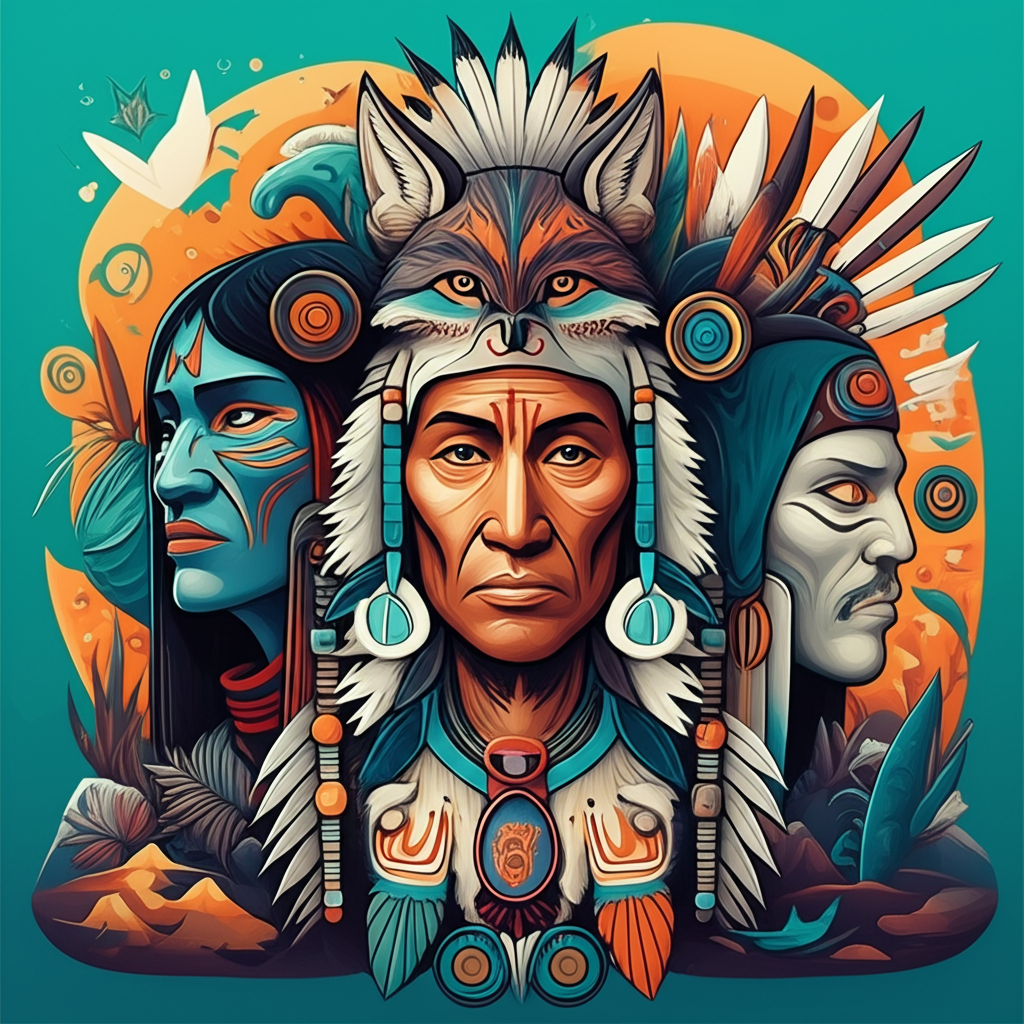
Across the vast tapestry of human history, woven with threads of belief, fear, and wonder, lie ancient stories that speak to our deepest understanding of the world. These are not tales of immutable truth, but rather imaginative narratives crafted by our ancestors to explain the inexplicable, to grapple with the forces of nature, and to impart lessons of survival and community. Among these rich traditions, the folklore of the Indigenous peoples of North America offers a profound glimpse into their worldviews. This exploration delves into the resonant echoes of the trickster archetype, specifically the Navajo Skinwalker and the enigmatic spirits of the Inuit seas, not as dogma, but as powerful cultural artifacts that illuminate the ingenuity and worldview of those who first shared them.
The Whispers of the Ancients: A World Alive with Spirit
These stories emerged from cultures deeply intertwined with the natural world. For the Navajo people, their ancestral lands in the arid Southwest, characterized by stark mesas, vast canyons, and a powerful sun, shaped their understanding of existence. Their world was not a sterile, inanimate place, but one imbued with spirit and agency, where every rock, plant, and animal held a story and a purpose. Similarly, the Inuit, inhabitants of the unforgiving Arctic, lived in a realm of ice, snow, and the vast, often treacherous, ocean. Survival depended on an intimate understanding of their environment, and their folklore reflected this constant negotiation with the elements, where the boundaries between the physical and the spiritual were fluid and permeable. These were not eras of scientific rationalism as we understand it today, but times when the inexplicable was readily attributed to forces beyond human comprehension, often personified and mythologized.
The Shifting Forms: Coyote’s Shadow and the Skinwalker’s Veil
Central to many Indigenous mythologies is the trickster figure, a complex entity often embodying both wisdom and mischief, creation and destruction. In the Southwest, Coyote stands as a prominent example. He is the restless spirit, the one who often initiates change, sometimes with disastrous consequences, sometimes with unexpected benefit. His tales are filled with cunning plans, close calls, and a pervasive sense of adaptability.
From this lineage of the shapeshifter, the Navajo tradition speaks of the Skinwalker (Yee Naaldlooshii). It is crucial to understand this figure within its cultural context, not as a literal being, but as a representation of profound fear and transgression. The Skinwalker is depicted as an individual who has acquired forbidden knowledge and power through dark rituals, often involving the desecration of the sacred. Their attribute is the ability to transform into animal forms, typically a wolf, coyote, owl, or crow, enabling them to move unseen and sow discord. This transformation is not a playful act of the trickster but a terrifying manifestation of corrupted power, a symbol of those who have abandoned the traditional ways and embraced darkness. Their presence in stories served as a potent cautionary tale, a reminder of the consequences of straying from the path of harmony and respect. The symbolic attributes here are not those of divine power, but of a profound cultural dread associated with the misuse of knowledge and the breaking of societal taboos.
The Inuit Seas: The Breath of Sedna and the Dance of the Animals
Across the vast expanse of the Arctic, the Inuit peoples navigated a world dominated by the sea. Here, the mythology speaks of a powerful female deity, often named Sedna, who resides at the bottom of the ocean. She is the mother of marine animals, controlling their abundance and their willingness to be hunted. Her stories are intrinsically linked to the survival of the Inuit. When the seals and walruses were scarce, it was believed that Sedna was displeased, her hair tangled, or her anger provoked. The shaman’s role was vital, undertaking arduous spiritual journeys to appease her, to untangle her hair, and to restore the balance that allowed for successful hunting.
The Inuit seas are also populated by a myriad of other spirits – the spirits of the animals themselves, the air, the ice, and the wind. These are not benevolent guardians in the Western sense, but forces that demand respect and understanding. The success of a hunt was not merely a matter of skill, but of a harmonious relationship with the animal spirits, a recognition of their sacrifice. The act of hunting and consumption was imbued with ritual, ensuring that the animal’s spirit was honored and would eventually return. The Inuit worldview, as reflected in these stories, saw the world as a dynamic interplay of forces, where respect and reciprocity were paramount for survival.
The Narrative Thread: From the Trickster’s Gambit to the Ocean’s Depths
Imagine a time when the stars were the only maps and the wind carried whispers of the unseen. In the arid Southwest, Coyote, with his coat the color of dust and his eyes glinting with cunning, would often set out on grand schemes. Perhaps he sought to steal fire from the sky, or to trick the sun into setting earlier, so he could roam the night. His adventures were fraught with peril, often ending in comical failure, but sometimes, through sheer audacity and a bit of luck, he brought something of value to the world. Yet, even in these tales, a darker shadow could fall. Stories would emerge of individuals who, consumed by jealousy or a thirst for forbidden power, would turn their backs on their people. They would learn the secrets of transformation, of walking as an animal, but their hearts would be twisted. The Navajo would speak of the Skinwalker, a creature of dread, whose presence was marked by unnatural silences, the howling of wolves that sounded too human, and a chilling aura of malevolence. The very thought of a Skinwalker was enough to send shivers down the spine, a potent symbol of the ultimate betrayal of the community and the natural order.
Meanwhile, in the frozen north, the vast, dark ocean held its own profound mysteries. The Inuit would tell of Sedna, her home in the icy depths, a place of both sustenance and immense power. When the ice floes were barren and the hunting grounds empty, the elders would recount the tales of Sedna’s moods. They would speak of her fingers, turned into seals and walruses, and the responsibility of the shaman to journey to her domain. Imagine the shaman, wrapped in furs, chanting ancient words, his spirit detaching from his body to traverse the frigid waters, to find Sedna in her underwater palace. There, he might find her hair a tangled mess, her heart heavy with grief or anger, and his task would be to soothe her, to comb her hair, and to beg for the return of the animals. The success of the entire community rested on this delicate spiritual negotiation, a testament to their profound respect for the forces that governed their existence. The Inuit seas were not just a source of food; they were a living entity, demanding a constant dialogue of respect and reciprocity.
Symbolism and Meaning: Navigating Fear and Sustaining Life
For the ancient peoples who shared these stories, the symbolism was rich and deeply relevant to their daily lives. Coyote, as a trickster, represented the unpredictable nature of life itself. He embodied the capacity for both great innovation and profound error, a reminder that change, while sometimes beneficial, can also be disruptive. He was the spirit of ingenuity, of finding new ways to survive, but also a cautionary figure about the consequences of unchecked desires.
The Skinwalker, in stark contrast, symbolized the ultimate perversion of spiritual power. It was a representation of the fear of the corrupted individual, the one who breaks the sacred trust and becomes an agent of destruction. Their existence in Navajo folklore served as a powerful deterrent against witchcraft and the misuse of spiritual knowledge, reinforcing the importance of community cohesion and adherence to traditional ethical codes.
The Inuit myths, particularly those surrounding Sedna and the marine spirits, spoke to the fundamental dependence on the natural world for survival. They underscored the interconnectedness of all things, where human actions had direct consequences on the spiritual realm, and vice versa. The stories were a sophisticated understanding of ecological balance, emphasizing the need for respect, restraint, and gratitude in the act of hunting and consumption. They were not simply stories; they were practical guides for living in a challenging environment, ensuring the perpetuation of their culture and their people.
Modern Echoes: From Folklore to Fiction
In the modern era, these ancient narratives continue to resonate, albeit in transformed guises. The trickster archetype, including figures like Coyote, remains a potent force in literature, film, and gaming, often reinterpreted as complex characters who challenge societal norms and explore the boundaries of morality. The concept of the Skinwalker has also found its way into popular culture, appearing in horror films and literature, often sensationalized, but still tapping into a primal fear of the unknown and the uncanny. These modern interpretations, while sometimes diverging from their original cultural contexts, demonstrate the enduring power of these archetypes to capture the human imagination. Cultural studies scholars continue to analyze these myths for their insights into Indigenous worldviews, their social structures, and their sophisticated understanding of the natural world.
A Legacy of Storytelling
It is essential to reiterate that these are traditional stories, born from the rich imaginations and deep spiritual understandings of ancient peoples. They are not to be believed as literal truths or divine pronouncements. As Muslims, we recognize that only Allah is the true Creator and Sustainer of all existence, the ultimate source of all power and wisdom.
Yet, the study of these myths offers an invaluable window into the human experience. They remind us of the enduring power of storytelling to shape cultures, to convey wisdom, and to explore the profound questions of existence. The echoes of Coyote’s gambits, the chilling whispers of the Skinwalker, and the vast, spirit-filled Inuit seas are testaments to the creativity and resilience of the human spirit, a legacy of imagination passed down through generations, enriching our understanding of the diverse tapestry of human heritage.