
 fufufafa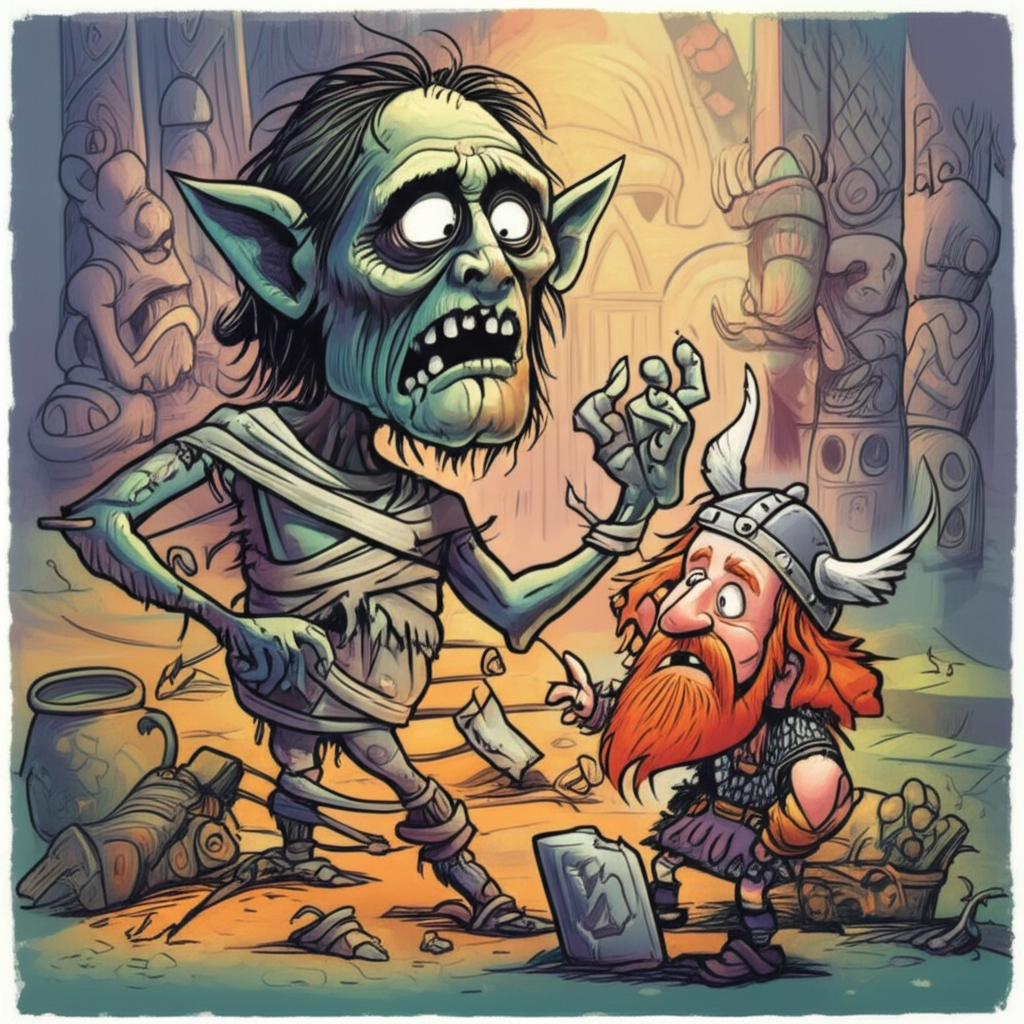
The chilling winds that sweep across the desolate, snow-laden landscapes of ancient Scandinavia have long carried tales of a world brimming with powerful gods, fearsome giants, and the restless spirits of the departed. These narratives, woven into the fabric of Norse mythology, offer a glimpse into the worldview of a people who lived in close communion with the harsh beauty of their environment and pondered the mysteries of life and death. Among these enduring legends is the spectral figure of the Draugr, a creature often associated with the halls of Asgard, the celestial realm of the Aesir gods, though more commonly found guarding ancient burial mounds. This is not a story to be believed as truth, but rather a traditional narrative passed down through generations, offering a window into the cultural imagination of our ancestors.
The stories of the Draugr emerged from a culture deeply rooted in the Viking Age, a period roughly spanning from the late 8th to the mid-11th century. The Norse people were seafarers, warriors, and farmers, their lives dictated by the unforgiving rhythms of nature. Their world was a place where the boundaries between the physical and the supernatural were blurred. They saw the hand of divine forces in the crashing waves, the rolling thunder, and the shifting seasons. Death was a constant companion, and the afterlife, a realm of both glory in Valhalla for the chosen warriors and a more somber existence in Hel for others, was a subject of profound contemplation. This worldview fostered a rich tapestry of myths and legends, designed to explain the inexplicable, to instill moral lessons, and to provide a framework for understanding their place in the cosmos.
The Draugr, as depicted in these ancient tales, is not a simple ghost. It is a reanimated corpse, a being that has risen from its grave, imbued with unnatural strength and malevolent intent. Unlike a spirit that might wander freely, the Draugr is tethered to its physical remains, often retaining its corporeal form, albeit in a state of decay. Its eyes might glow with an unholy light, its skin stretched taut over bone, and its breath carry the stench of the grave. Symbolically, the Draugr represents the enduring power of the past and the fear of what lies beyond the veil of death. It embodies the dark side of mortality, the lingering echoes of a life that refuses to fully relinquish its hold, and the potential for corruption that even the deceased might harbor. In some interpretations, its association with Asgard, though often secondary to its role as a guardian of tombs, could suggest a twisted echo of the eternal presence of the gods themselves, a perversion of their immortal vitality.
Imagine, then, a lone traveler, perhaps a skald seeking inspiration or a warrior on a perilous quest, venturing into the shadowed fringes of Asgard, or more likely, a place rumored to be touched by its potent aura – a hallowed, ancient burial mound where the spirits of fallen heroes or kings were said to rest. The air grows heavy, the silence oppressive, broken only by the whistling of the wind through skeletal trees. A faint, phosphorescent glow emanates from within the mound, a light that is neither comforting nor natural. As the traveler cautiously approaches, the earth groans, and from a gaping maw in the earth, a figure emerges.
It is a Draugr. Its form is gaunt, its ancient armor rusted and clinging to its desiccated flesh. The very air around it seems to crackle with an unnatural cold. Its eyes, like embers in the darkness, fix upon the intruder, a silent, unblinking accusation. A low, guttural growl emanates from its throat, a sound that seems to vibrate through the very stones of the earth. It moves with an unnatural speed, its limbs stiff but powerful, its strength far exceeding that of a living man. It might wield an ancient, cursed weapon, or perhaps its touch alone is enough to drain the life force from its victims. The encounter is not one of dialogue or reason, but a primal struggle against a force that defies the natural order, a manifestation of death’s lingering grip, a guardian of secrets and perhaps of treasures buried with the dead. The traveler, if they survive, would recount a harrowing tale of spectral power and the chilling reality of a world where the dead refuse to stay dead.
The symbolism embedded within the Draugr myth is multifaceted. For the ancient Norse, the Draugr likely represented a deep-seated fear of death and the unknown that lay beyond it. It could also symbolize the dangers of avarice and the curse that can befall those who disturb the resting places of the dead. The Draugr’s unyielding nature and relentless pursuit of intruders might have served as a cautionary tale against disrespecting the ancestors and their traditions. Furthermore, its strength and resilience could have been seen as a dark reflection of the heroic ideals of their own society, a twisted embodiment of endurance and an unwillingness to surrender, even in death. If its presence is even hinted at within the broader lore connected to Asgard, it might also represent the inherent dangers and the unseen forces that exist even within the divine realms, suggesting that even gods are not entirely immune to the darker aspects of existence.
In modern times, the Draugr continues to capture the imagination. It has found a prominent place in contemporary fantasy literature, video games, and even film. From its role as a formidable undead enemy in RPGs like Skyrim, where it guards ancient Nordic ruins, to its appearances in books and other media that explore Viking lore, the Draugr remains a compelling figure. Today, it is interpreted not as a literal threat, but as a powerful narrative device, a symbol of enduring fear, the consequences of past actions, and the allure of the macabre. It serves as a reminder of the rich storytelling traditions of the past and the enduring human fascination with the supernatural.
It is important to reiterate that the Draugr is a figure of myth and folklore, a creation of ancient human imagination and storytelling. As Muslims, we recognize that only Allah (God) is the true Creator and Sustainer of all existence, and that all power and authority reside with Him alone. These stories, while fascinating from a cultural and historical perspective, do not hold any divine truth. They are a testament to the human desire to understand the world, to grapple with the mysteries of life and death, and to express their deepest fears and hopes through the powerful medium of narrative. The tales of the Draugr, like countless other myths and legends from around the globe, offer us a unique opportunity to connect with our shared cultural heritage, to appreciate the boundless nature of human creativity, and to understand how ancient peoples made sense of their world through the magic of storytelling.


