
 fufufafa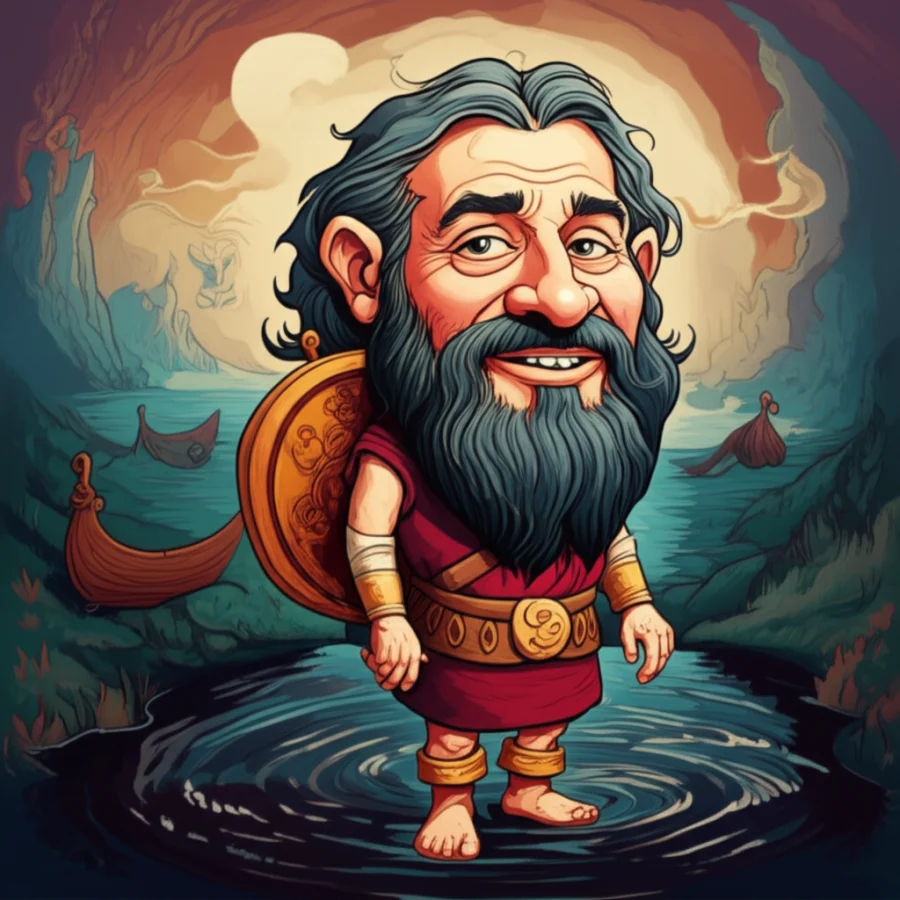
From the mist-shrouded valleys and ancient forests of Northern Europe, particularly the Norse and Germanic traditions, emerges a tapestry of myths woven with the threads of nature, magic, and the unseen. Among these tales, the story of the Alfar and the River of Souls offers a glimpse into how our ancestors grappled with the mysteries of life, death, and the enduring spirit. This is not a chronicle of divine decree or a call to devotion, but rather a traditional narrative, passed down through generations, reflecting a particular worldview held by ancient peoples.
The era in which these stories took root was one where the natural world held immense power and agency. Life was intrinsically linked to the cycles of the seasons, the bounty of the earth, and the dangers lurking in the wild. For those living in these early societies, the world was often perceived as a place teeming with spirits, both benevolent and formidable, that inhabited every aspect of existence – from the mighty oak to the flowing stream. The boundaries between the physical and the spiritual were fluid, and understanding these unseen forces was crucial for survival and well-being. Death, a constant and often abrupt reality, was a profound enigma, prompting the creation of elaborate explanations and pathways to comprehend its transition.
Central to this particular narrative is the figure of the Alfar, often translated as "elves." These beings are not depicted as the diminutive, whimsical sprites of later folklore. Instead, they are presented as beings of great power and beauty, intimately connected to the primal forces of nature. They are sometimes described as radiant, luminous beings, possessing an ethereal grace. Their attributes are symbolic rather than literal. The Alfar could represent the vibrant, life-giving energy of nature itself – the burgeoning growth of spring, the shimmering light of the sun filtering through leaves, or the deep, hidden wisdom of the ancient forests. Their beauty might symbolize the allure and awe inspired by the untamed wilderness, while their power could reflect the awe and fear elicited by the unpredictable forces of nature. They are often associated with fertility, prosperity, and sometimes, with hidden knowledge and magic.
The narrative of the Alfar and the River of Souls paints a picture of a journey beyond the mortal realm. When life’s thread is finally severed, it is said that the spirit, the essence of a being, does not simply vanish. Instead, it embarks on a passage, a transition akin to a flowing river. This is the River of Souls, a mythical waterway that carries the departed to their ultimate destination. The Alfar, in their role as guardians or guides of this ethereal current, are depicted as overseeing this flow. They are not necessarily judges or executioners, but rather custodians of this cosmic process. Imagine a scene, bathed in the soft glow of an unseen moon, where the Alfar, their forms shimmering with an inner light, stand on the banks of a river that appears to be made of pure starlight or liquid moonlight. The souls, perhaps appearing as wisps of luminescence or faint echoes of their former selves, drift gently downstream. The Alfar might be seen extending a hand, not to pull, but to steady the passage, ensuring that each soul finds its rightful course. Some tales suggest the Alfar possess the ability to influence the flow, perhaps guiding souls towards realms of peace or oblivion, depending on their deeds or the whims of the cosmic order as understood by the storytellers. The river itself is a powerful symbol of continuous motion, the ceaseless passage of time, and the inevitable journey of all living things.
The symbolism embedded within this myth is rich and multifaceted. The Alfar, as we’ve discussed, embody the vibrant, life-affirming, and sometimes mysterious aspects of the natural world. Their connection to the River of Souls suggests a belief in an afterlife, a continuation beyond the physical form, and a perceived order to this transition. The river itself symbolizes the relentless march of time and the unavoidable nature of death. It could also represent a cleansing force, washing away the earthly attachments and preparing the soul for its next existence. The Alfar’s role as guardians might have offered comfort to those facing the unknown, suggesting that even in the face of mortality, there were beings of power and grace overseeing the process. This could also speak to a deep respect for the unseen forces that governed their lives and the cosmos.
In the modern era, the Alfar and the concept of the River of Souls have found new life in the realms of literature, film, and gaming. Authors and creators often draw inspiration from these ancient myths to populate fantastical worlds with beings of profound magic and lore. The Alfar, sometimes reimagined as wise, ancient beings or powerful nature spirits, frequently appear in fantasy novels and role-playing games, adding depth and mystique to these fictional universes. The River of Souls, or similar concepts of mystical waterways connecting realms, serves as a potent metaphor for transition, destiny, and the spiritual journey. These modern interpretations, while often diverging from the original mythological context, underscore the enduring power of these narratives to spark imagination and explore universal themes. Cultural studies departments also delve into these myths to understand the worldview, beliefs, and societal structures of ancient peoples.
It is vital to reiterate that the Alfar and the River of Souls are products of human imagination and cultural storytelling traditions, originating from ancient European folklore. As Muslims, we recognize that the true Creator and Sustainer of all existence is Allah (SWT). Our understanding of the afterlife and spiritual matters is based on the divine revelations received through our prophets and holy scriptures. This ancient myth, therefore, is not a belief system but a fascinating artifact of human cultural heritage, a testament to our ancestors’ attempts to comprehend the profound mysteries of life and death through narrative and symbolism. By studying such stories, we gain valuable insights into the diverse tapestry of human thought, the evolution of cultural perspectives, and the enduring power of storytelling to shape our understanding of the world and our place within it. These tales, passed down through the ages, continue to resonate, reminding us of the rich legacy of human creativity and our innate desire to find meaning in the grand, unfolding story of existence.







