fufufafa
In the vibrant tapestry of ancient Chinese folklore, where the cosmos and earthly realms intertwined through the imagination of its people, lay a rich collection of myths and legends. Among these treasured narratives are tales of elemental deities and poignant romances, stories that speak to the human condition and the mysteries of the universe. This article delves into two such prominent threads: the formidable figure of Zhurong, the god of fire, and the enduring, bittersweet "Oath of the Weaver Girl and Cowherd." It is crucial to understand that these are traditional stories, born from the creative spirit of ancient peoples, serving as cultural artifacts rather than objects of belief or practice. They offer a unique window into a worldview far removed from our own, presented purely for historical, educational, and cultural appreciation.
Origins and Cultural Background
The myths surrounding figures like Zhurong and the tale of the Weaver Girl and Cowherd emerged from a China steeped in agrarian traditions, stretching back millennia. During the Shang and Zhou dynasties, and evolving through subsequent eras, people lived intimately with the rhythms of nature. Their world was often seen as populated by powerful, unseen forces: deities of mountains, rivers, winds, and fire, along with celestial beings who governed the stars. Society was often structured around imperial rule, filial piety, and a deep respect for cosmic order. Ancient Chinese cosmology envisioned a flat Earth beneath a domed heaven, with celestial bodies moving in predictable patterns, influencing life below. This worldview fostered a profound sense of awe and a desire to explain natural phenomena and human experiences through narrative. Myths provided not only explanations for the inexplicable but also moral guidance, a sense of shared identity, and entertainment in a world devoid of modern distractions. They reflected a society that sought harmony with nature and believed in a universe interconnected by fate and destiny.
Character Descriptions: Elemental Might and Star-Crossed Lovers
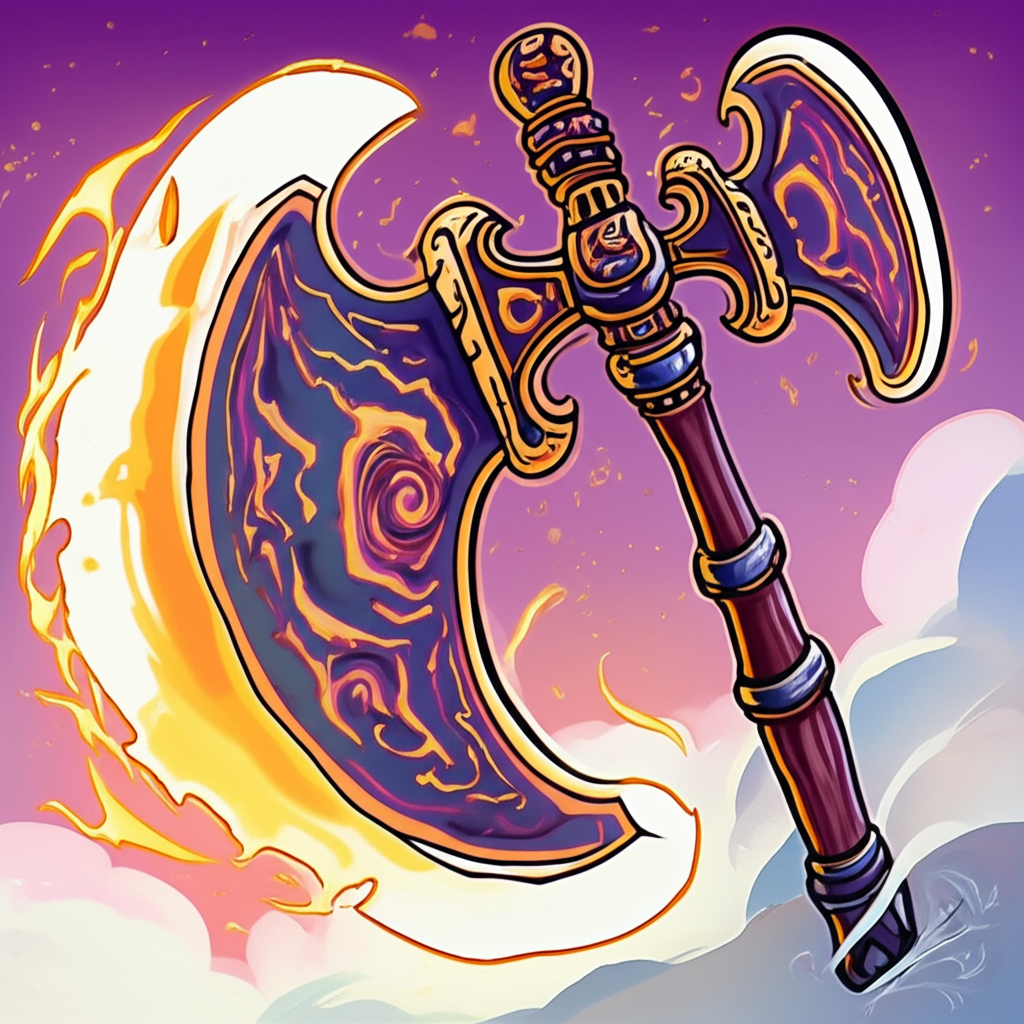
Zhurong, the Lord of Flame: Zhurong stands as one of the most ancient and potent deities in the Chinese mythological pantheon, often revered as the God of Fire and the South. Depictions of Zhurong vary, sometimes showing him with a human face and the body of a beast, riding two dragons, or holding a fiery torch. His symbolic attributes include his dominion over fire, which represented both destructive power and life-giving warmth, crucial for ancient survival. He was also associated with the summer and the southern direction, embodying vitality, passion, and the transformative power of heat. In some narratives, Zhurong is presented as a minister of the mythical Yellow Emperor or a descendant of the legendary Yan Emperor, further cementing his ancient lineage and authority within the celestial hierarchy. His presence signifies a primal, elemental force, essential to the balance of the cosmos.
The Weaver Girl (Zhi Nü) and the Cowherd (Niu Lang): These two figures are the heart of one of China’s most beloved and enduring romantic myths.
- Zhi Nü, the Weaver Girl: She is often depicted as a celestial maiden, the youngest daughter of the Jade Emperor (or Queen Mother of the West). Her symbolic attributes include diligence, beauty, and artistic skill, as she was tasked with weaving colorful clouds and celestial garments for the gods. She represents the elegance and industriousness often valued in ancient Chinese society, as well as the ethereal beauty of the heavens.
- Niu Lang, the Cowherd: A mortal, Niu Lang embodies humility, hard work, and kindness. He is often portrayed as an orphaned boy, living a simple life, tending his oxen. His symbolic attributes speak to the importance of agriculture, the dignity of labor, and the simple virtues of a rural existence. The faithful ox that often accompanies him is a symbol of loyalty, wisdom, and a connection to the natural world, sometimes even possessing magical abilities.
These characters, while distinct in their origin (one elemental god, two star-crossed lovers), represent different facets of the vast Chinese mythological landscape, from the grand cosmic forces to the deeply human experiences of love and longing.
Main Story: A Cosmic Drama and a Fated Separation
The tale of Zhurong often begins in the primordial mists of ancient China, where chaos reigned. It is said that Zhurong, with his command over fire, played a crucial role in shaping the world. One prominent myth recounts a great cosmic battle between Zhurong and Gonggong, the god of water. Their clash was cataclysmic, a struggle between opposing elemental forces that shook the foundations of the universe. When Gonggong, in his rage, smashed his head against Buzhou Mountain, one of the pillars supporting the heavens, the sky tilted, and the earth cracked. Zhurong, representing the power of fire and order, was often depicted as the victor, helping to restore balance to a world threatened by primal forces. His story is one of elemental power, cosmic conflict, and the establishment of order in a nascent world, a testament to the immense forces ancient people imagined at play in their universe.
Separate yet equally profound is the narrative of the Weaver Girl and Cowherd, a story that resonates with a different kind of cosmic significance. Long ago, in the celestial realm, lived Zhi Nü, the seventh daughter of the Jade Emperor. Her days were spent diligently weaving magnificent garments from starlight and clouds, creating the beautiful tapestries of the heavens. Yet, despite her exalted status, Zhi Nü yearned for a life beyond her divine duties, for the simple joys of the mortal world.
One day, with her sisters, she descended to Earth, where she encountered Niu Lang, a kind-hearted cowherd. Niu Lang, an orphan, lived a humble life, tending his fields and his beloved, old ox. There are variations to their meeting; some say the ox, a magical creature, advised Niu Lang to steal Zhi Nü’s celestial robes while she bathed, compelling her to stay. Regardless of the precise circumstances, an undeniable love blossomed between the celestial maiden and the mortal cowherd. They married, built a small home, and soon had two children. Their life was one of idyllic happiness, a testament to true love transcending societal bounds.
However, such a union between a goddess and a mortal was strictly forbidden by the celestial laws. The Jade Emperor and the Queen Mother of the West, enraged by Zhi Nü’s abandonment of her heavenly duties and her marriage to a mere mortal, ordered her immediate return to the heavens. Heavenly soldiers descended upon their home, tearing Zhi Nü away from her weeping husband and children.
Heartbroken, Niu Lang, guided by his loyal ox (who, in some versions, had foretold this tragedy and offered his hide as a means for Niu Lang to fly), wrapped his children in baskets carried on a pole and pursued his beloved into the sky. He flew tirelessly, driven by his oath of eternal love. Just as he was about to reach her, the furious Queen Mother of the West took a hairpin from her hair and drew a wide, silvery line across the sky. This shimmering line instantly transformed into the vast, uncrossable Milky Way, forever separating the two lovers.
Yet, even in their profound sorrow, their love persisted. The Jade Emperor, moved by their unwavering devotion and the cries of their children, granted them a single reprieve: once a year, on the seventh day of the seventh lunar month, a flock of magpies would form a bridge across the celestial river, allowing Zhi Nü and Niu Lang to reunite for one precious night. And so, every year, they gaze across the Milky Way, patiently awaiting their annual reunion, their love a beacon in the night sky.
Symbolism and Meaning
These ancient tales were rich with meaning for those who first shared them. Zhurong, the god of fire, symbolized not only the raw power of nature but also the concept of cosmic order, the establishment of civilization, and the ongoing struggle between elemental forces. His stories often represented humanity’s attempt to understand and perhaps even appease the powerful natural phenomena that governed their lives.
The "Oath of the Weaver Girl and Cowherd," on the other hand, speaks to universal human experiences. It symbolizes:
- Love and Separation: The enduring power of love that defies obstacles, and the profound pain of separation.
- Diligence and Humility: Zhi Nü’s weaving and Niu Lang’s cow-herding highlight the value of hard work and simple virtues.
- Cosmic Order vs. Human Emotion: The story explores the tension between strict celestial laws and the deep emotional bonds that humans form.
- Celestial Bodies: The myth provides an imaginative origin story for the Milky Way (the "Silver River") and the stars Vega (Zhi Nü) and Altair (Niu Lang), which are indeed separated by the Milky Way in the night sky. For ancient people, it offered a narrative explanation for the stars they observed, imbuing them with human-like drama and emotion.
- Hope and Patience: The annual reunion offers a glimmer of hope and underscores the virtue of patience and perseverance in the face of adversity.
Modern Perspective
Today, these myths continue to captivate and influence Chinese culture and beyond, though their interpretation has shifted from literal belief to cultural appreciation. Zhurong, while less frequently depicted than the star-crossed lovers, appears in historical dramas, video games, and fantasy literature as a powerful, ancient deity, representing elemental force and ancient heritage. His name might evoke a sense of primordial strength or a connection to China’s deep mythological roots.
The Weaver Girl and Cowherd myth, however, enjoys widespread popularity. It is the origin story for the Qixi Festival, often referred to as Chinese Valentine’s Day, celebrated annually on the seventh day of the seventh lunar month. During this festival, people make wishes for love, happiness, and good fortune, often gazing at the stars Vega and Altair. The story has been adapted countless times into films, television series, operas, ballets, and modern songs, each retelling adding new layers to its timeless appeal. It is studied in cultural courses as a prime example of Chinese romantic folklore and a testament to the enduring power of storytelling. Its themes of forbidden love, separation, and enduring hope resonate with audiences globally, cementing its place as a classic narrative of human emotion.
Conclusion
The tales of Zhurong, the fiery god, and the heart-rending "Oath of the Weaver Girl and Cowherd" are profound expressions of ancient Chinese imagination. They are not to be understood as divine truths or practices, but rather as invaluable cultural treasures that offer a window into the historical worldview, values, and artistic spirit of a civilization. As Muslims, we recognize that Allah alone is the true Creator and Sustainer of the universe, and all narratives outside of divine revelation are products of human ingenuity and cultural development. These myths serve as a testament to the universal human impulse to understand the world, to find meaning in the cosmos, and to weave stories that reflect our deepest hopes and fears. They remind us of the enduring power of cultural heritage, the boundless reach of human imagination, and the timeless tradition of storytelling that connects us across millennia.