fufufafa
The tales of ancient Greece, woven from threads of myth and legend, have long captivated the human imagination. Among these enduring narratives are the sagas of the Trojan War and the once-mighty Minoan civilization centered on the island of Crete. While the historical reality of a great conflict at Troy is debated by scholars, the myth surrounding it, and its potential entanglement with the memory of Crete’s decline, offers a fascinating glimpse into how ancient peoples processed monumental shifts in their world. This is not a chronicle of factual events, but a traditional story, a vibrant tapestry of imagination passed down through generations, reflecting their understanding of power, fate, and the forces that shaped their lives.
The origins of these stories lie in the Bronze Age Aegean, a period characterized by burgeoning trade, sophisticated artistry, and powerful maritime empires. The Minoan civilization, with its labyrinthine palaces like Knossos, flourished on Crete for centuries, its influence reaching far across the Mediterranean. The Mycenaean civilization, later to dominate mainland Greece, was heavily influenced by Minoan culture. The stories of the Trojan War, as we know them, were largely codified by the epic poet Homer centuries after the supposed events, drawing on a rich oral tradition that had preserved fragments of memory and embellished them with divine intervention and heroic deeds. These were societies deeply intertwined with the natural world, where the sun, sea, storms, and seasons were often seen as expressions of powerful, unseen forces. Their worldview was often animistic, attributing spirit or divine will to natural phenomena and the creatures that inhabited them. Myths provided a framework for understanding creation, the capriciousness of fate, and the often-harsh realities of life.
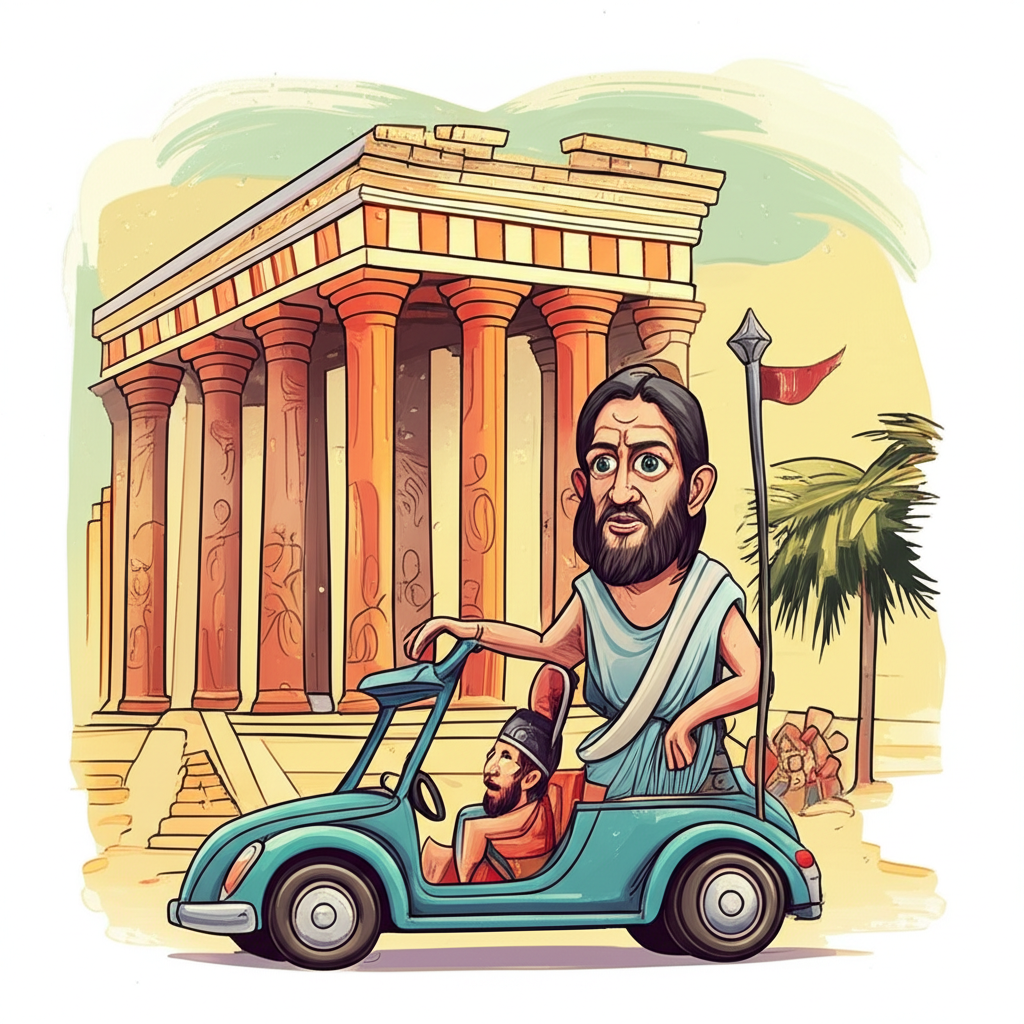
Within this mythical landscape, the figure of the Minotaur, a creature born from the union of Queen Pasiphae of Crete and a sacred bull, looms large in the lore of Knossos. This monstrous hybrid, with the head of a bull and the body of a man, represents a primal force, a terrifying embodiment of unchecked desire and the consequences of hubris. It was said to reside within the Labyrinth, a complex maze designed by the master craftsman Daedalus, a potent symbol of confusion, entrapment, and the hidden dangers that could lie beneath a seemingly ordered society. The Minotaur’s diet of Athenian youths, sacrificed to appease its hunger, speaks to a deep-seated fear of the monstrous and the terrible cost of appeasing such primal forces. The bull itself, a creature of immense power and fertility, was a significant symbol in Minoan culture, appearing in their art and religious practices. The Minotaur, therefore, can be interpreted as a distorted, terrifying manifestation of this powerful symbol, a warning against the perversion of natural order.
The connection between the decline of Knossos and the Trojan War is not a direct historical link, but a narrative thread woven through later interpretations of these ancient events. The myth suggests that the powerful Minoan civilization, represented by the grandeur of Knossos, eventually fell into decline. The reasons for this are multifaceted in legend, sometimes attributed to natural disasters like volcanic eruptions or earthquakes, and at other times to internal strife or the rise of external powers. The memory of this sophisticated civilization, its advanced culture and apparent vulnerability, may have contributed to the backdrop against which the story of Troy unfolded.
Imagine, then, a world where the echoes of Knossos’s demise still resonated. The Mycenaeans, who had absorbed much of Minoan culture, were now the dominant force in the Aegean. Their ambition and growing power, fueled by the wealth and trade routes once controlled by Crete, set the stage for grander ventures. The Trojan War, in this mythical context, emerges as a conflict born from such rising ambitions, perhaps a struggle for control of vital trade routes or an act of retaliation for perceived slights.
The narrative of the Trojan War, as recounted in epics like the Iliad, paints a vivid picture of heroic warriors and divine machinations. The abduction of Helen, wife of the Spartan king Menelaus, by the Trojan prince Paris, serves as the immediate catalyst for the decade-long siege of Troy. The Greeks, led by the formidable Agamemnon, King of Mycenae, gather their forces, their ships sailing across the wine-dark sea. We hear of the proud Achilles, whose rage drives much of the conflict, the wise Odysseus, whose cunning will eventually lead to the city’s downfall, and the valiant Hector, the defender of Troy. The gods themselves, personifications of natural forces and human emotions, are depicted as actively involved, taking sides, influencing battles, and manipulating the destinies of mortals.
The fall of Troy, the culmination of this legendary war, is a story of deception and devastating destruction. The ingenious ruse of the Trojan Horse, a colossal wooden effigy filled with Greek soldiers, allowed the seemingly defeated Greeks to infiltrate the heavily fortified city. The ensuing slaughter and the razing of Troy represent a cataclysmic event, a turning point that would reshape the geopolitical landscape of the Aegean.
The potential aftermath of Knossos, viewed through the lens of these myths, can be seen as a precursor to the very conditions that fostered such large-scale conflicts as the Trojan War. The decline of a dominant power like Crete could have created a vacuum, a period of instability and competition among emerging powers, leading to the kind of ambitious military campaigns described in the Trojan War legends. The memory of a once-great civilization brought low might have served as a cautionary tale, a reminder of the impermanence of power and the ever-present threat of destruction, whether by natural forces or human conflict.
Symbolically, the story of Knossos’s decline and the subsequent Trojan War speaks to profound aspects of the ancient Greek worldview. The Minotaur and the Labyrinth, as mentioned, represent the potential for chaos and entrapment that can arise from the darker aspects of human nature and the disruption of natural order. The Trojan War, with its divine involvement and heroic struggles, explores themes of fate, free will, honor, glory, and the devastating consequences of pride and ambition. It reflects a society grappling with the complexities of human behavior, the role of destiny, and the eternal struggle between order and chaos. The very act of storytelling, of preserving these narratives, was a way for people to make sense of their world, to understand their past, and to imbue their lives with meaning.
In modern times, the myths surrounding Knossos and the Trojan War continue to resonate powerfully. They are a rich source of inspiration for literature, film, and video games, where the heroic deeds of Achilles, the cunning of Odysseus, and the tragic fate of Troy are retold and reinterpreted for new audiences. Archaeologists and historians continue to study the material evidence of Minoan and Mycenaean civilizations, seeking to uncover the historical kernels that may have fueled these enduring legends. In academic circles, these myths are studied as cultural artifacts, offering insights into the beliefs, values, and anxieties of ancient societies. They serve as powerful allegories for enduring human themes like conflict, heroism, loss, and the cyclical nature of civilizations.
It is crucial to reiterate that these narratives, as captivating and culturally significant as they are, are traditional stories, products of human imagination and the storytelling traditions of ancient peoples. They are not factual accounts of divine power or historical events to be believed as truth. As Muslims, we recognize that only Allah (God) is the true Creator and Sustainer of all existence, the sole source of divine power and guidance.
The enduring legacy of these myths lies not in their literal truth, but in their ability to connect us to the rich tapestry of human cultural heritage. They remind us of the power of storytelling to shape our understanding of the world, to explore the depths of human experience, and to keep alive the memory of civilizations that have long since faded into the mists of time. The tales of Knossos and Troy, in their imaginative splendor, continue to illuminate the enduring human quest for meaning, glory, and understanding.