fufufafa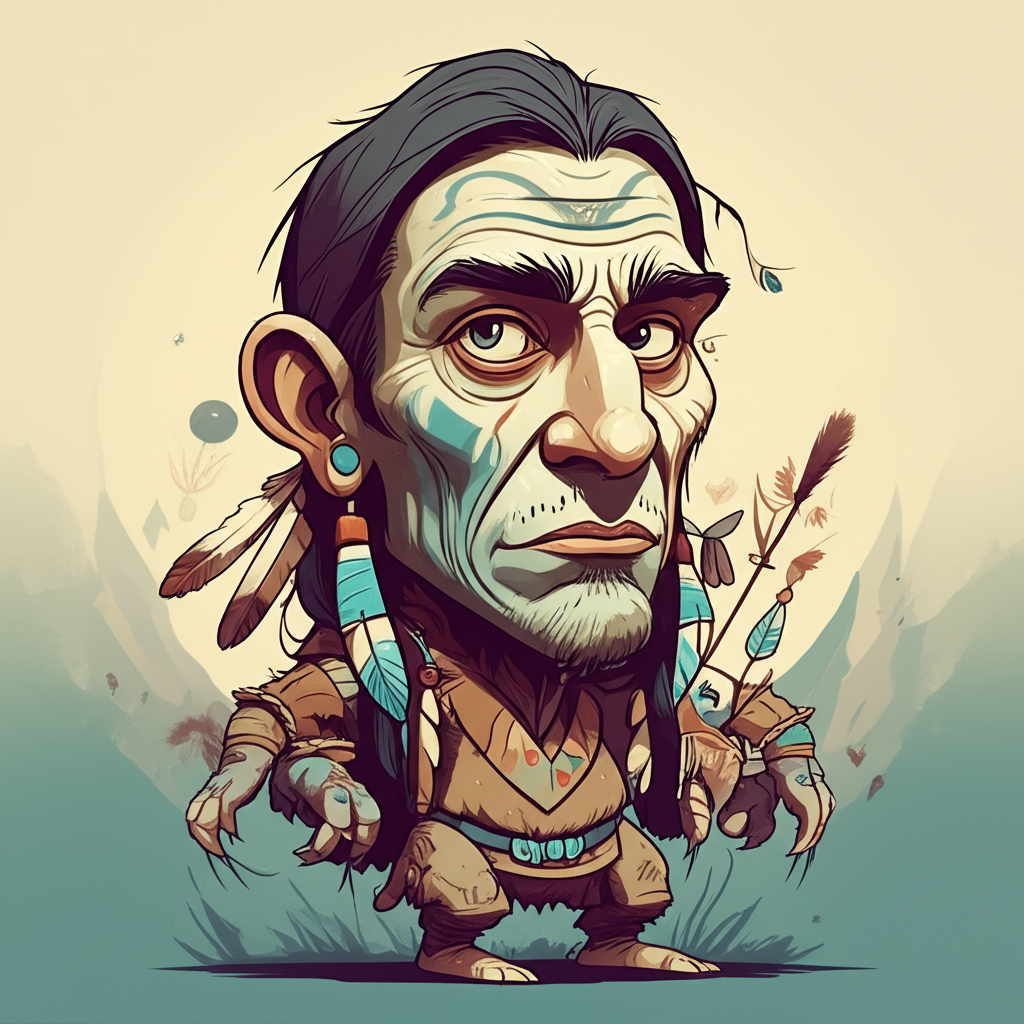
The concept of the Skinwalker, or yee naaldlooshii in the Navajo language, emerges from the rich tapestry of Diné oral traditions, stories passed down through generations around crackling fires, under star-dusted skies. These narratives are not static pronouncements but living embodiments of a worldview that perceived the universe as imbued with spirit, where the physical and spiritual realms were intimately intertwined. The Diné people, historically nomadic herders and farmers, lived in a land of stark beauty and formidable challenges – the mesas, canyons, and arid expanses of the American Southwest. Their lives were intimately tied to the rhythm of nature, the cycles of the sun and moon, the behavior of animals, and the subtle shifts in the environment.
In this ancient context, the world was understood as a delicate balance, a cosmic order maintained through ritual, respect, and adherence to sacred laws. Supernatural beings, both benevolent and malevolent, were not distant abstractions but active participants in the daily lives of humans. The land itself was alive, a provider and a source of both wonder and danger. It was within this framework that stories of figures who could transcend the boundaries of form, who could walk in two worlds, took root. While the specific lore of the Skinwalker is distinctly Navajo, the vastness and sometimes unforgiving nature of the Great Plains, with its own unique ecological challenges and Indigenous cultures, might have fostered analogous narratives of beings that embodied the wildness of the land and the potential for transformation, however terrifying.
The Skinwalker, as described in traditional Navajo accounts, is not a creature of flesh and blood in the conventional sense. It is a human being who has attained forbidden knowledge and power, often through dark rituals and pacts, enabling them to transform into an animal form. This transformation is not simply a physical change but a spiritual one, allowing them to embody the characteristics and abilities of the animal they assume. Common depictions include coyotes, wolves, owls, and other creatures associated with the night and with the wild. The symbolic attributes of these animals – the cunning of the coyote, the ferocity of the wolf, the nocturnal vision of the owl – are often transferred to the Skinwalker, amplifying their perceived threat. The very act of transformation is seen as a perversion of natural order, a transgression against the sacred balance of the universe. They are often described as moving with unnatural speed and silence, their eyes glowing with an eerie light, and their presence instilling a primal sense of dread.
The narratives surrounding Skinwalkers often depict them as agents of malice, individuals who have deliberately chosen a path of darkness, preying on the innocent and spreading fear. One common theme involves a Skinwalker attempting to infiltrate a community, often by mimicking the voice of a loved one or by using their powers to cause misfortune. The stories serve as cautionary tales, emphasizing the importance of maintaining spiritual purity and respecting the established boundaries between the human and spirit worlds. A recurring narrative might describe a lone traveler, perhaps a young hunter or a woman collecting herbs, who becomes lost as twilight descends upon the vast plains. The wind, usually a familiar companion, begins to carry an unsettling howl, a sound that seems to twist and contort, unlike any natural wolf. The traveler might feel an inexplicable chill, a prickling sensation on their skin, as if unseen eyes are watching from the shadows. Then, a figure emerges from the deepening gloom – a silhouette that seems too tall, too gaunt, moving with a disturbing fluidity. Its form might shift subtly, the outline of a wolf’s head briefly appearing before resolving back into a human-like shape. The air crackles with an unseen energy, and the traveler is left with a chilling certainty that they are in the presence of something profoundly unnatural, a being that walks in the guise of man but harbors the spirit of the wild, a manifestation of ancient fears about the darker potentials within the human heart and the untamed forces of the natural world.
These stories, while terrifying, were not simply designed to instill fear for its own sake. They served as potent vehicles for conveying complex ideas about morality, the consequences of forbidden knowledge, and the importance of maintaining community integrity. The Skinwalker, in its ability to shapeshift and sow discord, could represent the fear of internal corruption, the danger of individuals who betray their community and embrace destructive desires. The animal forms might symbolize the primal instincts that humans must learn to control, the wildness within that, if unchecked, can lead to ruin. In a world where survival depended on cooperation and respect for natural laws, the Skinwalker embodied the ultimate transgression against these principles.
In modern times, the figure of the Skinwalker has transcended its original cultural context and found its way into various forms of contemporary media. Literature, film, and video games often draw upon the mystique of the Skinwalker, reinterpreting the concept through a modern lens. These portrayals, while often entertaining, can sometimes strip away the nuanced cultural and spiritual significance of the original narratives, reducing the complex figure to a more straightforward horror archetype. However, these interpretations also contribute to the ongoing cultural dialogue about Indigenous folklore and the enduring power of these ancient stories to capture the human imagination. Cultural studies scholars examine these narratives as vital components of Indigenous heritage, offering insights into the beliefs, fears, and values of the peoples who created them.
It is crucial to reiterate that the Skinwalker is a figure from traditional stories, a part of the rich mythology and folklore of the Navajo people. These narratives are valuable for understanding cultural history, human psychology, and the power of storytelling. As Muslims, we recognize that the ultimate Creator and Sustainer of all existence is Allah (God), and we acknowledge His absolute power and sovereignty. The tales of the Skinwalker, like all ancient myths, offer a window into the human experience, into the ways our ancestors sought to understand the world around them, their fears, and their aspirations. They are echoes of imagination, passed down through generations, a testament to the enduring human need to tell stories and to make sense of the mysteries of existence. These cultural narratives, when approached with respect and an understanding of their context, enrich our appreciation for the diversity of human expression and the vast tapestry of our shared heritage.