fufufafa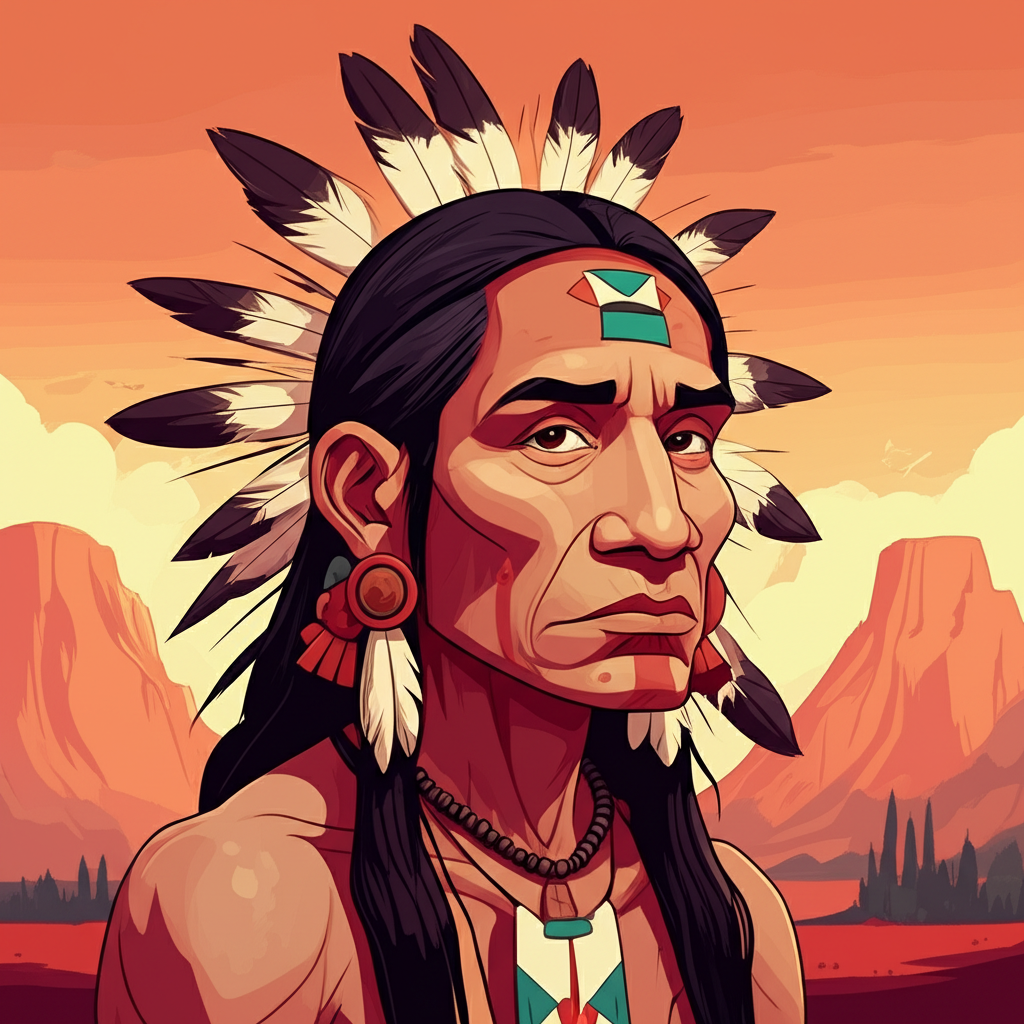
Introduction:
Whispers carried on the desert wind, tales spun around crackling fires under a canopy of stars – these are the echoes of the Navajo people, the Diné, whose stories are woven into the very fabric of the American Southwest. Among these ancient narratives, one figure inspires both fear and fascination: the Skinwalker, or Yee Naaldlooshii in Navajo. This article delves into the legend of the Skinwalker, exploring its roots in Navajo culture and its connection to the ancestral Puebloan world of the Mesa, recognizing it as a traditional story, a product of human imagination, and not a reflection of reality. This is a story, a cultural artifact, and not a statement of belief.
Origins and Cultural Background:
To understand the Skinwalker, we must understand the world of the ancient Diné. They lived in a world imbued with spiritual power, a world where the natural and supernatural were intertwined. Their cosmology was complex, with a delicate balance maintained through ritual and adherence to traditional ways. The Diné believed in a pantheon of deities and spirits, both benevolent and malevolent, who influenced every aspect of their lives.
Life in the high desert and canyonlands was harsh. Survival depended on a deep understanding of the environment, respect for the land, and a strong communal bond. Storytelling served as a vital tool for transmitting knowledge, preserving history, and reinforcing cultural values. Myths and legends explained the origins of the world, the proper way to live, and the consequences of straying from the path of harmony. The Diné people view their stories as lessons and reminders of the world around them and their place in it.
The Skinwalker, in this context, emerges as a figure representing the antithesis of Navajo values. It is a distortion of power, a perversion of sacred knowledge, and a violation of the natural order. It is a cautionary tale about the dangers of unchecked ambition and the importance of respecting traditional boundaries. The relationship with the ancestral Puebloan peoples, the Anasazi, who occupied the dramatic mesa top villages before them, also plays a role. The abandoned ruins became both a source of fascination and a symbol of a past era, sometimes associated with the darker aspects of Navajo lore.
Character / Creature Description:
The Skinwalker is often described as a person who has gained supernatural abilities through dark magic. Typically, this involves violating deeply held Navajo taboos and performing rituals that are considered extremely dangerous and forbidden. They are believed to be able to transform into animals, most commonly wolves, coyotes, foxes, owls, and other creatures of the night. They can also mimic human voices to lure victims into traps.
Visually, the Skinwalker is often depicted as a distorted and terrifying figure, clad in the skins of animals (hence the name). However, their appearance can vary depending on the animal they have transformed into. They are said to possess glowing red eyes, reflecting the darkness within.
The symbolic attributes of the Skinwalker are profound. They represent the potential for corruption within individuals and within society as a whole. They embody the dangers of abusing power and the consequences of rejecting traditional values. The ability to shapeshift symbolizes the loss of identity and the embrace of evil. The animal forms they assume represent the untamed and unpredictable forces of nature, which can be both beneficial and destructive. The Skinwalker stands as a constant reminder of the need for vigilance and the importance of maintaining spiritual balance.
Main Story / Narrative Retelling:
The wind howled a mournful song through the canyons, carrying whispers of unease among the Diné. Old Man Tso, his face etched with the wisdom of countless winters, sat by the fire, his eyes reflecting the dancing flames. He began his tale, his voice low and resonant, captivating the attention of the gathered villagers.
"Long ago, when the stars were closer to the earth, and the mountains still whispered secrets to the wind, there lived a powerful medicine man named Kael. He was respected for his knowledge of healing herbs and his ability to commune with the spirits. But Kael harbored a deep ambition. He craved more power, more knowledge, more control over the forces of nature.
He ventured to the ancient ruins of the Mesa, abandoned by the Anasazi long ago. Among the crumbling stone and silent kivas, he sought forbidden knowledge, secrets that were not meant for mortal eyes. He performed dark rituals under the pale light of the moon, sacrificing that which was sacred, twisting the ancient chants into malevolent incantations.
Slowly, Kael began to change. His eyes grew distant and cold, his face gaunt and shadowed. He was no longer the healer they once knew. He could transform into a wolf, his howl echoing through the canyons, sending shivers down the spines of those who heard it. He became a Yee Naaldlooshii, a Skinwalker.
He preyed on the innocent, mimicking the voices of loved ones to lure them into the darkness. He brought sickness and misfortune upon the village. Fear gripped the hearts of the Diné. They knew that Kael, once their protector, had become their greatest enemy.
The bravest warriors among them, guided by the wisdom of the elders, set out to confront the Skinwalker. They carried with them the prayers of their people and the strength of their ancestors. The battle was long and arduous, a struggle between light and darkness. In the end, through courage and sacrifice, they managed to banish the Skinwalker, driving him back into the shadows. But the memory of his evil lingered, a reminder of the dangers that lurk when the balance is broken."
Old Man Tso paused, his gaze sweeping over the faces of his listeners. "This," he concluded, "is why we must always respect the traditions of our people. This is why we must guard against the temptation of forbidden knowledge. For the darkness that dwells within the Skinwalker can dwell within us all."
Symbolism and Meaning:
The Skinwalker myth serves as a powerful symbolic representation of several themes. It represents the dangers of straying from the traditional path, the corruption of power, and the importance of maintaining a balance between the natural and supernatural worlds. It is a cautionary tale about the consequences of unchecked ambition and the violation of sacred taboos. For the ancient Diné, the story may have served as a social control mechanism, reinforcing adherence to cultural norms and discouraging the pursuit of forbidden knowledge. It also highlights the interconnectedness of all things and the fragility of the spiritual order. The relationship with the ancestral Puebloan ruins adds a layer of mystery and reinforces the idea that some places hold powerful, potentially dangerous, energies.
Modern Perspective:
The Skinwalker legend continues to resonate in modern culture. It appears in literature, movies, and video games, often portrayed as a terrifying shapeshifting creature. The enduring appeal of the Skinwalker stems from its ability to tap into primal fears and anxieties about the unknown. It represents the dark side of human nature and the potential for evil to corrupt even the most virtuous individuals. In cultural studies, the Skinwalker legend is often examined as a reflection of the complex relationship between the Navajo people and the dominant culture, as well as a symbol of cultural resilience and resistance. It is essential to approach these depictions with respect and sensitivity, recognizing that the Skinwalker is a deeply significant figure within Navajo culture.
Conclusion:
The tale of the Skinwalker, echoing from the Pueblo Mesa, is a testament to the enduring power of storytelling. It is a window into the world of the ancient Diné, their beliefs, their values, and their fears. It is important to remember that this is a cultural story, a product of human imagination, and not a reflection of reality.
As Muslims, we acknowledge that Allah is the one true Creator and Sustainer of the universe. The stories and myths of different cultures, like that of the Skinwalker, are valuable for understanding the diversity of human experience and the power of the human imagination. They provide insights into different worldviews and the ways in which people have sought to make sense of their place in the world. It is our duty to respect and appreciate these cultural heritages, while remaining steadfast in our faith and recognizing that all power and authority ultimately belong to Allah alone.