fufufafa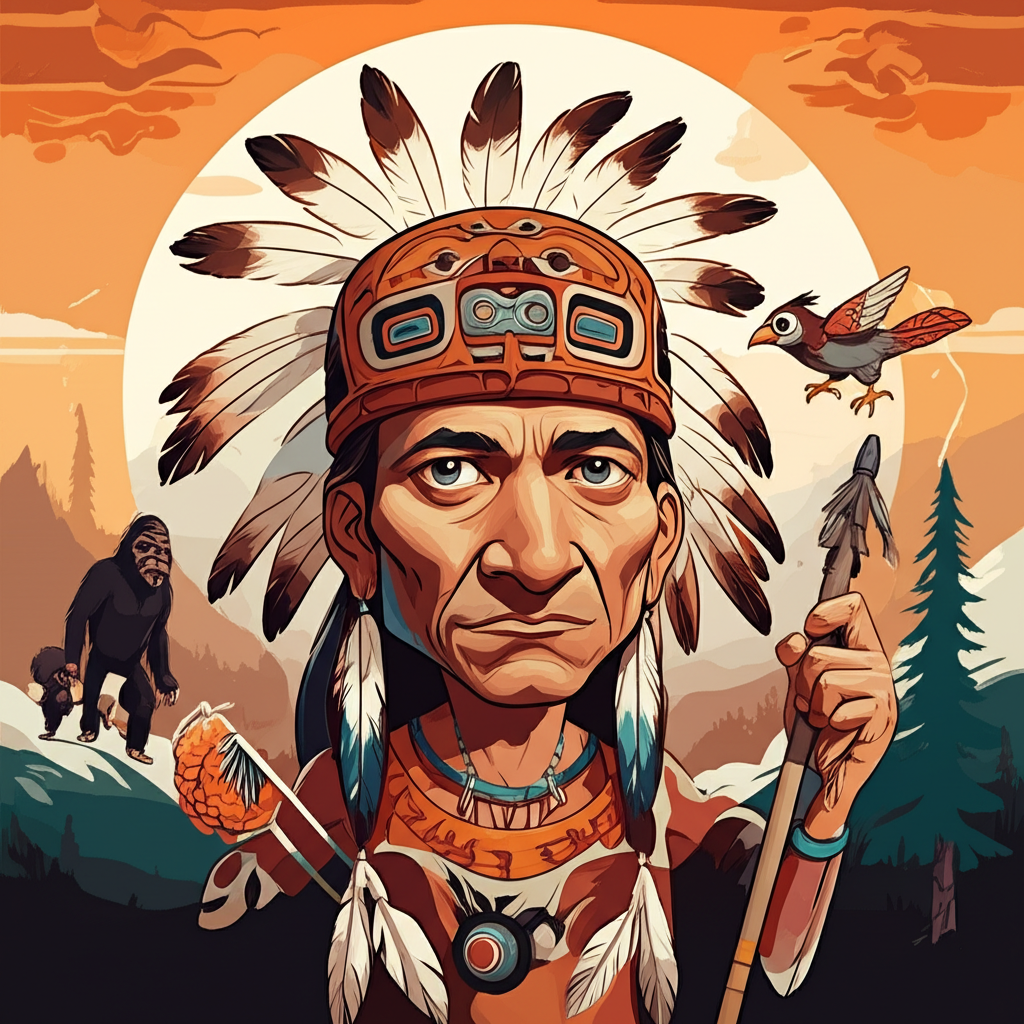
The vast, ancient landscapes of the Pacific Northwest, a region where towering cedars pierce the mist-laden skies and the restless ocean whispers secrets to the shore, are fertile ground for stories. Among the rich tapestry of folklore woven by the Indigenous peoples of this land, echoes of beings that challenge the boundaries of the natural world can be found. One such figure, known through the lens of Navajo tradition and reimagined within the Pacific Northwest’s cultural narrative, is the Skinwalker. It is crucial to understand that this exploration delves into traditional stories, passed down through generations by ancient peoples. These are not accounts of verifiable events or deities to be worshipped, but rather powerful narratives born from the human desire to understand the world, its wonders, and its fears.
The cultural era in which these tales likely took root was one deeply intertwined with the rhythms of nature. For the peoples of both the Navajo Nation, situated in the stark beauty of the Southwest, and the diverse tribes of the Pacific Northwest, the world was not a collection of separate entities but a living, interconnected whole. Spirits resided in the mountains, the rivers, the winds, and the creatures that roamed the earth. Life and death, creation and destruction, were understood through cycles and balance. The environment was not merely a backdrop but an active participant in human existence, and understanding its nuances was paramount to survival. In this worldview, the extraordinary was not necessarily outside the realm of possibility, but rather an expression of the deeper, often unseen forces that shaped reality.
Within this context, the figure of the Skinwalker emerges. It is important to approach this description with an understanding of its symbolic attributes rather than a belief in its literal existence. In Navajo tradition, a Skinwalker is often depicted as an individual who has gained forbidden knowledge and power through malevolent means, often involving dark rituals. This power allows them to transform into animal forms, typically a coyote, wolf, or bear, and to move unseen. Their presence is often associated with a sense of dread, a chilling aura that precedes their arrival. The symbolic attributes of the Skinwalker speak to primal fears: the fear of the unknown, the fear of betrayal from within one’s own community, and the fear of the corruption of natural order. The ability to shaper-shift can be seen as a metaphor for the hidden dangers that can lurk beneath a seemingly ordinary exterior, or the unsettling transformations that can occur when boundaries are transgressed.
While the Skinwalker is a distinctly Navajo concept, the spirit of such a transformative, shadowy figure can be found echoed in the folklore of other cultures, including the Pacific Northwest. Imagine, for a moment, the deep, ancient forests of the Pacific Northwest, where the perpetual twilight casts long, dancing shadows. The air is thick with the scent of damp earth and decaying leaves. It is here, in the hushed stillness broken only by the hoot of an owl or the rustle of unseen movement, that one might envision a narrative similar to the Skinwalker’s tales taking hold.
Picture a story, told around a crackling fire under a sky ablaze with stars, of a man – or perhaps a woman – who strayed from the sacred path. They sought power, not through the reverence of the natural world or the wisdom of the elders, but through forbidden pacts. In their pursuit, they learned to shed their human form, to become something else entirely. They might have been seen as a creature of the night, a blur of fur and shadow, its eyes glowing with an unnatural light in the darkness. Perhaps it was a being that could mimic the cries of lost children to lure unsuspecting travelers deeper into the woods, or a whisper on the wind that carried ill omens. The narrative would not focus on the specific details of its powers as if they were factual, but rather on the unsettling feeling it evoked – a disturbance in the natural harmony, a manifestation of the darkness that human beings are capable of. The story might describe how this being could move with impossible speed, slipping through the dense undergrowth unseen, or how its presence could drain the warmth from the air, leaving a palpable sense of fear in its wake. It would be a cautionary tale, whispered to remind listeners of the importance of respecting the boundaries between the human and the animal, the seen and the unseen, the good and the malevolent.
The symbolism embedded within such tales is profound and multifaceted. For the ancient peoples who shared these stories, they likely served as a way to understand and navigate the inherent dangers of their environment and the complexities of human nature. The Skinwalker, or its thematic counterpart in the Pacific Northwest, could represent the fear of predators, both animal and human, that threatened their survival. It could symbolize the dangers of greed and the corrupting influence of power sought through unethical means, serving as a moral compass to guide behavior within the community. The ability to transform might also speak to the fluidity of the natural world, the cycles of life and death, and the interconnectedness of all living things. It could be a way of expressing anxieties about those who defied societal norms or who held malevolent intentions, a symbolic representation of the dark side of human potential.
In the modern era, these ancient narratives continue to resonate, albeit through different mediums. The figure of the Skinwalker, with its potent imagery of transformation and dark power, has captured the imagination of writers, filmmakers, and game developers. It appears in horror novels and films, often as a terrifying antagonist, tapping into our primal fears of the unknown and the monstrous. In cultural studies and anthropological research, these stories are examined as invaluable windows into the belief systems, anxieties, and moral frameworks of the cultures from which they originate. They are studied not as literal accounts, but as sophisticated forms of storytelling that helped shape identity, transmit knowledge, and foster a sense of community.
In conclusion, the exploration of the Skinwalker myth, and its echoes within the rich folklore of the Pacific Northwest, serves as a powerful reminder of the enduring human impulse to create meaning through narrative. These are traditional stories, born from the wisdom and experiences of ancient peoples, offering insights into their understanding of the world. As Muslims, we recognize that only Allah (God) is the true Creator and Sustainer of all that exists, and that our understanding of the universe is guided by divine revelation. These myths, therefore, are not to be taken as factual accounts or objects of worship, but as fascinating expressions of human culture, imagination, and the timeless tradition of storytelling. They invite us to appreciate the diverse ways in which humanity has sought to comprehend the mysteries of existence, to confront fear, and to articulate the moral complexities of life, all through the captivating power of a well-told tale.