
 fufufafa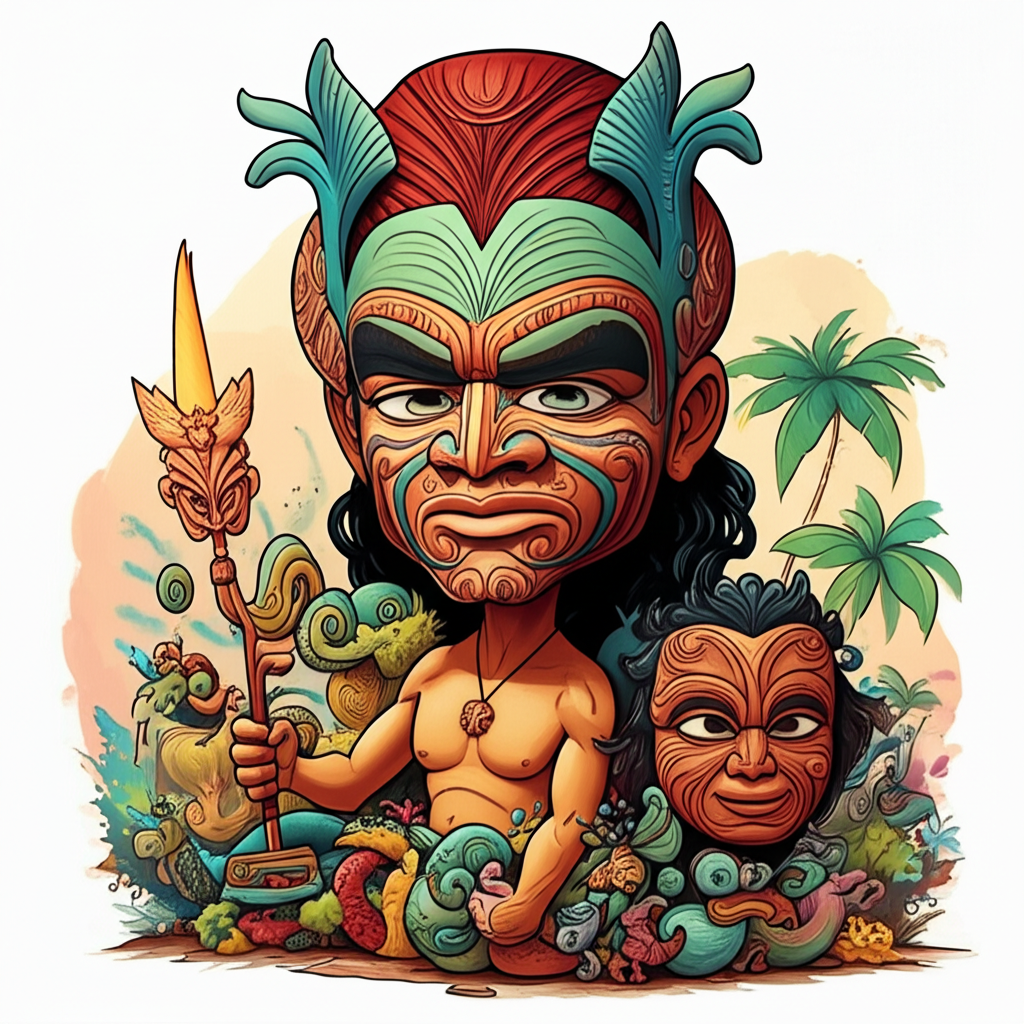
The vast, deep Pacific Ocean, a cradle of cultures and a canvas for countless tales, holds within its currents echoes of ancient peoples and their profound connection to the natural world. From the Polynesian triangle, a tapestry of myths and legends has emerged, woven from the threads of human experience, observation, and a deep respect for the forces that shaped their lives. Among these resonant narratives are the stories of Maui, the demigod trickster, the fearsome Taniwha, and the mythical homeland of Hawaiki. These are not accounts of historical fact, nor are they to be interpreted as literal truths. Instead, they are powerful expressions of a worldview held by ancient peoples, offering insights into their understanding of creation, their relationship with the environment, and their ancestral connections.
The genesis of these narratives lies in the vibrant cultural landscape of the Māori people of Aotearoa (New Zealand). In times long past, before the advent of modern science and global communication, the Māori worldview was deeply animistic. The world was perceived as alive, imbued with spiritual energy, or mana. Every mountain, river, forest, and ocean held its own spirit, and the actions of humans were intrinsically linked to the natural forces around them. Their understanding of the cosmos was shaped by the celestial bodies, the changing seasons, the bounty of the land and sea, and the ever-present forces of creation and destruction. Myths and legends served as a vital mechanism for transmitting knowledge, explaining natural phenomena, establishing social order, and preserving the collective memory of their ancestors. These stories were not merely entertainment; they were the very fabric of their understanding of existence, passed down through generations via oral tradition, carved into intricate artworks, and sung in resonant chants.
Central to these ancient narratives is the figure of Maui. Maui is not a god in the Abrahamic sense, but a powerful demigod, a wily and inventive trickster whose exploits often involved cleverness, daring, and a touch of mischief. His attributes are symbolic of human ingenuity, the struggle against the limitations of nature, and the desire to shape the world for the benefit of humankind. He is often depicted as a man of extraordinary strength and cunning, capable of feats that defied the natural order. His skin, sometimes described as being made of stone or possessing a magical sheen, represents his connection to the elemental forces of the earth. His adventures are characterized by his determination to improve the lives of his people, whether by slowing the sun, fishing up islands from the sea, or harnessing the power of fire. He embodies the spirit of innovation and the relentless pursuit of progress, even if his methods were sometimes unconventional.
The Taniwha are another significant element of Māori folklore. These are supernatural beings, often described as guardians of rivers, lakes, the sea, and sometimes even caves or mountains. They are typically depicted as large, reptilian or serpentine creatures, sometimes possessing multiple heads or other fearsome attributes. It is crucial to understand that the Taniwha represent the immense, often unpredictable power of nature. They symbolize the respect and awe that ancient peoples held for the natural world, particularly for the deep, mysterious waters that sustained and threatened them. A Taniwha could be a benevolent protector, bestowing good fortune or warning of danger, or a malevolent force, capable of causing floods, storms, or shipwrecks. Their symbolic attributes extend to representing natural hazards, the ancient wisdom embedded in the land, and the need for humans to live in harmony with their environment, lest they incur the wrath of these powerful entities. They are not to be worshipped, but understood as manifestations of natural forces and the respect they commanded.
The concept of Hawaiki is fundamental to the Polynesian worldview, representing the ancestral homeland, the place from which the canoes departed to settle the vast Pacific. Hawaiki is not a single geographical location that can be pinpointed on a map; it is a spiritual and ancestral realm, a repository of origins and a beacon of cultural identity. It is the place where the gods and ancestors dwelled, and from which the first humans emerged. The narrative of migration from Hawaiki is a testament to the incredible seafaring skills of the Polynesian ancestors, their courage, and their ability to navigate by the stars and currents. Hawaiki symbolizes ancestry, origin, and the enduring connection to the past that informs the present. It represents a collective memory, a spiritual anchor that binds dispersed communities together.
The story of Maui, the Taniwha, and the journey from Hawaiki is often intertwined. One prominent narrative recounts Maui’s quest to fish up land. Armed with his magical fishhook, fashioned from the jawbone of his grandmother, Maui cast his line into the ocean. He famously lured out islands, including the North Island of New Zealand, from the watery depths. These islands, often personified as resting places of the Taniwha, were seen as gifts from the ocean, shaped by Maui’s power and inhabited by the spirits of the land. Another tale might involve Maui encountering a fearsome Taniwha in the waters he navigated, demonstrating his cleverness in outwitting or subduing the creature, thus ensuring safe passage for his people. These narratives highlight the constant interplay between human endeavor and the formidable forces of nature, mediated by figures like Maui and the formidable Taniwha.
The symbolism embedded within these stories is rich and multifaceted. Maui’s actions often represent the human drive to overcome obstacles and to improve living conditions. His fishing up of islands can be seen as a metaphor for the creation of new beginnings, the establishment of communities, and the shaping of the world. The Taniwha, as embodiments of nature’s power, serve as reminders of the inherent dangers and the profound respect that must be accorded to the natural world. They represent the untamed forces that can both nurture and destroy. Hawaiki, as the ancestral homeland, symbolizes continuity, identity, and the enduring link to one’s origins. It speaks to the universal human need for belonging and a sense of rootedness. These narratives also often convey moral lessons, illustrating the consequences of greed, the importance of humility, and the virtues of courage and perseverance.
In the modern era, these ancient legends continue to resonate, finding new life in various forms of media and academic study. In literature, authors draw inspiration from the rich tapestry of Māori mythology to craft compelling stories that explore themes of identity, heritage, and the enduring power of the past. Films and animated productions have brought these characters and their epic adventures to the screen, introducing them to wider audiences. In video games, elements of Taniwha lore and Maui’s exploits are often incorporated, adding a unique cultural flavour to fantastical worlds. For scholars and cultural enthusiasts, these myths are invaluable resources for understanding the historical worldview of the Māori people, their intricate societal structures, their deep ecological knowledge, and their profound artistic traditions. They offer a window into a time when the human experience was inextricably linked to the rhythms of the natural world.
In conclusion, the stories of Maui, the Taniwha, and Hawaiki are not to be interpreted as literal accounts of historical events or as doctrines to be believed. They are powerful cultural narratives, passed down through generations by the ancient Māori people, offering profound insights into their understanding of the world, their relationship with nature, and their ancestral connections. As Muslims, we recognize that only Allah (SWT) is the true Creator and Sustainer of all that exists, and that all power and authority reside with Him alone. These ancient tales, however, serve as a testament to the enduring power of human imagination, the rich heritage of storytelling traditions, and the universal human impulse to make sense of the world around us through narrative and symbolism. They remind us of the diverse ways in which humanity has sought to understand its place in the cosmos, and the beautiful, imaginative legacies that can be preserved through cultural transmission.



