
 fufufafa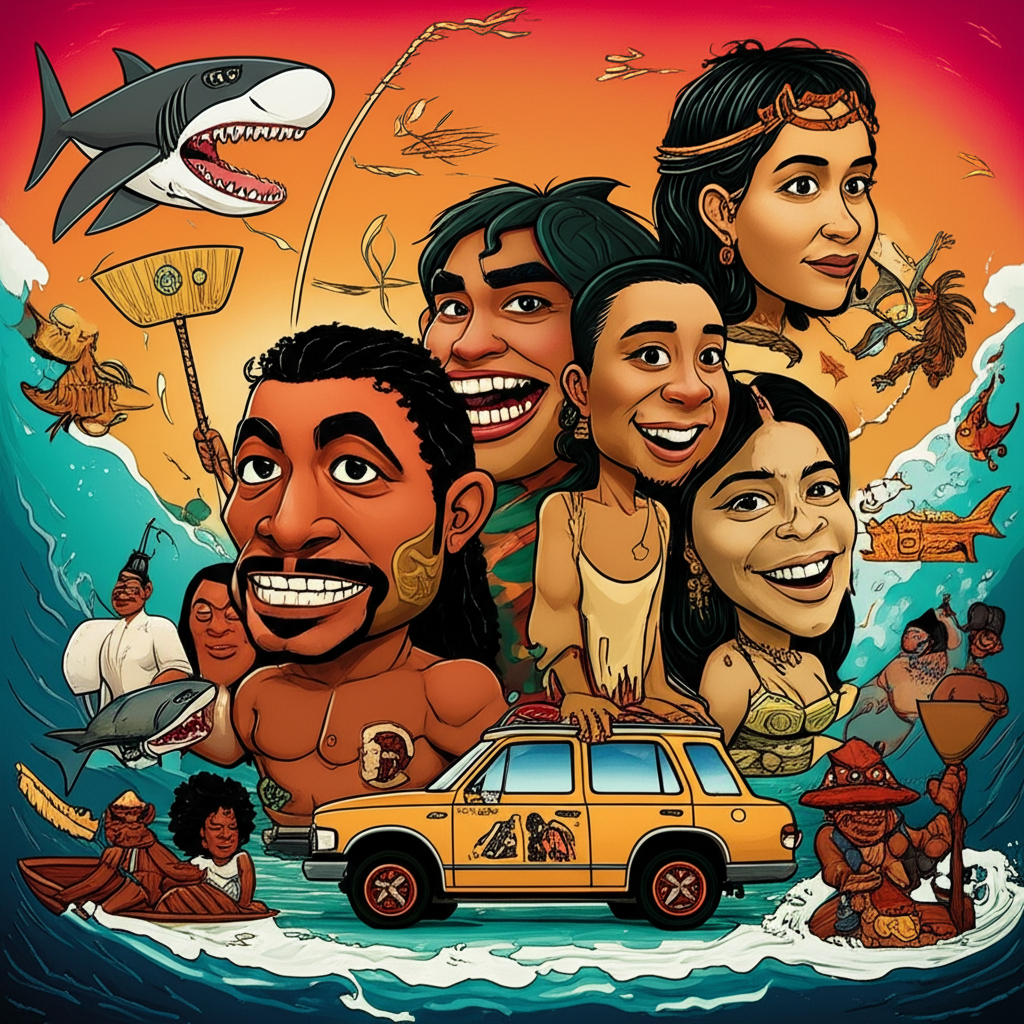
Across the vast, shimmering expanse of the Pacific, where turquoise waters kiss volcanic shores, lie islands steeped in a rich tapestry of oral traditions. From the fertile lands of Aotearoa (New Zealand) to the scattered atolls of Polynesia, ancient peoples wove narratives that sought to explain the world around them, to impart wisdom, and to honor the forces they perceived shaping their lives. Among these enduring stories are those that speak of Hina, a figure of immense significance, and her deep connection to the powerful denizens of the ocean – the shark gods. These tales, born from a time when the natural world was viewed with awe and a profound sense of interconnectedness, offer a glimpse into the minds and hearts of ancient Polynesian voyagers. It is crucial to understand that these are traditional stories, passed down through generations, and are not presented as factual accounts or divine revelations.
The cultural era in which these myths flourished was one of profound respect for the ocean. For the Polynesian peoples, the sea was not merely a boundary or a source of food; it was a highway, a lifeblood, and a spiritual realm. Their world was one where the tangible and the intangible were intricately interwoven. Islands, rising dramatically from the ocean’s depths, were seen as gifts from the gods, and the creatures that inhabited the surrounding waters were often imbued with divine or semi-divine qualities. Life was cyclical, tied to the rhythms of the tides, the migrations of fish, and the movements of the stars that guided their epic voyages. In such a worldview, it was natural for the most formidable and awe-inspiring creatures, like sharks, to be perceived as more than mere animals. They were seen as embodiments of power, guardians of the ocean’s secrets, and intermediaries between the human world and the spirit realm.
Central to these narratives is the figure of Hina. While her specific roles and epithets vary across different Polynesian traditions, she is often depicted as a woman of extraordinary beauty, resilience, and power. She is sometimes a goddess, sometimes a mortal heroine who achieves divinity through her trials. In many stories, Hina’s journey involves significant encounters with the ocean and its inhabitants, particularly the shark gods. These shark gods, such as those embodying the fearsome Mako or the ancient Mangō, were not simply predators. They were depicted as beings with immense strength, ancient wisdom, and a profound connection to the ocean’s currents and depths. Their formidable teeth and powerful jaws were not just tools of predation but symbols of their primal authority over the marine environment. Their presence was a constant reminder of the ocean’s untamed nature and its capacity for both sustenance and destruction. The symbolic attributes of these shark gods often included ferocity, protection, the power of transformation, and the deep, unknowable mysteries of the ocean. They represented the raw, elemental forces of nature that the ancient Polynesians both revered and sought to understand.
One recurring narrative thread involves Hina’s transformation or her descent into the ocean’s realm. In some versions, Hina, facing adversity or persecution on land, takes refuge in the sea. It is here, in the ocean’s embrace, that she encounters the shark gods. Perhaps she is threatened, and a benevolent shark god intervenes, or perhaps she herself possesses a latent connection to these beings. One compelling retelling imagines Hina, scorned and cast out by her community, finding solace in the vast blue. As she drifts, her tears mingle with the saltwater, and her sorrow resonates through the ocean. It is then that the great shark gods, ancient beings who have witnessed the birth of islands and the ebb and flow of tides, are drawn to her. They recognize in her a spirit that mirrors their own strength and resilience. Instead of seeing her as prey, they perceive her as a kindred spirit, a queen of the sea in the making. Some stories describe Hina being guided by these shark gods, learning the secrets of the ocean, or even being transformed into a shark herself, or a being closely allied with them. Her journeys might involve traversing underwater realms, mediating disputes among sea creatures, or protecting human voyagers from the ocean’s dangers. These are not tales of divine intervention in the sense of a singular, all-powerful deity, but rather intricate interactions between powerful natural forces and a heroic human or semi-divine figure.
The symbolism embedded within these myths is rich and multifaceted. The shark gods, in their imposing presence, likely represented the inherent power and unpredictability of the ocean. They could have symbolized the forces that governed survival – the need for caution, respect, and understanding of the natural world. Hina, in her interactions with them, might have embodied human resilience, adaptability, and the ability to find strength even in the face of adversity. Her journey could have represented the human quest for knowledge, the exploration of the unknown, and the deep spiritual connection that ancient peoples felt with their environment. The ocean itself, as the domain of these beings, symbolized the vastness of the universe, the source of life, and the ultimate mystery. These stories served as a way for ancient Polynesians to navigate their relationship with a powerful and often perilous environment, imbuing it with meaning and a sense of order, even within its wildness.
In the modern world, these ancient myths continue to resonate. They are preserved in oral traditions, in academic studies of folklore and mythology, and in the artistic expressions of contemporary Polynesian cultures. In literature, films, and video games, elements of these narratives find new life, often reinterpreted through a contemporary lens. The archetypes of the powerful sea creatures and the resilient human heroine are universal themes that continue to captivate audiences. For cultural studies scholars, these stories offer invaluable insights into the worldview, values, and social structures of ancient Polynesian societies. They are a testament to the enduring power of human imagination and the human need to make sense of the world through storytelling.
It is important to reiterate that the stories of Hina and the shark gods are traditional narratives passed down through generations. They are cherished as part of a rich cultural heritage, offering windows into the past and the ways in which ancient people understood their world. As Muslims, we recognize that only Allah (God) is the true Creator and Sustainer of all existence, and that all power and authority belong to Him alone. These stories, therefore, are not to be considered as belief systems or as factual accounts of divine power. Instead, they serve as a valuable reminder of the diversity of human expression, the power of imagination, and the profound human drive to connect with the forces that shape our lives, whether through scientific understanding or through the enduring tradition of storytelling. The echoes of Hina and the shark gods from Hawaiki continue to whisper across the Pacific, a testament to the enduring legacy of human creativity and the timeless pursuit of meaning.



