
 fufufafa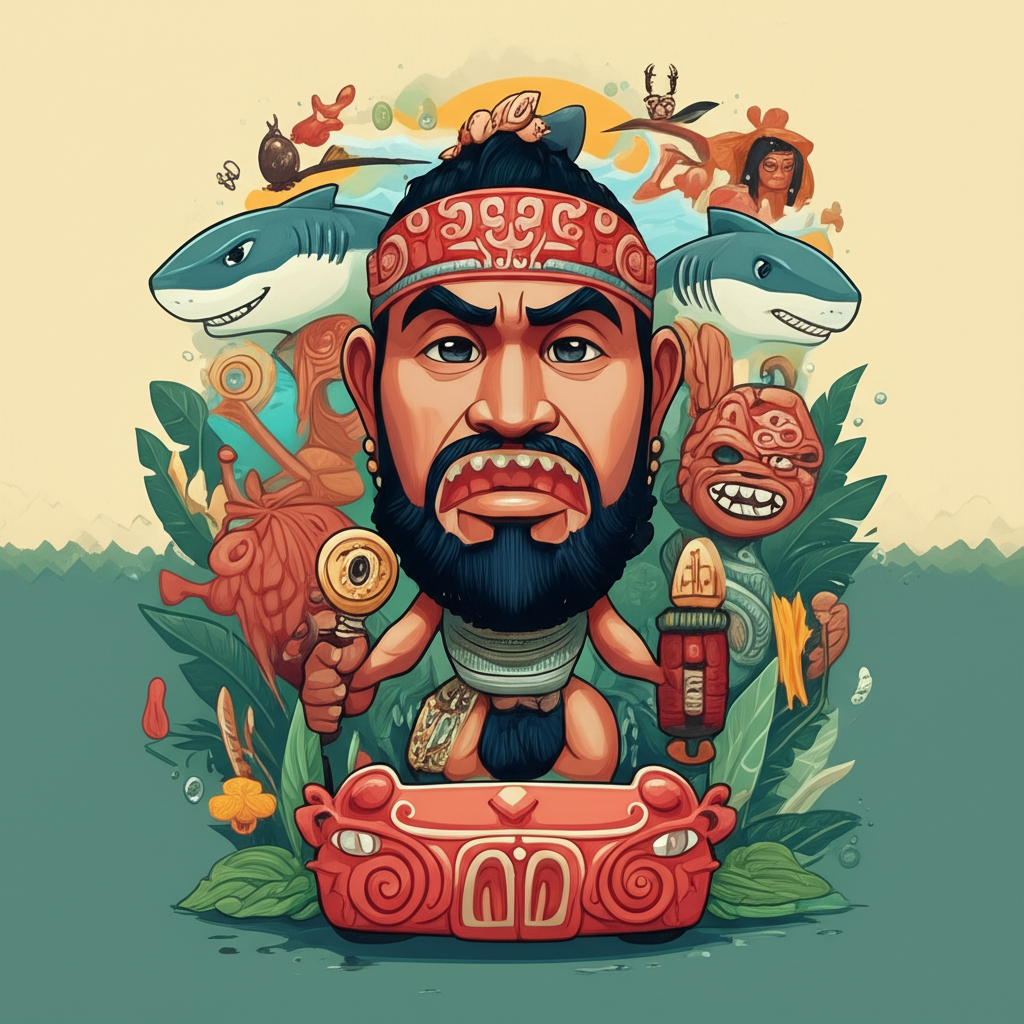
The vast Pacific Ocean, a shimmering expanse of sapphire and emerald, cradles a tapestry of islands, each with its own unique stories whispered on the trade winds. Among these, the Samoan archipelago, a cluster of volcanic peaks and coral fringed shores, holds within its ancient lore tales of powerful beings that once patrolled its turquoise depths. These are not tales of mere fish, but of spirits, of guardians, of the revered and feared – the shark gods, intrinsically linked to the legendary figure of Hina.
This narrative is a journey into the heart of Samoan mythology, a traditional story passed down through generations, offering a glimpse into the worldview of a people deeply connected to the sea. It is crucial to understand that these are ancient beliefs, cultural expressions of understanding the world, and not factual accounts. Our exploration is for cultural, historical, and educational appreciation, a respectful look at the rich tapestry of human imagination.
Origins and Cultural Background: A World of Spirits and the Sea’s Embrace
The stories of Hina and the shark gods emerge from a time when the Samoan people lived in intimate communion with their environment. This was an era characterized by a profound respect for the natural world, a world perceived not as inert matter but as alive with spiritual forces. The ocean was not simply a source of sustenance; it was a vast, mysterious realm teeming with unseen powers. For the ancient Samoans, life was a delicate balance between the tangible and the spiritual, where deities, ancestral spirits, and the forces of nature were interconnected.
Their society was structured around chiefs and villages, with a deep understanding of genealogy and the sacredness of lineage. The sea, with its unpredictable moods and abundant life, held a particular significance. It provided food, facilitated travel, and served as a constant reminder of the immense power that lay beyond human control. Myths and legends served as a vital means of explaining natural phenomena, reinforcing social order, and imparting moral lessons. They were the ancient Samoans’ way of navigating the complexities of existence, their cosmology woven from the very fabric of their island lives.
Character / Creature Description: The Formidable Shark Deities
Within these ancient narratives, the shark is not merely an apex predator but a potent symbol. The shark gods, often depicted as colossal beings with the formidable jaws and sleek bodies of their aquatic counterparts, embodied a duality. They represented both immense power and a chilling ferocity. Their symbolic attributes were not those of worship but of awe and caution. The sharp, serrated teeth spoke of decisive action and the ability to overcome obstacles. Their silent, relentless glide through the water evoked a sense of inevitable presence and unwavering purpose. Their ability to navigate the vast, often treacherous ocean mirrored the challenges of life itself. These were beings that commanded respect, not through benevolent offerings, but through their sheer, unyielding presence and the primal fear they could instill.
Main Story / Narrative Retelling: Hina and the Ocean’s Embrace
The tale often begins with Hina, a figure of considerable importance in Polynesian mythology, though her specific role can vary. In one iteration of the legend, Hina was a woman of extraordinary beauty and grace, often associated with the moon. She found herself in a precarious situation, perhaps fleeing danger or seeking refuge. It is at this juncture that the shark gods enter the narrative, not as passive observers, but as active participants in Hina’s destiny.
Imagine the scene: the sun setting, casting long shadows across the coral reefs, the gentle lapping of waves against the shore. Hina, perhaps seeking solace or escaping hardship, ventured into the ocean. The water, warm and inviting, soon became her refuge. However, the ocean is also the domain of the sharks. In this story, certain sharks were not just animals but divine beings, imbued with immense power and a primal connection to the ocean’s depths.
These shark gods, ancient and wise, recognized something special in Hina. They saw her resilience, her grace, and perhaps a spirit that resonated with the ocean’s own power. Instead of posing a threat, they became her protectors. They would swim alongside her, their immense forms a silent, unwavering escort. Some legends describe them guiding her to safety, others speak of them shielding her from harm, their presence a formidable deterrent to any who might seek to cause her ill.
The narrative might describe Hina, serene and unafraid, gliding through the water, her path cleared by these powerful guardians. The sharks, with their sleek, powerful bodies, would move with an almost ethereal grace, their dark forms a stark contrast against the vibrant blues and greens of the reef. There was no dialogue in the human sense, but a profound understanding, a silent pact between the mortal woman and these oceanic spirits. They were her wardens of the deep, ensuring her passage and her well-being in the vast, untamed expanse. This interaction was a testament to the interconnectedness of the natural and the spiritual realms as perceived by the ancient Samoans.
Symbolism and Meaning: Navigating the Currents of Existence
For the ancient Samoans, the story of Hina and the shark gods likely held multiple layers of meaning. The shark gods themselves could symbolize the awesome, often terrifying power of nature – the unpredictable currents, the storms, the sheer force of the ocean that could both sustain and destroy. Their protective role towards Hina might have represented the belief that even the most fearsome forces could, under certain circumstances, be benevolent or aligned with a just cause.
Hina, as a central figure, could have embodied aspects of feminine power, resilience, and perhaps even divine connection (given her association with the moon in some Polynesian traditions). Her acceptance and guidance by the shark gods could have illustrated the importance of respecting and understanding the natural world, recognizing its inherent power, and finding harmony within it. The story might have also served as a moral compass, subtly teaching about courage in the face of adversity and the potential for protection found in unexpected places. It was a way of understanding the ocean not just as a physical space, but as a realm governed by spiritual principles.
Modern Perspective: Echoes in Contemporary Culture
While these ancient tales are no longer actively worshipped, their echoes resonate in contemporary culture. The rich tapestry of Polynesian mythology continues to inspire literature, art, and film. The powerful imagery of the shark gods, their mystique and primal energy, can be found in contemporary fantasy novels, graphic novels, and even video games, where they are often portrayed as formidable guardians or mythical creatures. Anthropologists and cultural studies scholars delve into these narratives to understand the historical worldview of the Samoan people, their relationship with the sea, and the enduring power of storytelling. These interpretations, however, are purely academic and artistic, devoid of any belief in their literal truth.
Conclusion: A Legacy of Storytelling
The legend of Hina and the shark gods of the Samoan Isles is a captivating testament to the rich cultural heritage of the Polynesian people. It is a story woven from the threads of imagination, a reflection of how ancient communities sought to understand their world, their environment, and the powerful forces that shaped their lives. As Muslims, we recognize that only Allah is the true Creator and Sustainer of all that exists, the ultimate source of all power and wisdom. These traditional stories, therefore, are not to be believed as divine truth, but appreciated as valuable cultural artifacts. They offer us a window into the minds of our ancestors, a glimpse into their unique ways of perceiving and interacting with the vast and wondrous world around them. The enduring power of these tales lies not in their literal veracity, but in their ability to spark curiosity, to inspire imagination, and to remind us of the enduring human tradition of storytelling.



