
 fufufafa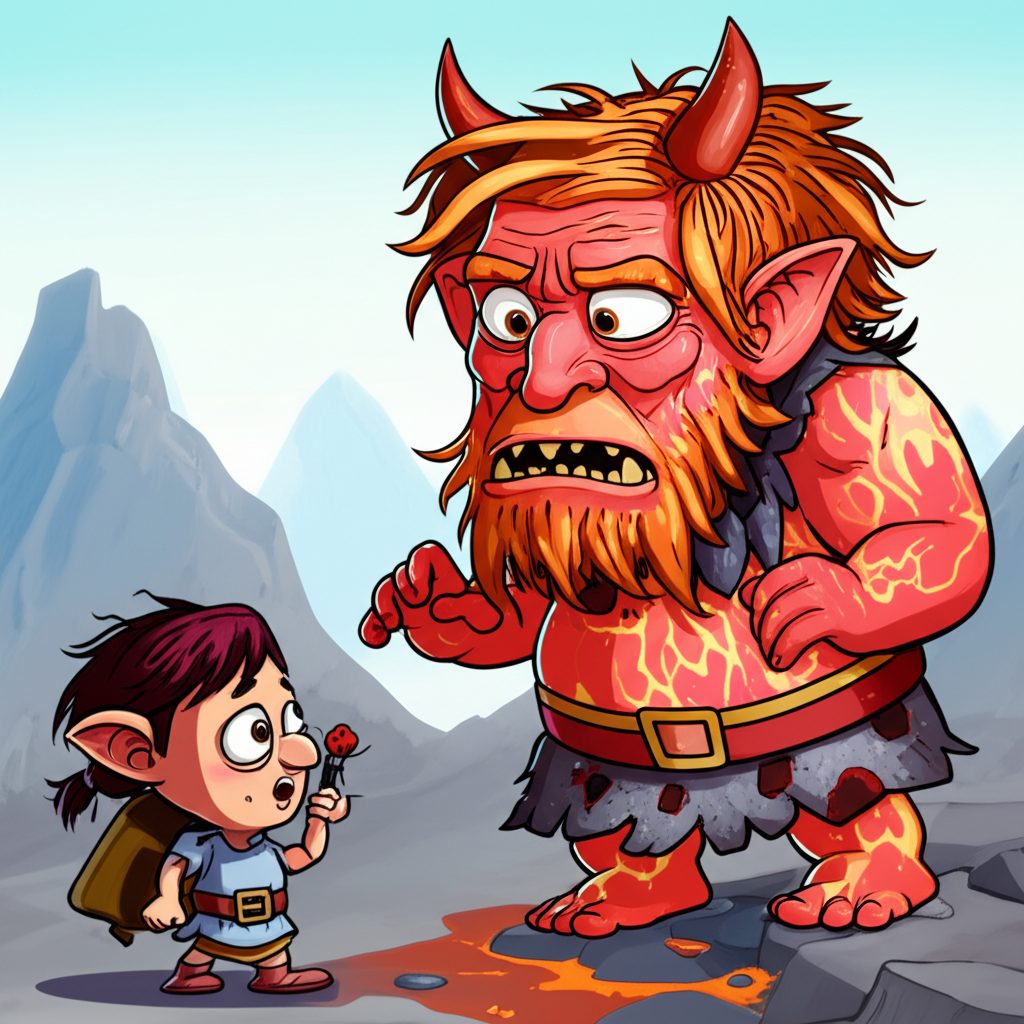
Across the vast tapestry of human storytelling, certain narratives echo with the raw power of ancient fears and the boundless expanse of human imagination. Among these are the myths and legends of Norse mythology, a rich tradition originating from the Germanic peoples of Scandinavia, particularly during the Viking Age. These tales, passed down through oral tradition and later inscribed in ancient texts like the Poetic Edda and the Prose Edda, offered explanations for the cosmos, the forces of nature, and the very essence of existence as perceived by these seafaring, warrior societies. It is within this context that we explore a hypothetical encounter, a narrative born from the embers of ancient lore, with the Jotnar of Muspelheim.
The era in which these stories took root was one of stark contrasts. The harsh northern climate, with its long, unforgiving winters and brief, intense summers, shaped a worldview that acknowledged both brutal forces and fleeting beauty. Life was often a struggle against the elements, against famine, and against the ever-present threat of conflict. This environment fostered a deep respect for, and often a healthy fear of, the untamed powers of nature. The Norse people viewed the world as a dynamic, often volatile place, populated by gods, giants, and other beings who wielded immense influence over mortal lives and the natural order. The cosmos was envisioned as a complex structure, with realms like Asgard (the home of the gods), Midgard (the realm of humans), and the fiery domain of Muspelheim.
From the fiery heart of Muspelheim, a realm perpetually alight with primal heat and molten rock, emerged the Jotnar – the giants. In Norse tradition, these beings were not always monstrous ogres, but rather primordial forces, often depicted as immense in stature and possessing a raw, elemental power that predated even the gods. They represented the wild, untamed aspects of existence, the chaotic energies that lay just beyond the ordered world of mortals. The Jotnar of Muspelheim, specifically, were intrinsically linked to fire, to heat, and to the destructive potential that lay dormant within the earth and the sun. Their symbolic attributes were those of immensity, raw power, and an almost indifferent, overwhelming force. They were the embodiment of the destructive, transformative fire that could both forge and annihilate.
Imagine, then, a lone traveler, a seeker of knowledge or perhaps a survivor driven by desperation, venturing too close to the fringes of this legendary realm. The air itself would begin to shimmer, not with the gentle warmth of a hearth, but with an oppressive, dry heat that parched the throat and stung the eyes. The very ground beneath their feet would feel unnaturally warm, a constant, unsettling thrumming as if the earth itself was breathing fire. This is the approach to Muspelheim, a land not of verdant forests or icy plains, but of molten rivers and obsidian mountains.
The encounter would not be with a single, easily definable creature, but with the very essence of the place. The Jotnar of Muspelheim, in their collective manifestation, would be less individual entities and more like living embodiments of the realm’s inferno. Picture towering figures, their forms indistinct in the searing haze, coalescing from the heat and smoke. Their skin, if it could be called that, might appear as cracked obsidian or glowing embers, radiating an unbearable heat. Their eyes, if visible, would burn with the intensity of a forge, not with malice, but with an ancient, all-consuming fire. Their voices, if they spoke, would be the crackling roar of a wildfire, a sound that spoke of creation and destruction intertwined.
The traveler would feel utterly insignificant, a fragile mote of dust against an overwhelming inferno. The Jotnar might not even acknowledge the traveler directly, their existence too vast, too primal to be concerned with a single mortal. Perhaps they would stride across the molten plains, their footsteps leaving trails of steam, their very presence altering the landscape. Or maybe they would observe from the fiery peaks, their immense forms silhouetted against the perpetual sunset of Muspelheim, their gaze carrying the weight of ages. The encounter would be one of awe and terror, a stark reminder of the raw, untamed forces that lay beyond human comprehension and control. It would be a moment where the boundary between the known world and the mythical unknown dissolved, leaving the traveler humbled and forever changed by the sheer scale of elemental power they had witnessed.
To the ancient Norse people, stories like this served multiple purposes. The Jotnar of Muspelheim could have represented the primal forces of nature – the destructive power of volcanic activity, the uncontainable heat of the sun, or the terrifying potential of uncontrolled fire. They might have symbolized the chaos that preceded order, the untamed wildness that humanity constantly strove to tame and understand. The fear of these beings could have been a way to process and respect the destructive elements of their environment, encouraging caution and a healthy reverence for the natural world. Furthermore, the contrast between the ordered realms of the gods and the chaotic domains of the Jotnar might have reflected a worldview that sought to establish boundaries and hierarchies, both in the divine and the mortal spheres.
In the modern world, these ancient myths continue to ignite imaginations. The Jotnar, and the fiery realm of Muspelheim, have found their way into countless works of literature, film, and video games. They are often depicted as formidable antagonists, their immense power and elemental connection to fire making them compelling adversaries for heroes. In these interpretations, they can symbolize raw, destructive power, the untamed aspects of nature, or even the primal urges within humanity. Scholars also study these myths as vital windows into the cultural, religious, and social beliefs of ancient Scandinavian societies, offering insights into their worldview, their values, and their understanding of the cosmos.
It is important to reiterate that the encounter described here, and the beings of Muspelheim, are elements of traditional storytelling, originating from ancient cultural narratives. They are not to be believed as literal truths or divine powers. As Muslims, we recognize that the only true Creator and Sustainer of all existence is Allah (SWT). These stories, however, hold value in their ability to illuminate the rich tapestry of human heritage, the enduring power of imagination, and the fascinating tradition of storytelling that has shaped cultures for millennia. They remind us of the diverse ways in which humanity has sought to understand its place in the universe, to grapple with the awe-inspiring forces of nature, and to weave narratives that continue to captivate and inform us across the ages.


