fufufafa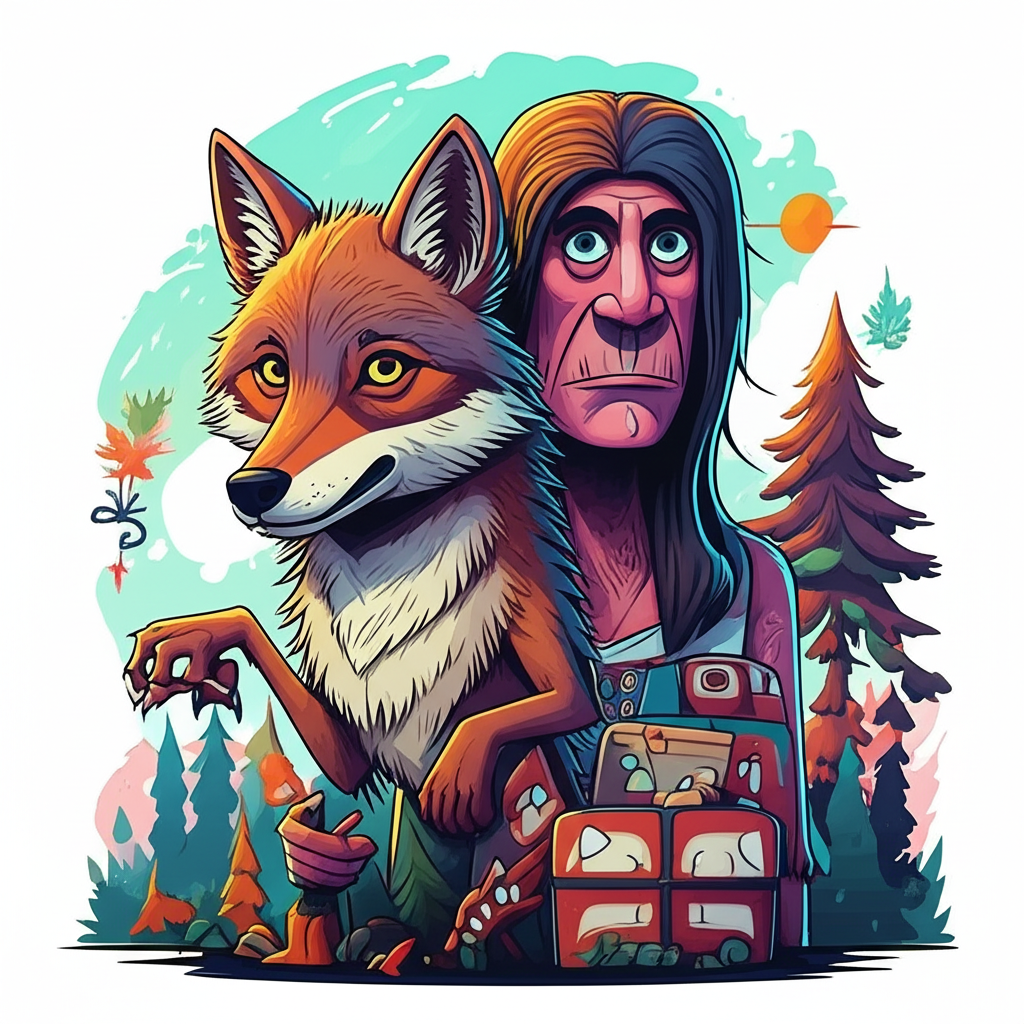
IMPORTANT NOTE: This article delves into mythology and folklore. The stories and figures discussed, such as Coyote and the Wendigo, are traditional narratives and symbolic representations from ancient cultures. They are NOT real and are NOT meant to be believed, worshipped, or practiced. This presentation is solely for cultural, historical, and educational understanding, exploring the rich tapestry of human imagination and the timeless lessons embedded within these tales.
1. Introduction: Whispers from the Ancient Forests
From the mist-shrouded peaks and salmon-rich rivers of the Pacific Northwest to the vast, cold forests of the Great Lakes region, the ancient peoples of North America wove intricate tapestries of stories to understand their world. These narratives, passed down through generations, served as vibrant chronicles of creation, morality, and the complex relationship between humanity and nature. Among the most enduring figures in these traditions are Coyote, the ubiquitous Trickster, and the chilling concept of the Wendigo – a spirit born of insatiable hunger. This article embarks on a narrative journey, exploring the thematic echoes that might connect these distinct yet powerful elements, particularly focusing on the rich cultural landscape of the Pacific Northwest. It is crucial to remember that this is an exploration of traditional stories told by ancient peoples, presented purely for cultural and educational understanding, not as a claim of truth or divine power.
2. Origins and Cultural Background: Life by the Cedar and Salmon
The cultural era in which these myths flourished was one deeply intertwined with the natural world. For the Indigenous peoples of the Pacific Northwest, life revolved around the abundance of the land and sea – the towering cedar forests, the annual salmon runs, the intricate network of rivers and coastlines. Their societies were often highly organized, with complex social structures, rich artistic traditions (evident in totem poles, masks, and weaving), and a profound spiritual connection to their environment.
In this worldview, the world was alive, imbued with spirits and interconnected energies. Animals were often seen as kin, teachers, or powerful beings with human-like qualities. The land itself held memory and power. Balance was paramount: balance between giving and taking, between individual needs and community welfare, between the physical and spiritual realms. Stories were not mere entertainment; they were vital teaching tools, conveying history, law, morality, and survival strategies. They explained the origins of the world, warned against hubris and greed, and celebrated virtues like wisdom, generosity, and respect. It was within this vibrant oral tradition that figures like Coyote thrived, and the lessons against destructive forces, akin to the Wendigo spirit, found their resonance.
3. Character / Creature Description: The Cunning Trickster and the Consuming Shadow
Coyote (The Trickster): Across numerous Indigenous cultures of North America, Coyote is a central and multifaceted figure. In the Pacific Northwest, as elsewhere, he is often depicted as a clever, cunning, and mischievous being, sometimes a benevolent creator or culture hero who brings fire or salmon, and other times a foolish, self-serving character whose schemes inevitably backfire. Symbolically, Coyote embodies paradox: he is both wise and foolish, creative and destructive, sacred and profane. He represents adaptability, the chaos that precedes order, and the essential lessons learned through error and experience. His stories often highlight the consequences of ego, gluttony, and a lack of respect, serving as cautionary tales wrapped in humor and wit.
The Wendigo (Concept of Insatiable Hunger): The Wendigo is primarily a terrifying figure from the Algonquian folklore of the Great Lakes region and Canadian Shield, not traditionally a part of Pacific Northwest mythology. However, the themes it embodies – insatiable hunger, gluttony, selfishness, and the ultimate descent into cannibalism – are universal cautionary tales found in various forms across many cultures. For the purpose of this narrative exploration, we will consider the "Wendigo" as a conceptual manifestation: a chilling spirit of extreme consumption, a destructive force that takes root when an individual or community succumbs to unchecked greed and self-interest, particularly in times of scarcity. It symbolizes the ultimate violation of communal values, the breaking of sacred taboos, and the spiritual decay that follows the relentless pursuit of more, regardless of the cost to others or the environment. It is often described as gaunt, with skin stretched taut over bones, eyes sunken, and an insatiable craving for human flesh, growing larger the more it consumes, yet never satisfied. It is a stark warning against the perils of imbalance and the self-destructive nature of boundless gluttony.
4. Main Story / Narrative Retelling: Coyote and the Shadow of the Empty Stomach
In the ancient times, when the Salish Sea teemed with life and the cedar forests stood tall and green, a small village nestled by a bountiful river. The people were guided by the wisdom of their elders, living in harmony with the cycles of the land, always taking only what they needed, and giving thanks. Yet, even in this place of balance, the shadow of greed could sometimes stir.
One harsh winter, the salmon runs were sparse, and the berry bushes yielded little. Fear began to gnaw at the edges of the community, and with fear, came selfishness in some hearts. Among them was a hunter named Kael, whose heart, once generous, began to harden. He hunted beyond necessity, hoarding pelts and what little meat he found, secretly believing he deserved more than others, that his skill entitled him to bypass the communal sharing. He rationalized his actions, telling himself the others were weak, that he was merely ensuring his own survival.
As Kael’s stores grew, so did his hunger – not for food, but for more. His eyes, once bright, grew hollow, always scanning for what he could take next. He spoke less, grew gaunt despite his secret feasts, and a strange coldness settled about him. His family noticed the change, the elders spoke in worried whispers, for Kael was beginning to manifest the very spirit of insatiable consumption, a chilling hunger akin to the Wendigo of other traditions. He grew irritable, his gaze distant, and a faint, unnatural chill seemed to follow him.
One day, Coyote, ever wandering, ever observant, happened upon the village. He saw the struggling community, the dwindling resources, and the strange, consuming shadow that clung to Kael. Coyote, with his usual blend of mischief and insight, knew a lesson needed to be taught, for such a spirit, if left unchecked, would devour the village from within.
Coyote transformed himself into an old, wizened shaman, his voice raspy, his eyes twinkling with ancient knowledge. He approached Kael, who sat alone by his hoarded supplies, gnawing on a bone, his face a mask of dissatisfaction.
"Ah, my young friend," Coyote croaked, "I sense a great hunger within you, one that no amount of meat can satisfy."
Kael merely grunted, clutching his bone tighter. "There is never enough," he muttered, "always more to be had."
Coyote nodded slowly. "Indeed. But some hungers feed upon themselves, growing larger with every bite, yet leaving the eater ever emptier. I know a secret, a way to truly fill such a hunger, to make it disappear forever."
Kael’s eyes, momentarily sparked with interest. "Tell me!"
"It is a feast," Coyote whispered, leaning in close, "a feast of giving. For every pelt you share, for every piece of meat you offer to those who have none, a portion of that great hunger within you will shrink. The more you give, the smaller it becomes, until it is but a tiny spark, easily extinguished."
Kael scoffed. "Foolishness! Giving makes you weaker, emptier."
"Ah," Coyote chuckled, "but that is the trick of the hunger. It lies to you. It tells you that taking fills, but it is only giving that truly satisfies. It is a strange magic, for when you feed others, you feed yourself in a way deeper than any meal."
Kael dismissed the old shaman, but Coyote’s words, like a burr under a saddle, began to irritate him. He saw the suffering of the children, the gaunt faces of the elderly. The strange chill around him seemed to intensify, and he felt a growing emptiness, even with his full belly.
Driven by a desperate, illogical hope that the old shaman’s trick might work, or perhaps by a flicker of his old self, Kael reluctantly began to share. First, a small portion of meat to a starving child. Then, a few pelts to a shivering elder. Each time he gave, a strange sensation washed over him. The gnawing hunger within didn’t disappear instantly, but it shifted. The chilling presence seemed to recede, replaced by a warmth, a connection to the grateful eyes of his neighbors.
As he continued to give, the spirit of insatiable hunger that had clung to him began to shrivel, to weaken. He watched in his mind’s eye as the gaunt, consuming shadow that had grown around him shrank, until it was a mere wisp, a cold memory. He found that the more he shared, the less he needed for himself, for his own spirit was nourished by the gratitude and renewed strength of his community. The insatiable hunger that had consumed him was finally defeated, not by taking, but by giving. Coyote, watching from the shadows, smiled and vanished, leaving Kael to rediscover the true abundance of a shared life.
5. Symbolism and Meaning: The Balance of Self and Community
This narrative, blending the essence of Coyote’s trickster wisdom with the cautionary themes of the Wendigo, is rich with symbolism. Coyote, in his shamanic guise, represents the vital cultural lessons that guide humanity away from self-destruction. His trick here is not one of deceit, but of revealing a profound truth through a paradoxical instruction.
The Wendigo-like spirit embodies the devastating consequences of unchecked greed, selfishness, and the breaking of communal taboos against hoarding and gluttony. In the context of the Pacific Northwest, where sustainable resource management was critical for survival, such a spirit served as a powerful warning against over-fishing, over-hunting, or taking more than one’s share. It symbolizes the spiritual and physical starvation that paradoxically accompanies endless consumption – a hunger that can never be truly satisfied, leading only to isolation and ultimate destruction.
The story teaches the fundamental importance of balance: between individual needs and communal well-being, between taking and giving, and between material wealth and spiritual health. It underscores the belief that true abundance is found not in accumulation, but in sharing and reciprocity. The transformation of Kael from a hoarder consumed by an empty hunger to a member of the community nourished by generosity highlights the moral imperative of putting community above self, a core value in many Indigenous cultures.
6. Modern Perspective: Enduring Lessons in a New Age
Today, these myths and legends continue to resonate, interpreted through new lenses in literature, film, games, and cultural studies. Coyote, the ultimate trickster, remains a compelling figure, appearing in contemporary Indigenous literature as a symbol of cultural resilience, a commentator on modern society, or a guide for navigating complex identities. His stories are studied for their psychological depth, their narrative structures, and their enduring social commentary.
The concept of the Wendigo, while specific to Algonquian traditions, has transcended its origins, becoming a potent metaphor in popular culture for insatiable greed, environmental exploitation, and the monstrous aspects of human consumption. It appears in horror fiction, video games, and movies, often representing the psychological descent into depravity or the ecological consequences of unchecked human appetite. In a world grappling with climate change, resource depletion, and economic inequality, the Wendigo’s symbolic warning against gluttony and destructive consumption finds chilling new relevance. Cultural studies analyze these myths to understand pre-colonial value systems, environmental ethics, and the power of storytelling to transmit complex societal norms and warnings across generations.
7. Conclusion: The Eternal Echo of Storytelling
The narrative exploration of Coyote and the Wendigo-like spirit in the Pacific Northwest serves as a powerful reminder of the profound wisdom embedded in ancient oral traditions. These stories, born from the deep connection between people and their environment, are not merely tales of fantastical beings but intricate lessons on human nature, morality, and the delicate balance required for sustainable living.
As Muslims, we recognize that Allah (SWT) is the one true Creator and Sustainer of all existence. These ancient stories, while imaginative and culturally significant, are the products of human thought and experience, reflecting diverse attempts to understand the world and instill ethical values. They stand as testaments to the universal human need for meaning, for understanding consequences, and for teaching successive generations how to live justly and harmoniously.
The echoes of Coyote’s cunning and the Wendigo’s chilling warning continue to reverberate, inviting us to reflect on our own choices, our relationship with the world, and the enduring power of cultural heritage and imagination. They remind us that while the forms of our challenges may change, the fundamental human struggles with greed, community, and balance remain timeless, forever illuminated by the lamp of storytelling.