fufufafa
The dust motes dance in the shafts of sunlight that pierce the venerable halls of ancient Greece, illuminating fragments of pottery, the ghosts of marble columns, and the whispers of stories that have echoed through millennia. Among these tales, none resonate with the stark ferocity and enduring legacy of the Trojan War, a saga born from the fertile imagination of the ancient Greeks. It is a story not etched in stone as historical fact, but woven into the very fabric of their cultural consciousness, a grand narrative passed down through generations of bards and storytellers, shaping their understanding of heroism, fate, and the often brutal realities of conflict.
This epic tapestry, primarily known to us through the masterful verses of Homer’s Iliad and Odyssey, emerged from a world steeped in the Bronze Age and its successor, the Archaic period. Life for the ancient Greeks was a delicate balance between the perceived order of the cosmos, overseen by a pantheon of powerful, often capricious deities, and the often chaotic forces of nature and human endeavor. Their understanding of the world was deeply intertwined with the natural landscape – the bountiful earth, the unpredictable seas, the awe-inspiring mountains – and the cyclical rhythms of life and death. In this environment, myths served as a crucial framework for comprehending existence, explaining the inexplicable, and imparting moral lessons. The Trojan War, in particular, offered a powerful lens through which to examine themes of honor, glory, the devastating consequences of pride, and the enduring power of human relationships, even amidst the savagery of war.
Within the grand drama of the Trojan War, the city-state of Sparta stands as a potent symbol of martial prowess and unyielding discipline. The Spartan warrior, a figure etched into the collective memory of Western civilization, was more than just a soldier; he was a living embodiment of the state’s ideals. These were men forged in the crucible of the agoge, a rigorous and brutal training system that began in childhood. From a young age, Spartan boys were stripped of familial comforts, subjected to harsh physical conditioning, and taught to endure pain, fear, and deprivation. Their lives were dedicated to the service of Sparta, their bodies honed into instruments of war, their minds schooled in obedience and unwavering loyalty.
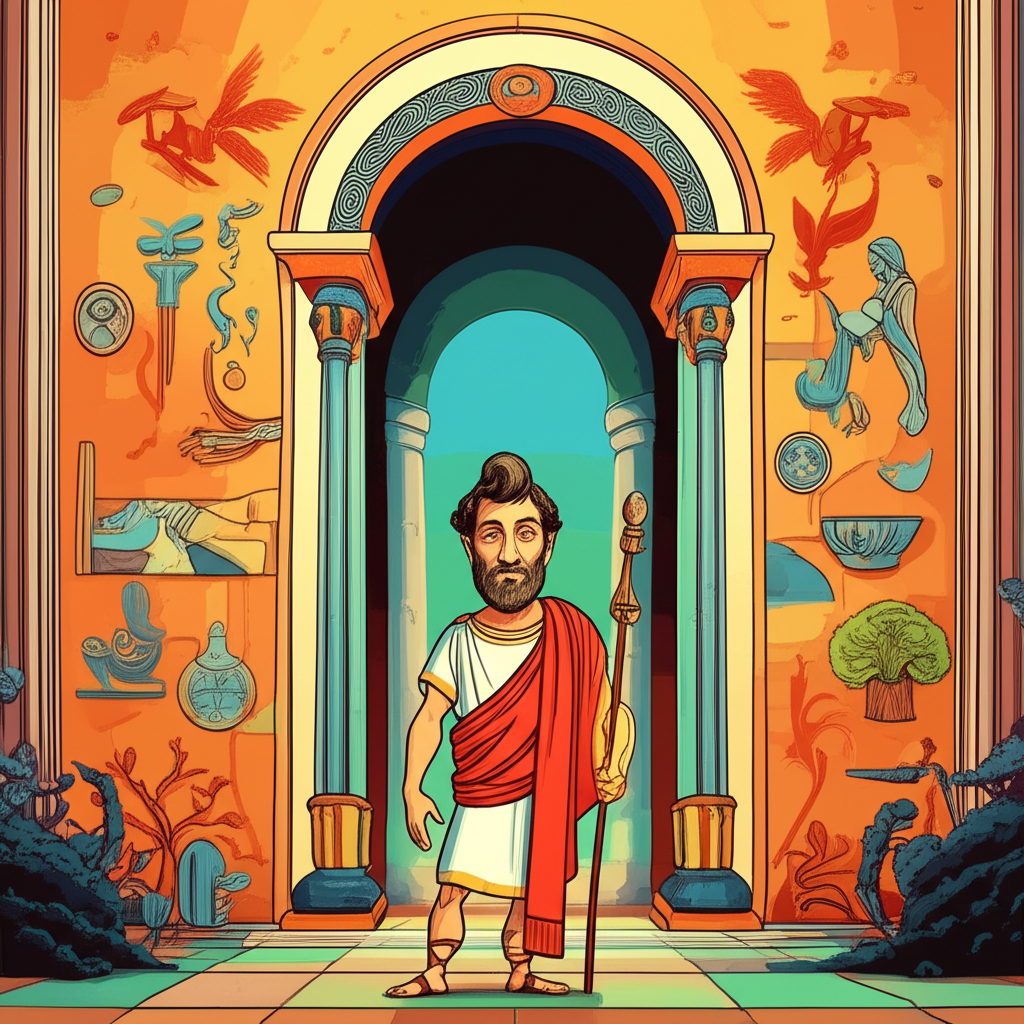
The symbolic attributes of the Spartan warrior were manifold. Their iconic crimson cloaks, often described as blood-red, were not merely for show but served a practical purpose: to mask wounds and instill fear in their enemies. Their heavy bronze armor, their long spears, and their formidable shields, often bearing the emblem of the lambda (Λ) for Lacedaemon, the official name for Sparta, were extensions of their very being. These were not individuals seeking personal glory in isolation, but rather components of a formidable phalanx, a wall of shields and spears that moved with the terrifying precision of a single organism. The Spartan emphasis was on collective strength, on the unwavering defense of their city and their way of life. They represented a stoic endurance, a refusal to yield, and a profound sense of duty that transcended personal comfort or even survival.
The narrative of the Trojan War, as it pertains to Sparta, is inextricably linked to the abduction of Helen, the wife of Spartan King Menelaus. Helen, renowned throughout the Hellenic world for her unparalleled beauty, was spirited away to the city of Troy by Paris, a prince of Troy, under the guise of hospitality. This act of perfidy, fueled by the intervention of gods and the hubris of mortals, ignited the flames of war. Menelaus, his honor deeply wounded, rallied the Achaean forces, a coalition of Greek city-states, to sail to Troy and reclaim his wife.
Among these allied forces, the Spartans, under the leadership of Menelaus himself and his formidable brother, Agamemnon, King of Mycenae, formed a crucial and terrifying contingent. Imagine the scene: the vast Achaean fleet, a shimmering forest of masts, cresting the waves towards the distant shores of Asia Minor. And within this armada, the Spartan ships, their crews a sea of bronzed bodies clad in gleaming armor, their faces set in grim determination. As they landed on the Trojan beaches, the air would have filled with the thunderous war cries of the Spartans, their synchronized advance a terrifying spectacle.
The Iliad paints vivid portraits of Spartan warriors in the thick of battle. We hear of their unflinching courage as they face the Trojans, their spears finding their mark with deadly accuracy. We witness their resilience in the face of overwhelming odds, their unwavering commitment to the collective push forward. Even when their leaders fall, or when the tide of battle seems to turn against them, the Spartan spirit, the ingrained discipline, would have compelled them to hold the line. Their songs, perhaps not sung in joyous melodies but in the grim cadence of marching feet and the clash of steel, were hymns of endurance, of sacrifice, and of a relentless pursuit of victory, no matter the cost. They were the unyielding shield, the sharpest spear in the Achaean arsenal, their presence a constant and formidable force on the battlefield.
The symbolism embedded within the Spartan contribution to the Trojan War is multifaceted. Their unwavering loyalty to Menelaus and their commitment to upholding honor and oaths represented the ideal of civic duty and the paramount importance of justice in the ancient Greek worldview. The Spartan warrior, with his disciplined ferocity, embodied the virtues of courage, self-sacrifice, and the collective strength that could overcome even the most formidable of enemies. Their relentless pursuit of their objective, even over a decade of brutal warfare, highlighted the Greek fascination with perseverance and the notion that great deeds required immense fortitude. Furthermore, the stark contrast between the disciplined Spartans and the more individualistic heroes of other Greek contingents underscored different ideals of heroism and warfare, contributing to the rich tapestry of Greek thought.
In the modern era, the Trojan War, and the figures of the Spartans within it, continue to captivate our imaginations. They are reimagined in countless books, films, and video games, often portrayed as the archetypal warriors – stoic, disciplined, and incredibly effective. From the visceral battle sequences in films like "Troy" to the strategic depth of historical strategy games, the Spartan legacy endures. In literature and cultural studies, they are analyzed as a fascinating example of a militaristic society, a lens through which to examine the dynamics of power, social control, and the construction of identity. They serve as a powerful reminder of the enduring human fascination with martial prowess and the archetypes of the warrior.
It is crucial to reiterate that the Trojan War, and the roles of figures like the Spartans within it, are ancient stories, products of mythology and folklore. They are not historical accounts to be believed as literal truth, nor are they divine pronouncements. As Muslims, we recognize that only Allah (God) is the true Creator and Sustainer of all existence. These narratives, however, offer invaluable insights into the cultural heritage, the moral frameworks, and the imaginative worlds of ancient peoples. They are testaments to the enduring power of storytelling, to the human need to grapple with fundamental questions of life, death, honor, and conflict. The songs of Sparta, though sung in the distant echoes of a bygone age, continue to resonate, reminding us of the richness of our shared human heritage and the boundless creativity of the human spirit.