fufufafa
The archipelago of the Philippines, a tapestry woven with emerald islands and sapphire waters, has long been a fertile ground for stories. Among its many cultural treasures, the Visayas region, with its ancient traditions and deep connection to the sea, cradles tales that have been passed down through generations, whispered in the rustling of coconut palms and carried on the salty spray of the ocean. One such enduring narrative speaks of the Manananggal, a creature born from the shadows of ancient beliefs, a figure that stirred both fear and fascination in the hearts of those who lived by the rhythm of the tides.
This is not a tale of divine decree or factual occurrence, but rather a testament to the rich imaginative landscape of ancient peoples. It is a story told to explain the inexplicable, to give form to primal anxieties, and to reflect the complex relationship between humanity and the natural world that surrounded them. These narratives, like the weathered carvings on old stone temples, offer a glimpse into the minds and souls of those who shaped them.
The era in which these stories of the Manananggal likely took root was one where the world was perceived as alive with unseen forces. Life was dictated by the sun, the moon, the capricious nature of storms, and the bounty, or scarcity, of the land and sea. Communities were often small, isolated, and deeply reliant on their immediate environment for survival. In such a setting, the boundary between the tangible and the spiritual was fluid. Illness, misfortune, or the unexplained disappearance of livestock or even individuals could easily be attributed to the actions of entities beyond human comprehension. The natural world, with its hidden dangers and majestic power, was often personified, and the Manananggal emerged as a potent symbol within this worldview.
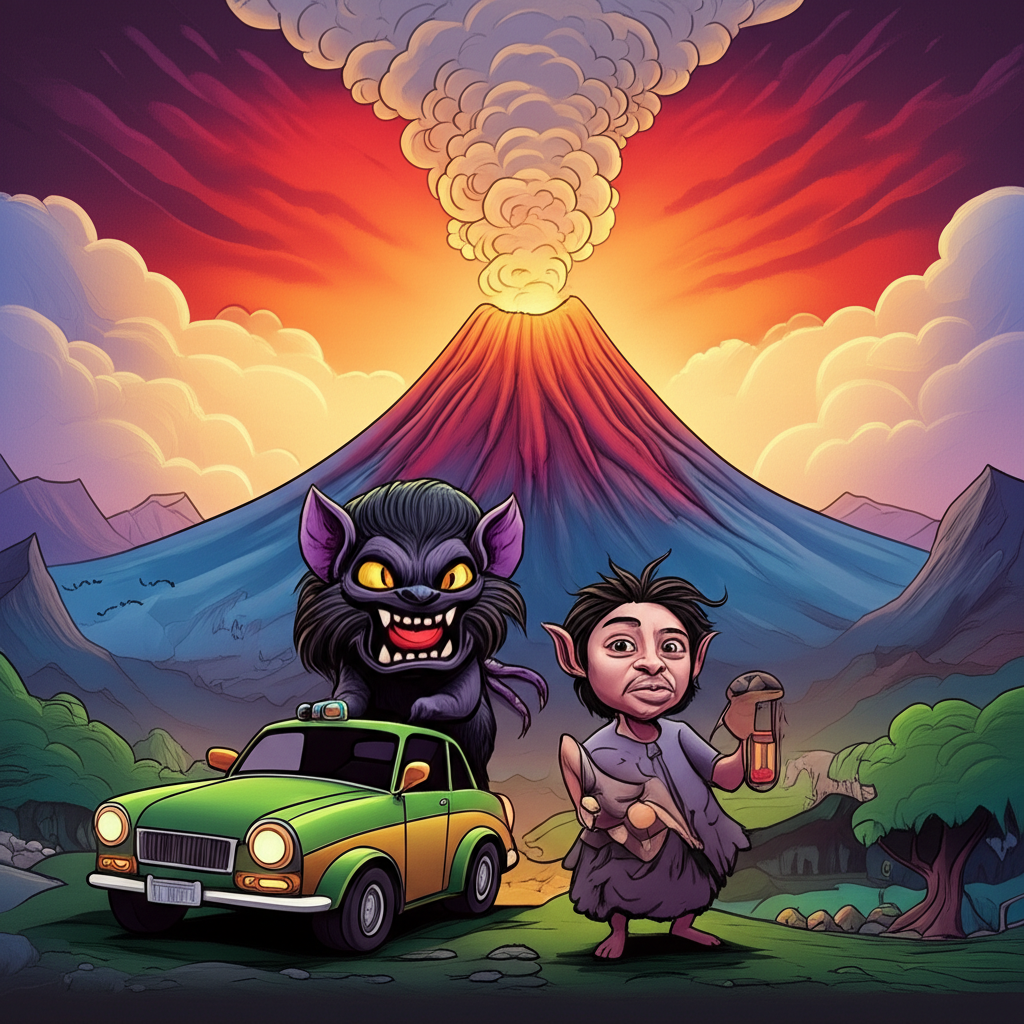
The Manananggal, as depicted in these traditional narratives, is a creature of terrifying duality. By day, it is said to appear as a beautiful woman, her allure a dangerous deception. But as darkness falls, a chilling transformation occurs. The upper torso detaches from the lower body, sprouting grotesque, leathery wings reminiscent of a bat’s. The severed torso, suspended in the air by these powerful wings, then embarks on its nocturnal hunt. Its long, prehensile tongue, described as needle-sharp, is used to probe for the unborn fetuses of pregnant women, a particularly grim aspect of its predatory nature. The lower half of its body is often left standing or propped against a wall, vulnerable and exposed, a stark reminder of the creature’s fragmented existence.
The narrative retellings of the Manananggal’s exploits paint a vivid, albeit unsettling, picture. Imagine a starlit night, the air thick with the scent of salt and blooming jasmine. A hushed village sleeps, its thatched roofs silhouetted against the moon. Suddenly, a faint, rustling sound, like dry leaves skittering across a roof, can be heard. It is the sound of the Manananggal’s wings, a harbinger of dread. A pregnant woman, restless in her sleep, might feel a subtle vibration, a change in the air. The story would then describe the creature’s silent descent, its shadowy form weaving through the palm trees. The fear would stem from the violation of the most sacred space – the womb – and the helplessness of those most vulnerable. Tales would circulate of villagers finding bloodstains on their doorsteps or hearing unsettling cries carried on the wind, fueling the collective anxiety. The Manananggal, in these narratives, was not merely a monster; it was a phantom that preyed on the deepest fears of a community, representing the unseen threats that lurked beyond the safety of their homes.
The symbolism embedded within the Manananggal myth is multifaceted and speaks volumes about the anxieties and values of the people who shared it. The creature’s duality, the beautiful woman hiding a monstrous reality, could represent the inherent dangers of superficial appearances, a caution against trusting what is easily seen. Its ability to separate, to exist in fragmented form, might have symbolized a breakdown of natural order or a fear of the self being torn apart by inner turmoil or external pressures. The predilection for preying on pregnant women and fetuses likely represented a deep-seated fear of infertility, the loss of future generations, and the disruption of the natural cycle of life. Furthermore, the vulnerability of the creature’s severed lower half suggested a potential weakness, a way to combat such a terrifying entity. The belief that sprinkling salt, ash, or crushed eggshells around a home could deter the Manananggal speaks to a desire for tangible defenses against the intangible, a need to find practical solutions to deeply felt fears.
In the modern era, the Manananggal has transcended its origins as a purely folkloric entity and has found new life in various forms of media. It has become a recurring figure in Filipino literature, offering authors a powerful symbol of horror, societal critique, or even a complex exploration of female agency and identity. In cinema and television, the Manananggal has been reimagined countless times, its terrifying visage gracing the silver screen and captivating audiences with its unique brand of terror. Video games often incorporate the creature as a formidable antagonist, its distinctive appearance and predatory nature making it a memorable foe. These modern interpretations, while often focusing on the visceral horror, also serve as a conduit for cultural preservation, introducing the legend to new generations and keeping its echoes alive. Cultural studies scholars delve into the myth, dissecting its layers of meaning and understanding its role in shaping Filipino identity and worldview.
It is crucial to reiterate that the Manananggal is a creation of ancient storytelling, a product of a time when the world was understood through myth and legend. As Muslims, we recognize that the ultimate Creator and Sustainer of all existence is Allah (SWT), and that true power and divinity reside solely with Him. These narratives, while captivating, do not represent a belief system or a divine truth. Instead, they are a testament to the enduring power of human imagination and the vital role of storytelling in preserving cultural heritage. The echoes of Anitun Tabu, the whispers of the Manananggal across the Visayas seas, are not calls to fear or worship, but rather invitations to explore the rich tapestry of human culture, to understand the fears and aspirations of our ancestors, and to appreciate the enduring tradition of weaving tales that continue to resonate through time. These stories, like the ancient coral reefs that fringe the Visayas islands, are living testaments to the vibrant, imaginative spirit of the people who conceived them.