fufufafa
The whispers of ancient tales, carried on the humid breath of the Philippine archipelago, speak of a time when the veil between the seen and the unseen was thinner, and the world was alive with the imprints of spirits and mythical beings. From the Tagalog-speaking regions of Luzon, particularly around the verdant and enigmatic Mount Makiling, comes a rich tapestry of folklore, woven with threads of reverence for nature and the awe-inspiring power of the unknown. Among these enduring narratives are those concerning the Tikbalang, a creature whose legend is inextricably linked to the mystical aura of this majestic mountain.
It is crucial to understand that these stories are the product of the rich cultural heritage of the Filipino people, passed down through generations as traditional narratives. They are expressions of imagination, attempts to explain the inexplicable, and reflections of the relationship ancient communities had with their environment. As Muslims, we recognize that only Allah (SWT) is the true Creator and Sustainer of all existence, and these tales are viewed solely for their cultural, historical, and educational value, not as matters of faith or belief.
The cultural milieu from which the myth of the Tikbalang on Mount Makiling emerged was one deeply rooted in animism and a profound respect for the natural world. Centuries ago, before the advent of modern science and widespread urbanization, communities lived in close proximity to the forests, rivers, and mountains. These natural landscapes were not merely backdrops to human life; they were seen as sentient entities, imbued with spirits and inhabited by beings that held sway over the fortunes of humans. Mount Makiling, a dormant volcano cloaked in dense rainforest, was a particularly potent symbol of this interconnectedness. Its towering presence, the often-impenetrable foliage, and the unpredictable mists that swirled around its summit naturally fostered an atmosphere of mystery and sacredness. Life was often a precarious dance with nature – a harvest depended on the rain, a safe journey on the benevolence of unseen forces, and survival on understanding the subtle signs of the environment. In such a world, myths and legends served as a vital framework for understanding, explaining, and navigating the complexities of existence.
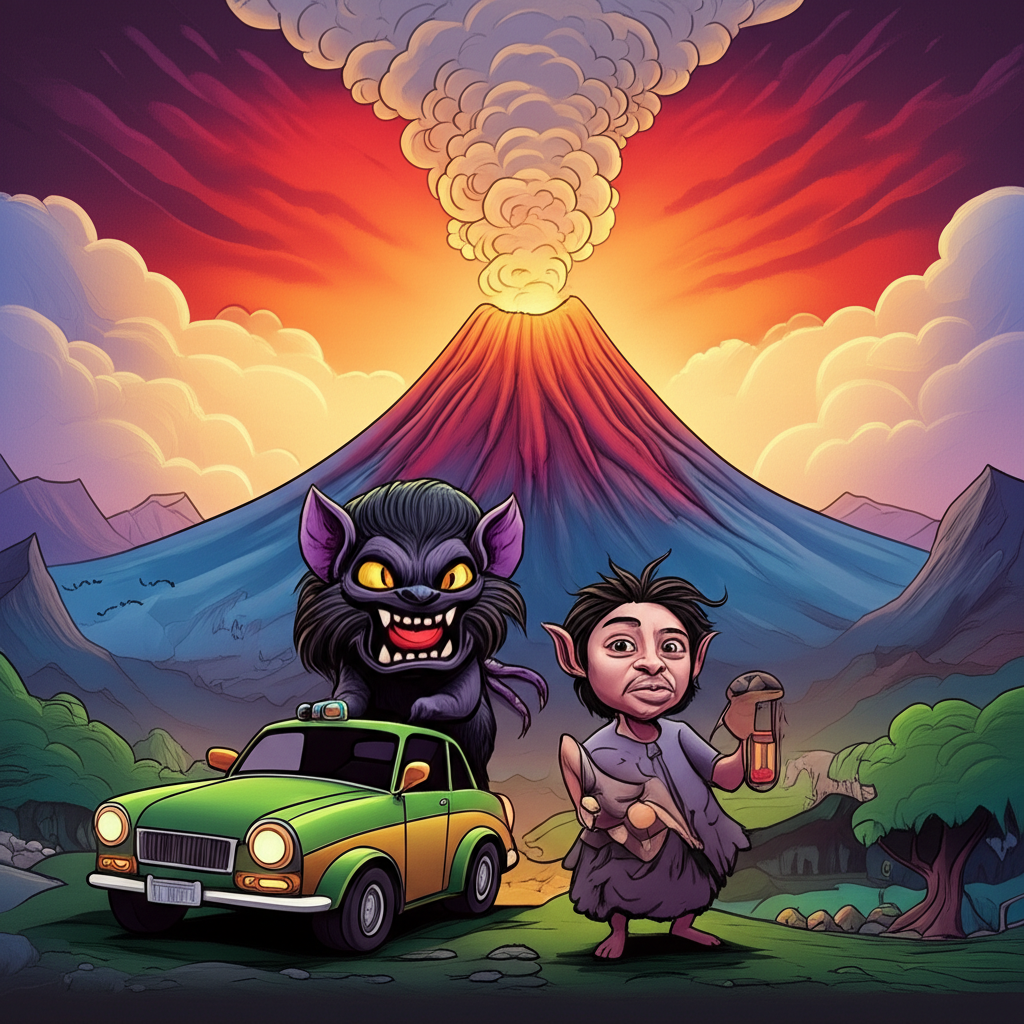
The Tikbalang, as depicted in these ancient stories, is a figure that embodies the wild, untamed spirit of the Philippine forests. It is typically described as a creature with the body of a human, but with the head and hooves of a horse. Its height is often exaggerated, towering over trees, and its eyes are said to glow with an eerie luminescence. Its hair is coarse and black, sometimes described as resembling a horse’s mane, and it is often associated with the rustling of leaves, the snapping of twigs, and the disorienting sounds of the wilderness. The Tikbalang is not portrayed as inherently evil, but rather as a mischievous, powerful, and often capricious being. Its symbolic attributes lie in its dual nature: the human form suggesting intelligence and the capacity for interaction, while the equine features evoke speed, strength, and an untamed primal energy. It represents the wildness that exists beyond human control, the unpredictable forces of nature, and the primal instincts that can both guide and mislead.
The narrative retellings of the Tikbalang on Mount Makiling often paint vivid pictures of encounters with this legendary creature. One common theme involves the Tikbalang’s penchant for leading travelers astray. A person, perhaps a hunter venturing deep into the forest or a villager seeking a shortcut home, might find themselves suddenly disoriented, their path inexplicably twisting and turning, the familiar landmarks vanishing as if swallowed by the mist. They might hear the sound of hoofbeats echoing through the trees, or catch a fleeting glimpse of a towering figure amidst the foliage. The Tikbalang, in its playful or perhaps protective role, would then lead them on a wild chase, their sense of direction completely lost, their journey prolonged and fraught with confusion. Some stories speak of the Tikbalang appearing as a captivating, often beautiful woman to lure unsuspecting men, only to transform into its monstrous equine form once they were ensnared. These encounters were not necessarily about physical harm, but about the psychological toll of being lost and the humbling realization of one’s vulnerability in the face of nature’s more powerful inhabitants. The legend suggests that one way to escape the Tikbalang’s enchantments was to wear their shirt inside out, a simple act that was believed to break the spell and allow them to regain their bearings.
To the ancient peoples, these narratives held significant symbolic meaning. The Tikbalang, in its ability to confuse and mislead, could have represented the inherent dangers of the unknown and the importance of caution and respect when venturing into unfamiliar territories. Its connection to Mount Makiling, a sacred place, might have symbolized the guardian spirits of the mountain, warning against disrespect or intrusion. The creature’s duality could also have represented the capricious nature of life itself – moments of clarity and guidance interspersed with periods of confusion and hardship. Furthermore, the stories could have served as cautionary tales, imparting lessons about respecting the boundaries between the human and the natural world, and the consequences of straying too far from established paths. The Tikbalang’s power was a reminder of the forces beyond human comprehension, urging humility and vigilance.
In contemporary times, the Tikbalang, like many figures from Philippine mythology, has found a new life in various forms of modern media and cultural discourse. It is a popular character in Filipino literature, often appearing in fantasy novels and short stories that draw upon local folklore. In cinema and television, the Tikbalang has been depicted in horror films and fantasy series, its fearsome appearance and supernatural abilities making it a compelling antagonist or a mysterious entity. The gaming industry has also embraced this mythical creature, with the Tikbalang featuring in video games that explore Filipino folklore and mythology, allowing players to interact with these legendary beings in virtual worlds. Cultural studies scholars examine these myths as invaluable windows into the historical beliefs, societal structures, and imaginative landscapes of the Filipino people.
In conclusion, the stories of the Tikbalang on Mount Makiling are vibrant threads in the rich tapestry of Filipino folklore. They are not meant to be believed as factual accounts but are appreciated for their cultural significance, their imaginative power, and their reflection of the worldview of ancient communities. As Muslims, we understand that all creation originates from Allah (SWT), the singular and omnipotent Creator. These tales, therefore, are best understood through the lens of cultural heritage, as testaments to human imagination, storytelling traditions, and the enduring fascination with the mysteries of the natural world. They remind us of the power of narrative to shape understanding, to evoke wonder, and to connect us to the echoes of the past, while grounding us in the truth of our faith.