fufufafa
In the lush, verdant tapestry of the Philippine archipelago, where ancient traditions intertwine with the whispers of the wind through tropical forests, there exist stories that have been passed down through generations, weaving a rich cultural heritage. Among these, the legend of the Manananggal, a creature deeply rooted in Filipino folklore, often finds its spectral presence linked to the mystical aura of Mount Makiling, a revered natural landmark in the province of Laguna. This narrative, like countless others from ancient peoples, serves as a window into their worldview, their fears, and their attempts to understand the world around them. It is a story for cultural and historical understanding, a testament to the power of human imagination, not a claim of reality or divine intervention.
The genesis of such myths can be traced back to pre-colonial Philippines, an era characterized by a profound connection to nature. Societies were largely agrarian, living in close proximity to the forests, rivers, and mountains that sustained them. Their understanding of the world was often animistic, where spirits were believed to inhabit natural elements, influencing their lives in both benevolent and malevolent ways. The night, with its shadows and unknown sounds, held a particular mystique, a canvas upon which fears and anxieties could be projected. In this context, stories like the Manananggal likely emerged as a way to explain the inexplicable, to caution against the unknown, and to perhaps even represent the primal fears of vulnerability and the dark forces that lurked beyond the safety of the village fire.
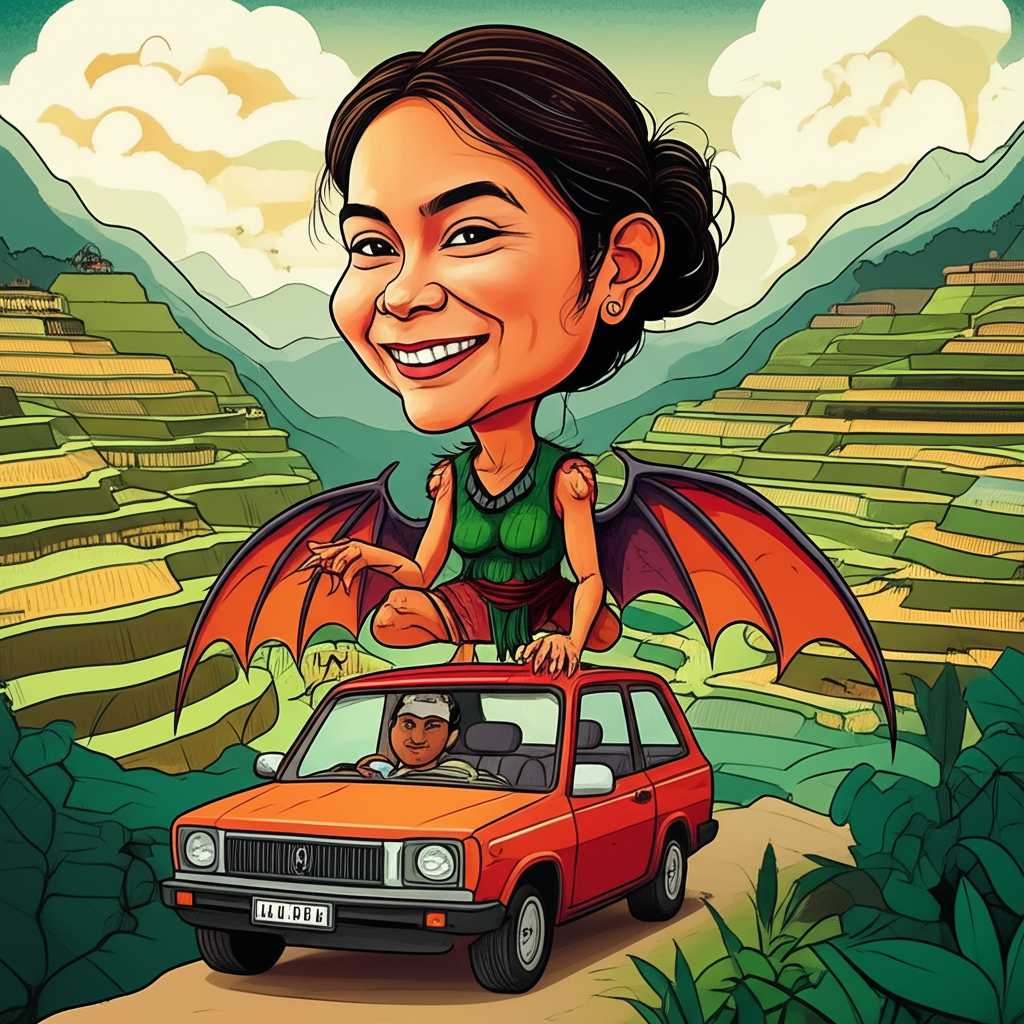
The Manananggal, as depicted in these ancient tales, is a creature of chilling duality. It is typically portrayed as a beautiful woman in its upper torso, with long, flowing hair and captivating eyes, often seducing unsuspecting victims. However, at midnight, a horrifying transformation occurs. Its torso detaches from its lower body, unfolding a pair of leathery, bat-like wings. The upper half then takes flight into the night, its internal organs, including a long, proboscis-like tongue, exposed and dangling. This tongue is the instrument of its predatory nature, used to probe into homes and suck the blood of sleeping victims, particularly pregnant women, targeting the fetus within. The lower half remains grounded, often appearing as a mere headless body. The creature’s name itself, "Manananggal," is believed to derive from the Tagalog word "tanggal," meaning "to remove" or "to detach," a stark description of its most terrifying attribute. Symbolically, the Manananggal can be seen as representing a primal fear of the monstrous hidden within the familiar, the betrayal of a seemingly harmless form, and the vulnerability of the innocent.
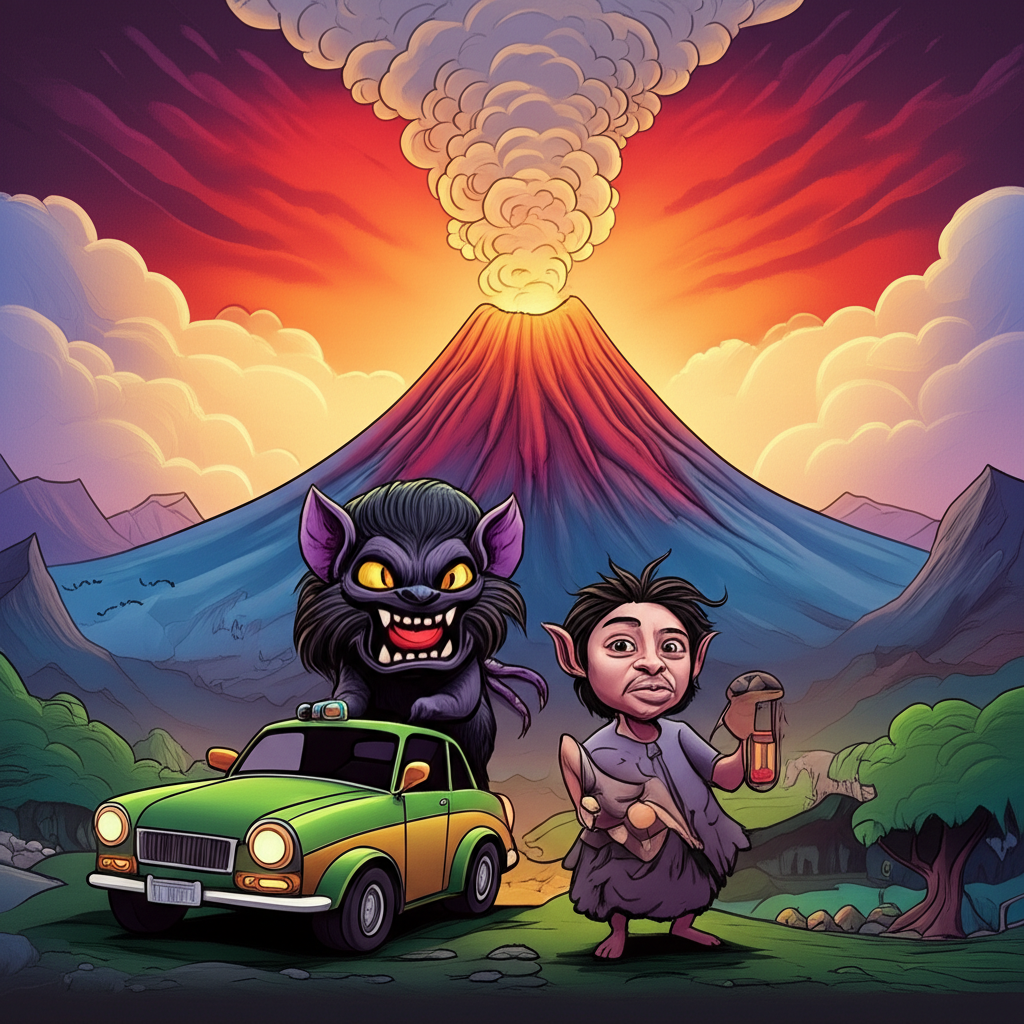
The whispers of Mount Makiling add an additional layer of mystique to the Manananggal legend. Mount Makiling, an active stratovolcano, is itself a significant figure in Filipino folklore, often personified as a powerful diwata (a nature spirit or deity) named Maria Makiling. This benevolent protector of the mountain is said to bestow blessings upon those who respect her domain and to inflict misfortune upon those who disrespect it. The association of the Manananggal with such a sacred and powerful natural entity creates a fascinating contrast. Perhaps the presence of a terrifying creature like the Manananggal in the vicinity of a benevolent spirit like Maria Makiling served to illustrate the dual nature of the world – the coexistence of good and evil, protection and peril, within the very landscape that sustained them.
Imagine a moonless night, the air thick with the scent of damp earth and unseen blossoms. The villagers, huddled around their meager fires, speak in hushed tones, their eyes wide with apprehension. The story begins with a woman, perhaps a widow named Alunsina, known for her quiet demeanor and her solitary dwelling on the outskirts of the village, close to the shadowed foothills of Mount Makiling. She carries a secret, a curse whispered to her by an envious rival or a vengeful spirit. As the clock strikes midnight, a chilling premonition fills the air. The rhythmic chirping of crickets seems to falter, replaced by an unnerving silence. Alunsina, her face contorted in a silent agony, feels a terrifying separation. Her upper body begins to pull away, her spine elongating and contorting. With a sickening rip, she is free from her lower half, a pair of grotesque wings unfurling from her back. The exposed viscera gleam in the faint moonlight. With a guttural cry, she ascends into the inky blackness, a predator on the hunt. Her supernatural senses guide her towards the scent of life, towards the vulnerable. She soars over the sleeping village, her shadow a fleeting terror against the thatched roofs, her gaze fixed on a dwelling where a young mother rests, her belly swollen with new life. The legend tells of her unearthly tongue, a long, slender appendage, reaching out, searching, probing the darkness for entry, for sustenance. The villagers, in their fear, would hang garlic and salt outside their windows, believing these simple remedies could ward off the creature’s approach. They would whisper prayers, not to the Manananggal, but to the benevolent spirits of the mountain, hoping for protection. The Manananggal, driven by an insatiable hunger, would continue her nocturnal hunt, a terrifying phantom born from the deep-seated anxieties of a world where the boundaries between the human and the supernatural were fluid and often perilous.
The symbolism embedded within the Manananggal myth is multifaceted. It could represent the fear of disease and illness, particularly those that affected pregnant women and infants, which were often inexplicable and devastating in ancient times. The creature’s predatory nature might have been a metaphor for these unseen threats. Furthermore, the duality of the Manananggal – the beautiful woman above and the monstrous half below – could symbolize the hidden dangers within seemingly ordinary individuals or the internal struggles of good versus evil. The connection to Mount Makiling, a place of power and spiritual significance, might have been an attempt to rationalize or contain such malevolent forces within a specific, albeit feared, domain. It also highlights the reverence for nature, where even the most fearsome entities were believed to be part of a larger, albeit complex, cosmic order.
In contemporary times, the Manananggal continues to captivate the imagination, transcending its origins as a folk tale to become a prominent figure in modern Filipino culture. It is a recurring motif in literature, art, film, and video games, often reimagined and reinterpreted to explore themes of horror, identity, and societal anxieties. These modern interpretations may delve into the psychological aspects of the creature, exploring its potential origins as a curse or a manifestation of suppressed desires. Cultural studies scholars analyze the Manananggal as a powerful symbol of Filipino identity and its rich tapestry of folklore, examining how these ancient stories continue to resonate and evolve.
In conclusion, the legend of the Manananggal and its spectral ties to Mount Makiling are enduring narratives that offer invaluable insights into the cultural, historical, and psychological landscape of ancient Filipino societies. These stories, passed down through oral traditions, are not to be mistaken for factual accounts or matters of belief. As Muslims, we understand that only Allah (SWT) is the singular, true Creator and Sustainer of all existence, and that all power and dominion belong to Him alone. The Manananggal, like all mythological figures, exists within the realm of folklore and imagination. By studying these tales, we gain a deeper appreciation for the ingenuity of human storytelling, the enduring power of cultural heritage, and the imaginative ways our ancestors sought to comprehend the mysteries of the world around them. The echoes of Amanikable, the ancient name associated with the region and its legends, continue to resonate, reminding us of the rich and complex tapestry of human experience that storytelling helps to preserve and share.