fufufafa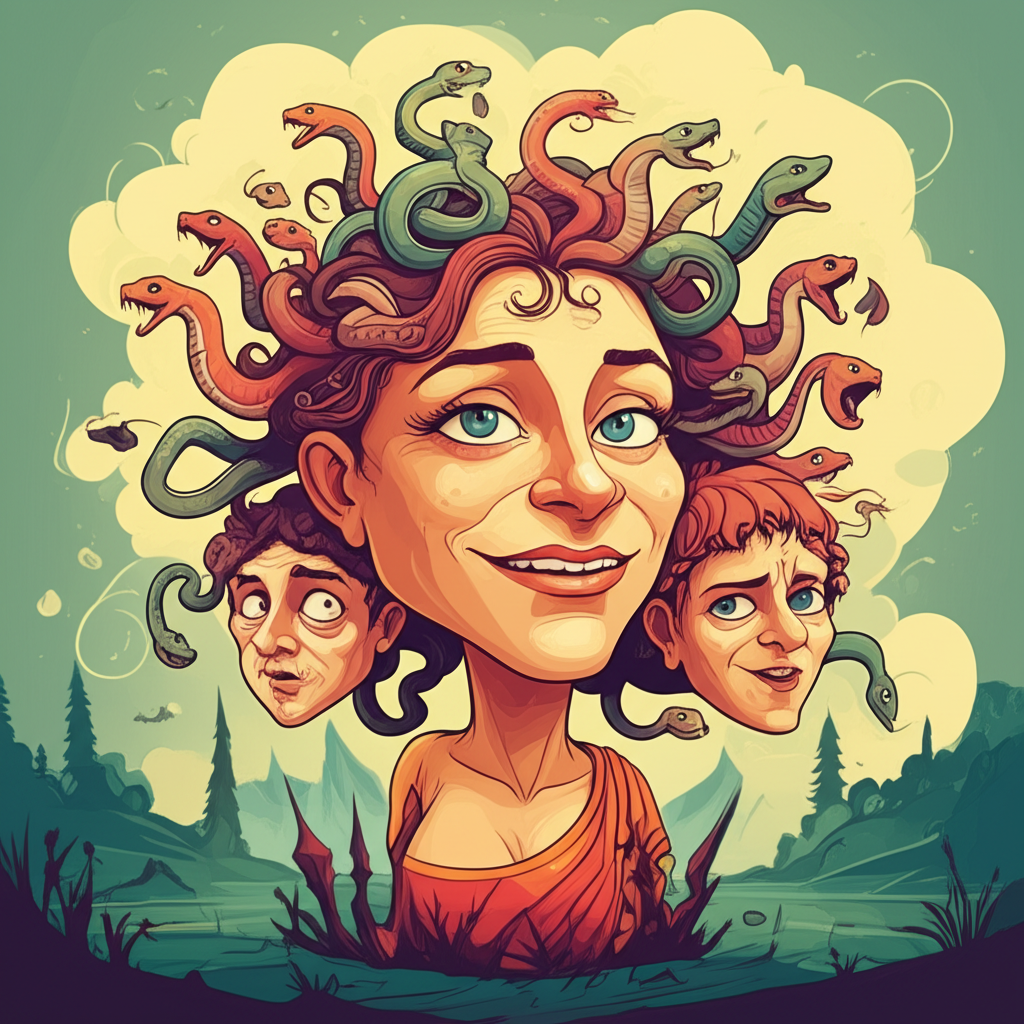
The whispers of ancient Greece echo through time, carried on the wind that sweeps across the rugged landscapes of Arcadia. Within this land of pastoral beauty and wild, untamed nature, a potent myth took root and blossomed in the collective imagination: the tale of the Gorgons. This is not a chronicle of historical fact, nor a testament to divine power, but rather a traditional story, woven by the hands of ancient storytellers to explain the world around them and the fears that stirred within their hearts. To understand the Gorgons of Arcadia is to delve into the very fabric of a bygone culture, to appreciate the stories that shaped their worldview and the profound symbolism they imbued in their narratives.
The era in which these tales of the Gorgons likely flourished was the Archaic and Classical periods of ancient Greece, a time when oral tradition was paramount and the natural world held a profound, often awe-inspiring, presence. The Greeks of this period viewed the world as a place teeming with unseen forces, inhabited by gods, goddesses, heroes, and monstrous beings. The untamed wilderness – the deep forests, the treacherous mountain passes, the shadowy caves – was often seen as the domain of these supernatural entities, places where the ordinary laws of the world might bend or break. Arcadia, with its wild, mountainous terrain and its reputation for being a more primitive, pastoral region, was a fitting stage for such primal and fearsome myths. Their understanding was rooted in observation and a desire to find order and meaning in the often chaotic and unpredictable forces of nature and human existence.
The most prominent and terrifying figure within the Gorgon lore is often Medusa, though the myth typically speaks of her and her sisters as a group. These were not simply beautiful maidens with a dangerous secret, but rather monstrous beings, embodiments of primal fear and destructive power. Descriptions vary across ancient texts, but common threads paint a picture of terrifying visages. Their hair was often depicted as a writhing mass of venomous snakes, a potent symbol of danger and corruption. Their eyes were said to possess a horrifying power: to turn any living creature that met their gaze to stone. This petrifying gaze, a chilling manifestation of immobility and death, was their signature weapon. Some accounts also describe them with tusks, leathery wings, and scales, further emphasizing their monstrous, non-human nature. These attributes were not meant to be literal depictions of biological creatures, but rather symbolic representations of the destructive forces they embodied – the paralyzing fear of death, the insidious nature of corruption, and the overwhelming power of the untamed.
The narrative of the Gorgons, particularly Medusa, is intrinsically linked to the hero Perseus. The tale, as it often unfolds, begins with a quest given to Perseus by King Polydectes, who desired to be rid of the young hero. Perseus was tasked with a seemingly impossible feat: to bring back the head of Medusa. Armed with divine assistance from the gods – Hermes providing winged sandals, Hades a helmet of invisibility, and Athena a mirrored shield – Perseus embarked on his perilous journey. He found the Gorgons, not in a grand palace, but in a desolate, remote place, often described as the edge of the world. It is here, through the reflection in Athena’s shield, that Perseus was able to confront Medusa without directly meeting her fatal gaze. He decapitated her, and from her severed neck, it is said, sprang Pegasus, the winged horse, and Chrysaor, a giant. The head of Medusa, still possessing its petrifying power, was then used by Perseus as a weapon, turning his enemies to stone.
The symbolism embedded within the Gorgon myth is rich and multifaceted, offering insight into the anxieties and values of ancient Greek society. The petrifying gaze, the ability to turn flesh to stone, can be interpreted as a potent metaphor for the paralyzing effects of fear, the inevitability of death, and the destructive consequences of unchecked terror. The snakes often associated with their hair might symbolize chaos, primal instincts, or even the insidious nature of evil that coils and strikes unexpectedly. The monstrous appearance itself speaks to a fear of the alien, the grotesque, and the forces that lie beyond human comprehension. Conversely, the slaying of Medusa by Perseus, aided by the gods, represents the triumph of order over chaos, reason over primal fear, and the heroic ability to confront and overcome even the most terrifying obstacles. It speaks to the importance of cleverness, divine favor, and the courage to face one’s deepest anxieties.
In the modern world, the myth of the Gorgons continues to captivate the human imagination, finding new life in various forms of art and media. They are recurring figures in literature, often reimagined as formidable antagonists or as symbols of ancient power. In film and television, their terrifying visage and petrifying gaze have been a staple of fantasy and horror genres, a testament to their enduring power to evoke dread. Video games frequently feature them as challenging enemies, their iconic serpentine hair and stone-turning abilities translated into engaging gameplay mechanics. Beyond entertainment, scholars and mythographers continue to analyze the Gorgons within the broader context of classical mythology and folklore, exploring their archetypal significance and their reflection of ancient Greek societal values and anxieties.
It is crucial to reiterate that the myth of the Gorgons is a product of ancient storytelling and cultural interpretation, not a reflection of reality. As Muslims, we hold the unwavering belief that only Allah (God) is the true Creator and Sustainer of all that exists. The stories of the ancient world, while fascinating for their cultural and historical insights, do not alter this fundamental truth. The enduring appeal of the Gorgon myth lies not in its veracity, but in its power as a narrative, a testament to the human capacity for imagination and the timeless need to grapple with profound concepts like fear, mortality, and heroism. These tales, passed down through generations, serve as a vital link to our cultural heritage, reminding us of the rich tapestry of human experience and the enduring power of storytelling to illuminate our understanding of ourselves and the world.