
 fufufafa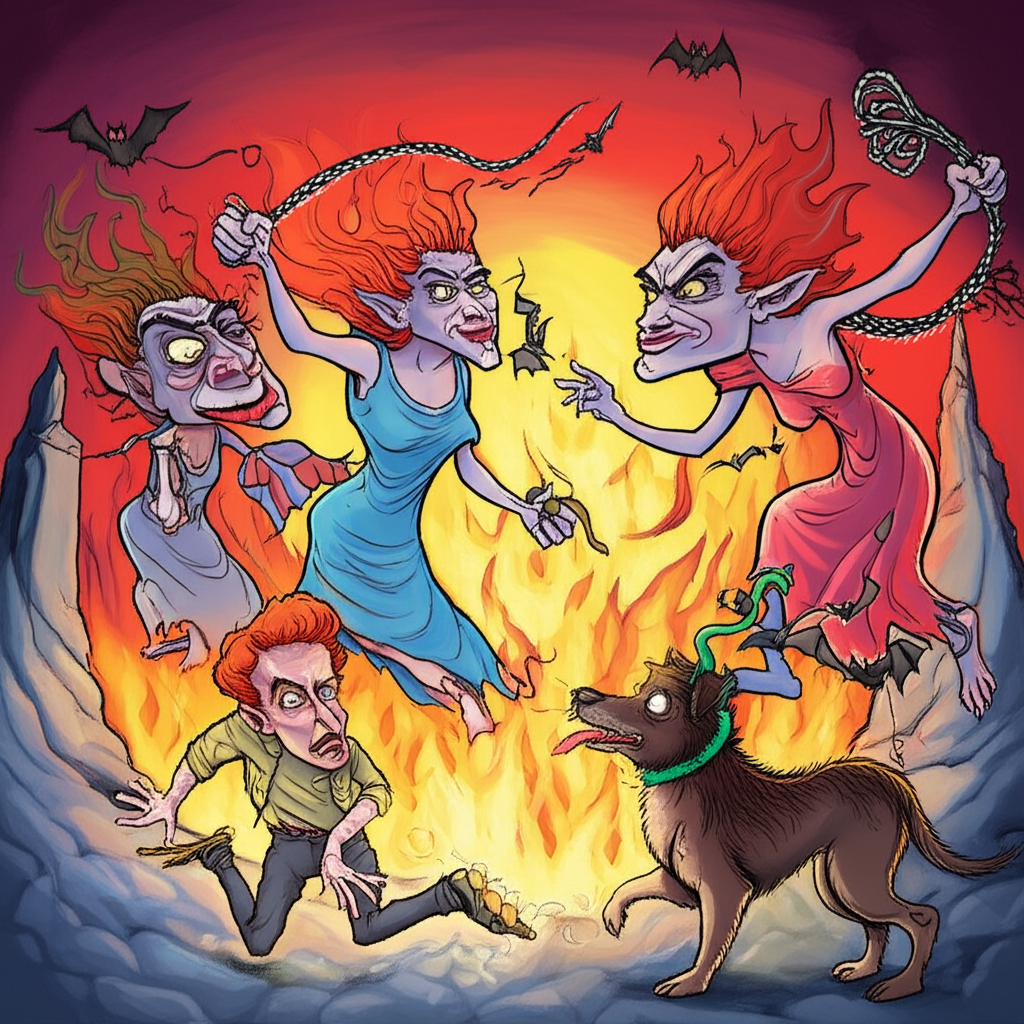
The shadows of ancient Greece, a land steeped in myth and philosophy, birthed tales that echoed with the primal fears and aspirations of its people. Among these enduring narratives are the stories of the Erinyes, more commonly known as the Furies, formidable beings who stalked the fringes of the underworld and beyond. These are not accounts of historical events or divine pronouncements, but rather the rich tapestry of human imagination, woven from a deep-seated understanding of justice, retribution, and the inescapable consequences of wrongdoing. For the ancient Greeks, these were powerful symbols, cautionary tales told to illustrate a profound respect for the cosmic order and the moral laws that governed both gods and mortals.
The world in which these myths flourished was one where the lines between the tangible and the supernatural were often blurred. In the absence of scientific explanation for natural phenomena or the complexities of human behavior, the divine and the mythical offered frameworks for understanding. Life was a precarious dance between the whims of the gods, the forces of nature, and the ever-present specter of fate. Justice, in this context, was not always meted out swiftly or predictably in the mortal realm. The Furies represented the embodiment of that delayed, but ultimately inevitable, cosmic reckoning. They were the silent, relentless agents of a justice that transcended human courts, a justice that pursued transgressors even into the deepest despair. Their origins are often traced to the primordial darkness, born from the blood of Uranus when he was castrated by his son Cronus, a primal act of violence that birthed a lineage of vengeful entities.
The Furies, in their most common depictions, were not figures of beauty or grace. They were terrifying embodiments of wrath and punishment. Often described as winged, serpentine creatures with whips of flame and eyes that wept venom, they exuded an aura of dread. Their hair was said to be made of writhing snakes, their faces gaunt and contorted with eternal fury. They were not creatures to be reasoned with or appeased, but forces of nature personified, akin to a storm or an earthquake, yet driven by a specific, vengeful purpose. Their symbolic attributes were stark: the snake, a creature of the underworld and often associated with primal power and danger; the whip, a tool of torment and control; and their unyielding gaze, representing the inescapable scrutiny of divine retribution. They were the embodiment of the guilt that gnaws at the conscience, the fear of exposure, and the dread of ultimate consequence.
Imagine, then, a soul burdened by an unforgivable transgression, a mortal who has defied the sacred laws of hospitality, spilled innocent blood, or betrayed a solemn oath. As they flee, seeking solace in the farthest reaches of the known world, a chilling whisper begins to fill the air. It is not the wind, nor the rustle of leaves, but a sound that seems to emanate from the very earth, a low, guttural hum that grows into a mournful chorus. This is the sound of the Furies, Avernus’s avenging daughters, beginning their relentless pursuit.
The air grows heavy, thick with the scent of brimstone and decay. The sky, once clear, darkens unnaturally, as if the sun itself recoils from the impending arrival. Then, they appear. Not descending from the heavens, but seeming to coalesce from the very shadows. Winged figures, their forms indistinct at first, then sharpening into terrifying clarity. They move with a speed that defies natural locomotion, their serpentine locks hissing, their eyes burning with an unquenchable fire. One might see a lash of flame arc through the air, not to strike a physical blow, but to sear the very soul, reminding the fugitive of their deeds. Another Fury might unleash a chilling shriek, a sound that bypasses the ears and pierces directly into the deepest chambers of the mind, dredging up every forgotten shame and terror.
The pursuit is not merely physical; it is psychological and spiritual. The Furies do not seek to capture and imprison, but to drive their quarry to madness, to despair, to a self-inflicted end that serves as their ultimate penance. They whisper accusations, amplify guilt, and paint vivid replays of the transgression in the mind’s eye. The very landscape seems to conspire against the fugitive, every shadow a lurking Fury, every gust of wind a hiss of accusation. There is no escape, for the Furies are within as much as they are without. They are the manifestation of the inescapable consequences of violating the fundamental order of things. The journey is one of unending torment, a perpetual dance with the embodiment of divine wrath, until the weight of guilt and the Furies’ relentless presence crushes the spirit entirely.
To the ancient Greeks, the Furies served as potent symbols of several crucial concepts. Primarily, they represented the concept of divine retribution and the inevitability of justice. Unlike human justice, which can be flawed, delayed, or even evaded, the Furies were the unwavering embodiment of consequence. They underscored the belief that certain transgressions, particularly those against the gods or the natural order, could not go unpunished. They also symbolized the power of guilt and conscience. The internal torment of a guilty mind was externalized in the Furies, a constant reminder that one’s own actions could be their greatest tormentor. Furthermore, they could be seen as guardians of oaths and sacred laws, ensuring that the consequences of breaking them were dire. In some interpretations, they also represented the primal forces of the earth and the underworld, a reminder of the raw, untamed powers that lay beneath the surface of civilization.
In the modern era, the Furies continue to captivate the human imagination, albeit through the lens of art and scholarship. They appear in literature as archetypes of vengeful spirits or personifications of inescapable fate. In popular culture, their imagery is often adapted for characters in video games and movies, where they embody formidable antagonists or cosmic forces of punishment. Literary analyses delve into their symbolic significance, exploring themes of justice, morality, and the human psyche. They are studied in comparative mythology, offering insights into the diverse ways ancient cultures grappled with concepts of good and evil, crime and punishment, and the perceived workings of the universe. Their enduring presence in our storytelling traditions speaks to their power as potent symbols that resonate with timeless human anxieties and desires for order and accountability.
It is important to reiterate that the encounter with the Furies of Avernus is a narrative from the rich tradition of ancient Greek mythology. These are stories born from human imagination, passed down through generations to explore complex ideas about justice, morality, and the consequences of actions. As Muslims, we recognize that the true Creator and Sustainer of all existence is Allah (God) alone. These ancient tales, while fascinating for their cultural and historical insights, are not to be believed as truth or divine power. They serve as a testament to the enduring human capacity for storytelling, the power of symbolic representation, and the ways in which past cultures sought to understand their world. By examining these myths, we gain a deeper appreciation for the diverse tapestry of human heritage, the evolution of thought, and the universal quest for meaning.


