
 fufufafa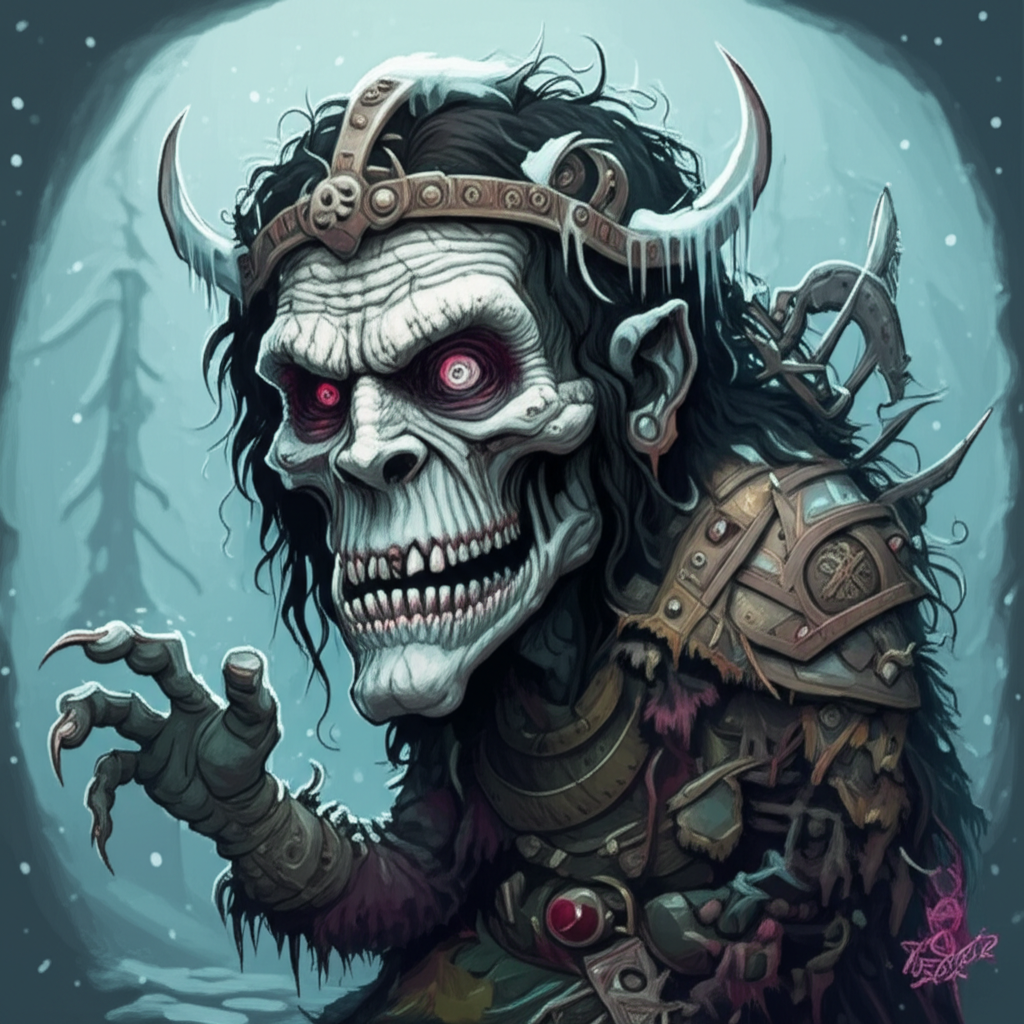
The biting winds that sweep across the rugged landscapes of Scandinavia, through ancient fjords and over snow-capped peaks, carry with them tales as old as the stones themselves. These are the sagas of a people deeply connected to the harsh, yet beautiful, environment they inhabited, a people whose worldview was shaped by the relentless cycle of seasons, the raw power of nature, and a profound respect for their ancestors. From this rich tapestry of folklore, we encounter the chilling legend of the Draugr and the elusive Crown of Winter. It is crucial to understand that this narrative, like all myths and legends, is a product of the imaginative minds of ancient peoples, a storytelling tradition offering insight into their beliefs and fears, and not a reflection of verifiable reality.
The cultural milieu from which the Draugr and the Crown of Winter emerged is the Viking Age and the preceding Germanic Iron Age. This was a time when life was often precarious, demanding resilience, strength, and a keen understanding of the natural world. Societies were organized around chieftains and warriors, where honor, kinship, and the pursuit of glory were paramount. The world, as they perceived it, was a dynamic place, alive with both benevolent spirits and malevolent forces. The lines between the living and the dead were not always clearly defined, and the spiritual realm was believed to be an active participant in the lives of mortals. Ancestor veneration was a significant aspect of their belief system, with the dead often seen as guardians or potential adversaries if their rest was disturbed. The vast, untamed wilderness, with its deep forests and frozen expanses, was a place of mystery and danger, often populated by beings of myth.
The Draugr, the spectral inhabitants of these ancient tales, are not simply ghosts in the modern sense. They are the restless dead, beings who refuse to pass on, often retaining their physical forms and a semblance of their former lives, albeit twisted and corrupted. Imagine a figure, gaunt and desiccated, clad in the tattered remnants of their earthly attire, their skin stretched taut over bone, giving them a perpetually hungry appearance. Their eyes might glow with an unnatural, chilling light, a testament to their unnatural existence. Unlike ephemeral spirits, Draugr possess immense physical strength, far exceeding that of a living man. They are said to be able to swell their bodies to monstrous sizes, crush bone with their grip, and even drag ships from their moorings. They are animated by a dark, lingering will, often driven by greed, malice, or a desperate clinging to their earthly possessions and power. Their touch is said to carry a deathly chill, capable of draining the life force from the living. These attributes symbolize the primal fears of decay, the corruption of what was once living, and the lingering power of earthly desires even beyond the grave.
The legend of the Crown of Winter, often intertwined with the fate of the Draugr, speaks of an artifact of immense, chilling power. It is said to be a crown forged not of gold or silver, but of solidified frost, woven from the very essence of the deepest, coldest winters. This crown, when worn, is rumored to grant its wearer dominion over the ice and snow, the ability to command blizzards, and a chilling immortality, binding them to the frozen earth. The story often tells of a powerful chieftain or a formidable warrior who, in their insatiable lust for power or fear of death, sought to claim this artifact. Perhaps they were a ruler who wished to extend their influence eternally, or a warrior who sought to become an unconquerable force. Driven by ambition, they would venture into the desolate, icy realms where the Crown of Winter was said to lie hidden, guarded by ancient spirits or the very elements themselves.
The narrative unfurls as a perilous quest into the heart of a perpetual winter. Our protagonist, driven by a consuming desire, embarks on a journey fraught with peril. The air grows thin and sharp, the snow drifts pile high, and the sun becomes a distant, pale disc. They battle not only the brutal elements – the howling winds that threaten to tear flesh from bone, the treacherous ice that hides unseen depths – but also the very guardians of the artifact. These guardians might be monstrous creatures born of the ice, or perhaps they are the spectral remnants of those who failed in their own quests for the Crown, now bound to protect it.
As they draw closer to their goal, the cold intensifies, seeping into their very soul. They might face trials of courage, cunning, and endurance. If they overcome these obstacles and finally lay their hands upon the Crown of Winter, a profound transformation occurs. The cold, instead of destroying them, seems to infuse them, granting them a terrible, icy power. However, this power comes at a terrible price. The warmth of their humanity is extinguished, replaced by an unending, gnawing cold. Their heart turns to ice, and their spirit becomes as brittle and unyielding as the frozen landscape. They become a Draugr, a powerful, undead entity, forever bound to the frozen wastes, their reign a testament to the destructive nature of unchecked ambition and the ultimate futility of defying the natural order. Their story serves as a cautionary tale, a chilling echo of what happens when mortal desires clash with the immutable laws of existence.
The symbolism embedded within this myth is multifaceted. The Draugr themselves can be seen as representing the fear of the unknown after death, the potential for the past to haunt the present, and the lingering consequences of unfinished business or unfulfilled desires. Their immense strength and resilience can also be interpreted as the enduring power of the past, the weight of history that can oppress the present. The Crown of Winter, on the other hand, embodies the allure of ultimate power, the desire for control over the uncontrollable forces of nature, and the perilous pursuit of an unnatural immortality. It signifies the seductive nature of absolute power and its potential to corrupt and destroy the very essence of what it means to be alive. The relentless winter itself can symbolize hardship, death, and the cyclical nature of life and decay, a powerful force that must be respected rather than conquered.
In the modern era, these ancient tales continue to captivate our imaginations. The Draugr, with their chilling presence and formidable strength, have become popular antagonists in video games, literature, and fantasy films. They represent a primal fear of the undead, a more visceral and ancient threat than the more common zombie or vampire. The concept of a powerful artifact like the Crown of Winter, granting dominion over the elements, is a recurring trope in fantasy narratives, exploring themes of power, corruption, and the cost of ambition. These modern interpretations often draw inspiration from the original folklore, adapting the core elements to create new stories that resonate with contemporary audiences, while also serving as valuable subjects for cultural studies and academic exploration of mythology.
It is vital to reiterate that the tales of Draugr and the Crown of Winter are traditional stories, woven from the threads of ancient imagination and cultural understanding. They are not a reflection of a verifiable truth. As Muslims, we recognize that only Allah (God) is the true Creator and Sustainer of all that exists, and that all power and dominion belong to Him alone. These stories, however, offer a unique window into the minds of our ancestors, revealing their perceptions of the world, their fears, and their aspirations. They highlight the enduring power of human storytelling, the capacity for imagination to grapple with the mysteries of life and death, and the rich cultural heritage that continues to shape our understanding of the world and ourselves. The echoes of these ancient narratives, carried on the winds of time, remind us of the vast and varied landscape of human belief and the timeless art of crafting tales that endure.


