fufufafa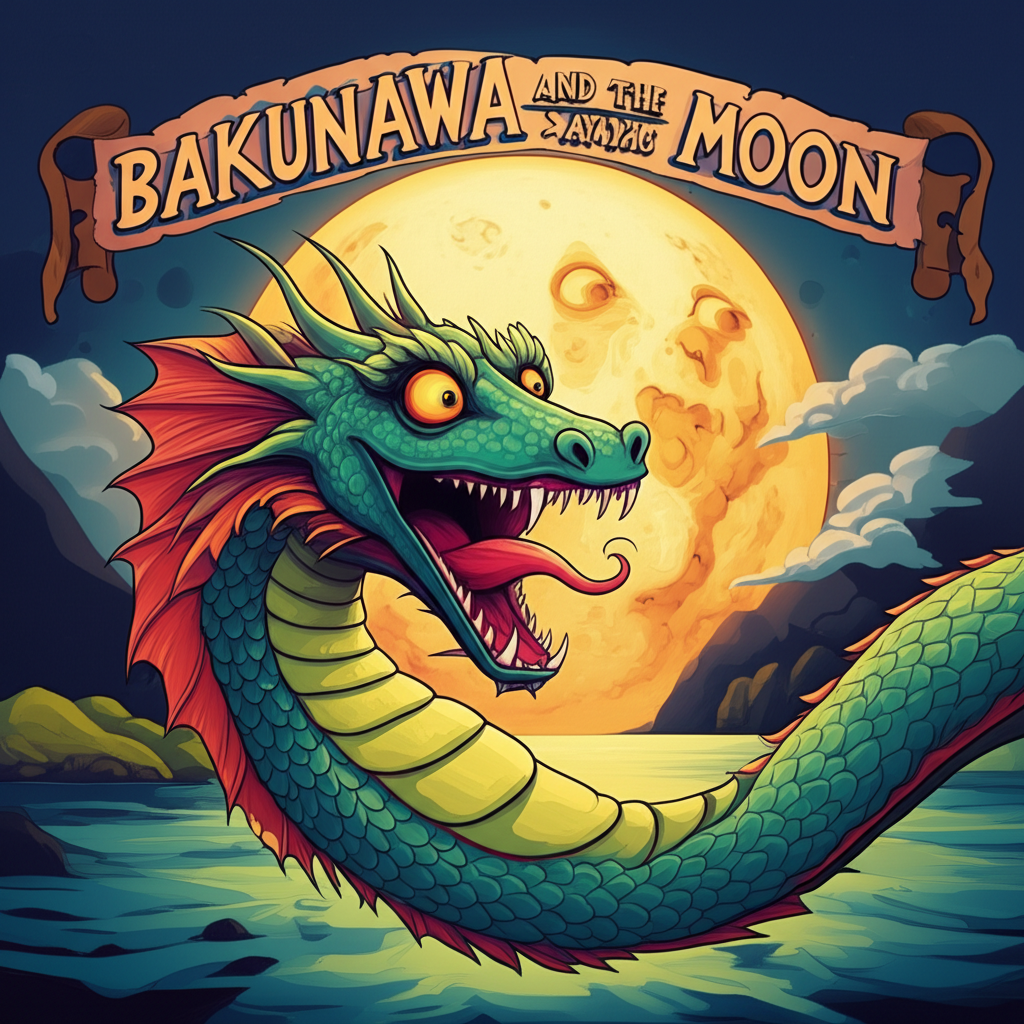
The archipelago of the Philippines, a tapestry woven with emerald islands and sapphire seas, holds within its embrace a rich heritage of stories. Among the most captivating are the myths and legends passed down through generations, whispered on the salty breeze and sung in the rhythmic cadence of the Visayan people. These tales, born from the ancient minds of those who navigated these waters and lived under these stars, offer a glimpse into a worldview shaped by the raw power of nature and the mysteries of the cosmos. The legend of Bakunawa and the Moon is one such story, a powerful narrative that speaks to the enduring human fascination with the celestial dance above and the deep, unfathomable world below.
This is not a testament to divine intervention or a call to worship. Instead, it is a journey into the cultural landscape of ancient Visayan societies, where the lines between the tangible and the ethereal were often blurred. Imagine a time before modern science, when the cosmos was a canvas of wonder and the natural world a realm of potent forces. The Visayan people, deeply connected to the rhythm of the tides, the ferocity of storms, and the bounty of the sea, looked to the heavens for answers and explanations. Their world was one where the moon, a constant companion in the night sky, held a profound significance, influencing tides, marking time, and casting an otherworldly glow. The vast, dark ocean, a source of sustenance and peril, was equally a realm of awe and trepidation, teeming with unseen life.
Central to this legend is Bakunawa, a creature of immense scale and fearsome reputation. Ancient Visayan lore describes Bakunawa not as a mere animal, but as a colossal sea serpent, a dragon-like entity whose body is said to be as vast as the ocean itself. Its scales shimmered with an otherworldly luminescence, and its eyes, like twin moons, held an ancient, unknowable gaze. Bakunawa was not simply a physical being; it embodied primal forces. Its existence was intrinsically linked to the sea, representing its depths, its mysteries, and its potential for both creation and destruction. The creature was often depicted as dwelling in the deepest trenches of the ocean, a hidden power that could stir the waters and influence the very fabric of the world.
The heart of the myth unfolds in a dramatic, cyclical narrative. According to the ancient stories, Bakunawa possessed an insatiable hunger for the moon. It was said that the creature, driven by an eternal craving, would emerge from the ocean’s abyss and ascend towards the sky, its massive form eclipsing the stars. The purpose of this ascent was to devour the moon, to consume its light and pull it into its watery domain. When Bakunawa succeeded in its pursuit, the night sky would plunge into darkness, a terrifying event for the people who relied on the moon’s gentle illumination. This celestial drama was not a random occurrence; it was believed to be Bakunawa’s attempt to consume the moon entirely.
The ancient Visayans, witnessing these lunar eclipses, would interpret them as the moon being swallowed by the great serpent. In their fear and desperation, they would engage in rituals to ward off Bakunawa. These often involved making loud noises – beating drums, clanging metal objects, and shouting – in an effort to startle the creature and force it to release its celestial prey. The cacophony was intended to drive Bakunawa back into the depths of the ocean, allowing the moon to reappear, battered but not broken, in the night sky. This act of collective human effort, of raising their voices against the perceived threat, was seen as a crucial element in restoring balance to the cosmos.
The symbolism woven into the Bakunawa and the Moon legend is rich and multifaceted. Bakunawa, in its insatiable hunger and its ability to plunge the world into darkness, can be interpreted as representing the destructive forces of nature – the terrifying power of typhoons that ravaged coastal communities, the unpredictable fury of the sea, and the primal fear of the unknown that lurks beneath the surface. The moon, on the other hand, symbolized order, guidance, and the cyclical nature of life. It was a beacon of hope, a source of light in the darkness, and a celestial clock that governed the rhythms of their lives. Bakunawa’s attempt to consume the moon could represent the struggle between chaos and order, between the destructive and the life-giving forces of the universe. The collective human response, the raising of their voices, symbolized the power of community and the resilience of the human spirit in the face of overwhelming odds. It also speaks to their understanding of celestial events, not as divine pronouncements, but as natural phenomena that could be understood and influenced, however symbolically, through collective action.
In the modern era, the myth of Bakunawa has found new life beyond its original context. It continues to resonate in the realm of literature, inspiring contemporary authors to weave its narrative into their stories, exploring themes of creation, destruction, and the enduring mysteries of the universe. In popular culture, Bakunawa has made appearances in video games and animated series, reimagined through the lens of modern fantasy and science fiction, often as a formidable antagonist or a guardian of ancient secrets. Cultural studies scholars delve into these legends to understand the worldview, anxieties, and aspirations of ancient Filipino societies. These retellings, while imaginative, serve to preserve and disseminate these cultural narratives, ensuring that the stories of our ancestors are not lost to the passage of time.
It is crucial to reiterate that the legend of Bakunawa and the Moon is a traditional story, a product of human imagination and a testament to the storytelling heritage of the Visayan people. As Muslims, we recognize that the true Creator and Sustainer of the universe is Allah (SWT). The natural world, including the moon and the vast oceans, are His creations, governed by His divine order. This myth, therefore, is not a matter of belief or worship but a valuable artifact of cultural history, offering insights into how our ancestors perceived and interacted with the world around them. It is through these stories that we connect with our heritage, appreciate the power of human creativity, and understand the enduring human impulse to make sense of the mysteries that surround us, from the luminous orb in the night sky to the unfathomable depths of the sea. The songs of the Visayas seas, in their ancient echoes, continue to remind us of the vibrant tapestry of human culture and the timeless power of a well-told tale.